

Blog
How to Choose the Right Vacuum Packaging Machine
Choosing the right vacuum packaging machine starts with understanding what you package each day. A small bakery sealing coffee bags has different needs from a food processor packing large cuts of meat. Product size, moisture, packaging material, and daily output all affect the choice. A machine that looks powerful in a product photo may not suit your actual workflow.
Start by comparing chamber and external vacuum machines. Chamber models can handle liquids more reliably because the product and bag sit inside the chamber during evacuation. External models often take less space and may suit dry goods or lighter workloads. Check the chamber dimensions against your largest package, not just your average one. Measure twice. A few centimeters can matter.
Consider pump capacity, sealing-bar length, cycle time, and how easy the machine is to clean. Ask suppliers about replacement parts, maintenance intervals, warranty coverage, and service response times. These practical details can matter more than a long feature list. If possible, test the machine with your own product and packaging. Watch for leaks, crushed items, or seals that wrinkle at the corners. Small failures add up.
There is no single best vacuum packaging machine for every business. A model built for continuous production may be unnecessary for a shop sealing a few dozen packs daily. On the other hand, choosing only by the lowest price can create extra work later. Compare the total cost, including bags, upkeep, and operator time. I would still verify performance under real working conditions; a successful demonstration does not guarantee an easy fit on a busy production line.
Identify Product Size, Moisture, and Packaging Needs
How to Choose the Right Vacuum Packaging Machine
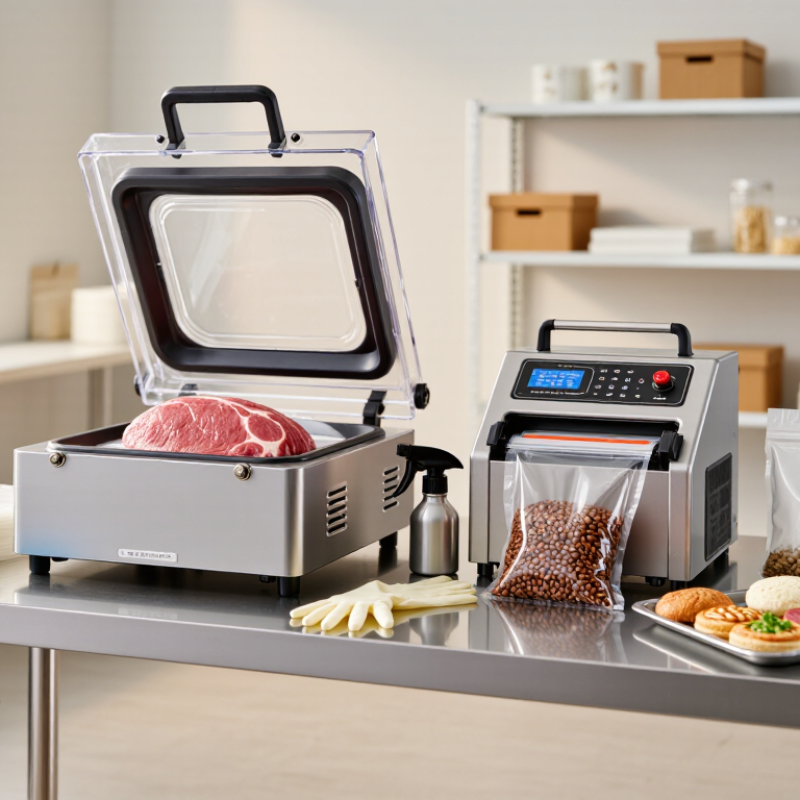
Start with the product’s actual dimensions, not just its average weight. A long loaf, a stack of portions, and a compact block may weigh the same but need different bag widths and chamber space. Measure the largest item you expect to pack, then leave room for a clean seal above it. A bag that fits too tightly can wrinkle at the sealing bar. That small mistake can lead to leaks.
Moisture matters just as much. Dry goods usually suit straightforward chamber or external vacuum systems, while liquids and wet foods need careful handling. In a chamber machine, liquid is less likely to be pulled from the bag during vacuuming, but the product still needs suitable bags and clean, dry sealing edges. For delicate items, test a few packages before committing to a machine. Vacuum pressure can crush soft bread or bruise tender produce. I once assumed a stronger vacuum was always better; it was not.
Tips: List your product sizes, moisture levels, and daily package volume. Bring a sample bag and product when comparing equipment. Check seal width, cycle time, cleaning access, and whether the machine handles your busiest day. A short trial helps. Keep notes on leaks and crushed items, too; the first test rarely tells the whole story.
Choose Chamber or External-Suction Models by Bag Type
How to Choose the Right Vacuum Packaging Machine
Choose the machine around the bags you already use. Chamber models typically work with smooth, flat vacuum pouches. The pouch sits inside the chamber, where pressure drops around the entire bag. This makes chamber machines useful for liquids, marinades, and moist foods: a small amount of sauce is less likely to be pulled toward the seal. Check the chamber’s interior dimensions against your largest pouch. A bag that fits on paper may be awkward to position once filled. It happens.
External-suction models usually need embossed or channel-textured bags. Their patterned surfaces help air escape through the open end during suction. These machines suit many dry goods and occasional household jobs, especially when you package items too large for a chamber. But liquids can travel toward the machine, and a smooth pouch may not evacuate properly. Watch the seal, too: crumbs or a damp edge can leave a weak spot. Before buying, run a small test with your actual bag type and a representative product. Bag samples are useful. So is checking how much counter space the machine needs. If your bag supply changes, reconsider the choice; the best fit can shift.
How to Choose the Right Vacuum Packaging Machine
Choose chamber or external-suction models according to bag type and product characteristics.
Score meaning: 3 = preferred, 2 = workable, 1 = limited, and 0 = generally not recommended. Chamber machines work with smooth bags and are better suited to liquid-rich products because the entire bag is placed inside the vacuum chamber. External-suction machines typically require embossed or textured bags and are most practical for dry products and small-batch packaging.
Set Target Vacuum Levels of 0.8–0.95 bar Below Atmosphere
A target vacuum of 0.8–0.95 bar below atmospheric pressure means removing much of the air from the package. At standard sea-level pressure, that leaves roughly 0.2–0.05 bar of absolute pressure inside the chamber. Check how the machine displays vacuum: some gauges show pressure reduction, while others show remaining absolute pressure. The numbers can look similar but mean different things.
Choose a target based on the product, bag, and seal—not the highest setting by default. A firm block of cheese may tolerate a deeper vacuum, while soft bread, berries, or delicate pastries can be crushed. Start near 0.8 bar below atmosphere, then inspect the package for compression, leaks, and seal quality. A clear test bag helps reveal trapped air around corners. Small details matter.
For repeatable results, use the same product temperature, fill weight, and bag type during trials. Record the setpoint and cycle time; a vacuum reading alone does not guarantee a good seal. If liquid begins to boil or foam, reduce the vacuum or use a gentler cycle. That can feel counterintuitive. Still, the ideal setting is the one that protects the product and produces consistent packages, even if it is not the machine’s maximum.
Compare Pump Capacity, Cycle Time, and Output per Hour
Choosing a vacuum packaging machine starts with pump capacity, but pump size alone can mislead. A 100 m³/h pump may remove air quickly, yet small chambers can limit actual output. PMMI’s 2023 State of the Industry report identifies labor pressure and uptime as major automation concerns. That makes repeatable cycle performance more valuable than impressive specifications.
Measure cycle time with your actual product, pouch, and sealing temperature. A practical calculation is simple: output per hour equals bags per cycle multiplied by 3,600, divided by total cycle seconds. For example, two bags in a 24-second cycle produce about 300 bags per hour. Allow time for loading, unloading, cleaning, and occasional rework. The real figure may fall below 240 bags hourly. It happens often.
Industry testing also supports controlled verification. ASTM F88/F88M is widely used to evaluate seal strength, while ASTM D3078 helps detect gross leaks in flexible packaging. These tests do not measure production speed, but they expose weak seals created by rushed cycles. Compare usable output, not the fastest empty-machine demonstration. A 2024 packaging workforce report from PMMI also links skilled-labor shortages with greater automation demand. That suggests simpler loading and accessible controls deserve attention. I have seen operators choose higher pump capacity, then lose output through awkward handling. The calculation looked perfect. The work pattern did not.
Verify Seal Width, Material Compatibility, and HACCP Compliance
Choosing a vacuum packaging machine starts with the seal, not the pump. Seal width should match the pouch structure and production speed. A narrow seal may fail under handling stress. An oversized seal can waste film and increase heating time. Test samples using ASTM F88/F88M seal-strength methods, then record failure patterns. Peel, channel leaks, and burn marks each indicate different settings. I have seen attractive seals fail after refrigeration. Visual inspection alone is not enough.
Material compatibility needs equal attention. Polyamide, polyethylene, multilayer laminates, and barrier films respond differently to heat and pressure. Check the supplier’s temperature range, approved food-contact status, and recommended dwell time. ASTM F2029 can help evaluate heat-seal performance. Do not assume thicker film means safer packaging. It may require a wider seal or longer heating. This is where machine trials matter.
HACCP controls must be built into the selection process. The FDA Food Code 2022, Section 3-502.12, treats reduced-oxygen packaging as a specialized process requiring documented controls in applicable operations. Codex CXC 1-1969 defines seven HACCP principles, including critical limits, monitoring, corrective action, and verification. Set limits for vacuum level, seal temperature, dwell time, and seal width. Keep calibration records. Recheck them after maintenance. A weak point remains: many teams validate one product, then reuse those settings for every film. That shortcut deserves review.
| Selection Dimension | What to Verify | Practical Guide | Why It Matters |
|---|---|---|---|
| Seal width | Width and consistency of the machine’s sealing bar or seal band | Compare the seal width with the pouch supplier’s requirements. A seal around 3–5 mm is common for many flexible pouches, but the appropriate width depends on the film, product, and process. | A seal that is too narrow, uneven, or incompatible with the pouch can increase the risk of leaks and failed packages. |
| Seal integrity | Seal strength, continuity, and resistance to contamination in the seal area | Test the intended pouch and product under normal operating conditions. Include checks for wrinkles, product residue, channels, and incomplete seals. | Vacuum level alone does not confirm that a package is properly sealed. |
| Packaging material compatibility | Film structure, thickness, pouch type, and sealing requirements | Confirm that the machine can seal the selected vacuum pouches. Many flexible vacuum pouches use multilayer structures; not every film is suitable for every sealing system. | Material compatibility affects seal quality, vacuum performance, and package durability. |
| Machine configuration | Chamber, external-suction, or continuous-belt design | Chamber machines are commonly used with vacuum pouches and can handle a range of product sizes. External-suction machines generally require suitable textured bags. Continuous systems may suit higher-volume production. | The machine design must match the pouch type, product, and required production rate. |
| Product characteristics | Moisture, liquid content, sharp edges, and sensitivity to compression | Test representative products, including the wettest or most fragile items. Check whether the machine’s cycle settings can be adjusted for the product. | Liquids can interfere with sealing, while sharp or delicate products may require suitable pouch selection and handling. |
| Cycle and capacity | Cycle time, chamber dimensions, number of seal bars, and expected daily output | Estimate throughput using the actual pouch size and product load, not an empty-machine cycle time. Confirm that the chamber accommodates the largest routine package. | A machine that is undersized can create a production bottleneck; excess capacity may add unnecessary cost. |
| Cleaning and hygienic design | Accessible surfaces, removable components, drainage, and cleaning instructions | Review the manufacturer’s cleaning and maintenance procedures. Check that food-contact areas can be inspected and cleaned using the facility’s approved methods. | Cleanability supports hygienic operation and helps prevent product residues from accumulating. |
| HACCP program fit | Whether the machine can be incorporated into the facility’s hazard analysis and control procedures | Identify relevant hazards and define applicable monitoring, verification, corrective-action, and recordkeeping procedures for the packaging step. | HACCP is a site-specific food-safety system; purchasing a machine alone does not establish HACCP compliance. |
| Controls and monitoring | Adjustable vacuum and sealing settings, alarms, and repeatable cycle controls | Verify that operators can set and monitor the process parameters required by the facility’s validated procedures. | Consistent settings and documented checks can help identify process deviations. |
| Acceptance testing | Performance with the intended product, pouch, and operating procedure | Before purchase, run sample packages and inspect seal appearance, vacuum retention, and package performance using suitable verification methods. | Testing with real materials helps confirm that the machine meets the operation’s requirements. |
Related Posts
-
Top 10 Vacuum Packaging Machines for Home Use in 2023
-
How to Choose a Commercial Food Vacuum Sealer in 2026?
-
Top 10 Benefits of Using a Vacuum Sealer for Food Preservation?
-
2026 Best Food Vacuum Sealer for Your Home Kitchen Needs?
-
2026 Top Vacuum Sealer Buying Guide for Global Buyers?
-
China Top Vacuum Sealer Machine Manufacturers Guide

