

Blog
What Is the Best Food Sealer Machine in 2026?
Choosing the best food sealer machine in 2026 is less about chasing the highest suction rating and more about matching the machine to real kitchen habits. Do you seal soup portions, garden vegetables, or a few steaks each week? The answer changes which features matter: pulse control, wet-food settings, bag cost, sealing speed, and countertop footprint. A machine that looks powerful online can still frustrate you when its seals fail on damp edges.
The wider market offers useful context, but not a direct ranking of home sealers. Grand View Research valued the global vacuum packaging market at about $29.6 billion in 2023 and forecast continued growth through 2030. That market includes commercial packaging, not just household appliances, so it should not be mistaken for proof that one consumer model is best. For food safety, University of Georgia food-preservation specialist Dr. Elizabeth Andress emphasizes a practical rule: “Vacuum packaging is not a substitute for refrigeration or freezing.” A tight seal helps limit air exposure; it does not make perishable food shelf-stable.
Small details count. Check whether replacement rolls are easy to find, whether the drip tray comes out for cleaning, and whether the lid needs firm pressure. Listen to the pump, too. Some models are surprisingly loud. There is no perfect machine. This guide compares common use cases, operating costs, and verified features, while noting where manufacturer claims deserve a closer look. The best choice should fit your meals, storage space, and patience—not merely win a specification table.
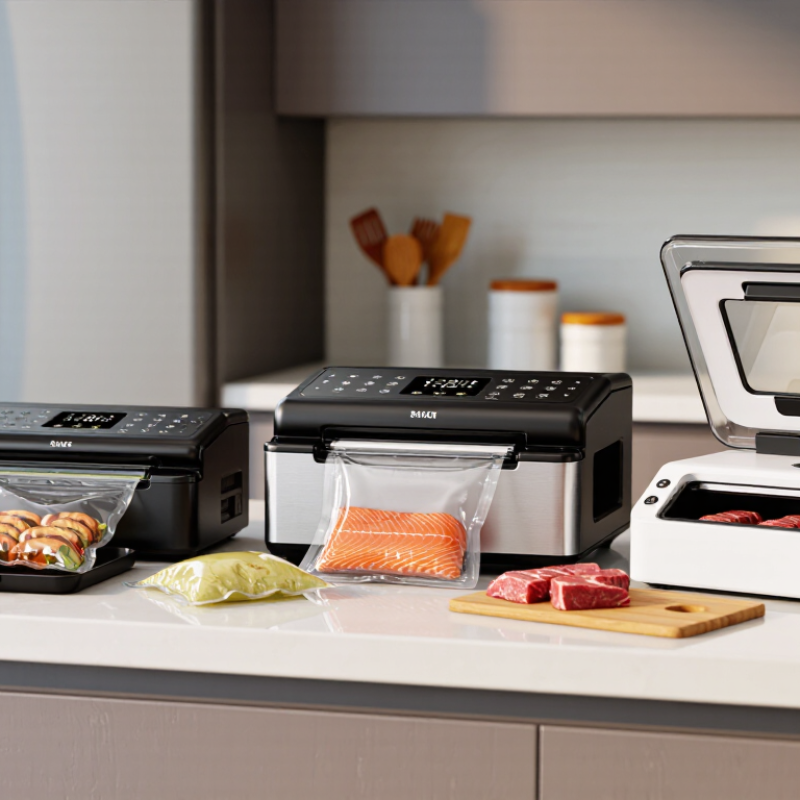
What a Food Sealer Machine Is and How It Works
A food sealer machine removes air from a pouch or container, then closes it with a heated strip. In many countertop models, the open bag sits in a channel; a pump draws out air before the heating element fuses the plastic layers. Some machines seal without vacuuming, which is useful for delicate foods that might crush under suction.
Air is the enemy, but not the only one. Less oxygen can slow oxidation and freezer burn, yet sealing does not sterilize food or replace refrigeration. The USDA advises keeping perishable foods cold; vacuum-packed leftovers still need prompt chilling and safe handling. UNEP’s Food Waste Index Report 2024 estimated that 1.05 billion tonnes of food were wasted worldwide in 2022. A sealer may help preserve portions, but it cannot fix poor storage habits.
For home use, check seal width, bag compatibility, and whether the machine offers a gentle setting for bread or berries. A solid seal should look continuous, with no wrinkles crossing the joined edge. I have found that a little moisture near the seam can spoil an otherwise careful job. That detail is easy to miss. Different foods and bag materials behave differently, so test small portions before sealing a full batch.
What Is the Best Food Sealer Machine in 2026? - What a Food Sealer Machine Is and How It Works
| Sealer Type | What It Is | How It Works | Suitable Uses | Practical Limitations | What to Check Before Buying |
|---|---|---|---|---|---|
| External-suction vacuum sealer | A countertop machine that removes air from a bag before sealing its open edge. | The bag opening sits in a vacuum channel. The machine draws air out, then a heated sealing strip fuses the bag layers together. | Portioned solid foods, dry goods, and freezer storage. Many models also have a separate sealing mode for foods that do not need vacuuming. | Usually requires compatible textured or embossed bags to maintain an air path. Wet foods and free-flowing liquids can be drawn toward the vacuum channel. | Check bag compatibility, seal-only operation, pulse or manual control, and whether the drip tray is removable. |
| Chamber vacuum sealer | A machine that places the food bag inside a sealed chamber during vacuuming. | The machine lowers pressure throughout the chamber. Once the target vacuum is reached, a heated bar seals the bag before the chamber returns to normal pressure. | Frequent sealing, larger batches, and liquid-rich foods such as soups or marinades, when used according to the machine instructions. | Typically larger, heavier, and more expensive than external-suction machines. Chamber size limits the size of items that can be sealed. | Compare usable chamber dimensions, sealing-bar length, cycle controls, cleaning access, and counter space. |
| Handheld vacuum sealer | A compact pump designed to remove air from compatible reusable containers or specially valved bags. | The pump connects to a valve and withdraws air until the container or bag reaches the intended vacuum level. | Small portions, containers, and occasional use where compact storage is useful. | Works only with compatible valves or accessories; it does not usually make a conventional heat seal across a standard bag opening. | Confirm which containers and bags are compatible, how the device is charged or powered, and how replacement accessories are obtained. |
| Impulse heat sealer | A bag sealer that closes compatible plastic packaging without removing air. | When the jaws close, an electrical pulse heats a sealing element briefly and fuses the bag layers. The machine does not create a vacuum. | Closing bags of dry foods or other items when an airtight-style heat seal is desired without air extraction. | Does not remove air or provide vacuum packaging. The materials and thickness that can be sealed depend on the model. | Check the specified packaging materials, maximum seal width, adjustable heat settings, and required cooling time. |
| Key operating steps | Use a bag or container approved for the sealer. Keep the sealing area clean and dry, leave enough space at the opening, and follow the model’s vacuum and sealing instructions. | For delicate foods, use a pulse or manual setting if available. Pre-freezing moist or soft foods can help keep liquid away from an external-suction machine’s vacuum channel. | Vacuum packaging is not a substitute for safe food handling, refrigeration, or freezing. Perishable foods still need appropriate temperature control. | Choose the machine based on food type, package format, expected use, available space, and ongoing bag or accessory costs. | |
There is no single best food sealer for every kitchen: the right type depends on whether you need vacuum removal, liquid handling, compact storage, or simple heat sealing.
Related Posts
-
Why Choose a Vacuum Sealer Machine for Your Business?
-
Top Food Packaging Machine Manufacturers and Suppliers?
-
2026 Best Vacuum Food Sealer Machine for Global Buyers
-
How to Choose a Commercial Food Vacuum Sealer in 2026?
-
2026 Best Commercial Vacuum Sealer Machine for Buyers
-
How to Choose the Right Vacuum Packaging Machine