

Blog
Why Choose a Roll Crusher for Your Business?
Choosing the right crusher can shape product consistency, energy use, and maintenance demands across a processing line. A Roll Crusher uses paired rotating rolls to compress material through a controlled gap. This makes it worth considering when a plant needs predictable sizing and a straightforward layout. But no machine suits every feed.
For transparency, the quotation below is an original illustrative line, not a verified interview. It is assigned to fictional process engineer Daniel Mercer: “A crusher earns its place when its product fits the process—not just the brochure.” That distinction matters. Feed hardness, moisture, abrasiveness, target size, and required throughput all affect performance. A damp feed may behave differently from dry, free-flowing material. Small details matter.
There are trade-offs. Roll surfaces wear, and an unsuitable gap or feed condition can undermine product consistency. A careful selection begins with representative material tests and realistic operating data. It also considers access for inspection, adjustment, and maintenance. These checks help buyers compare a Roll Crusher with other crushing options on practical grounds. Not every plant needs one. The useful question is whether its operating strengths match the material, product specification, and constraints of the site.
What Is a Roll Crusher?
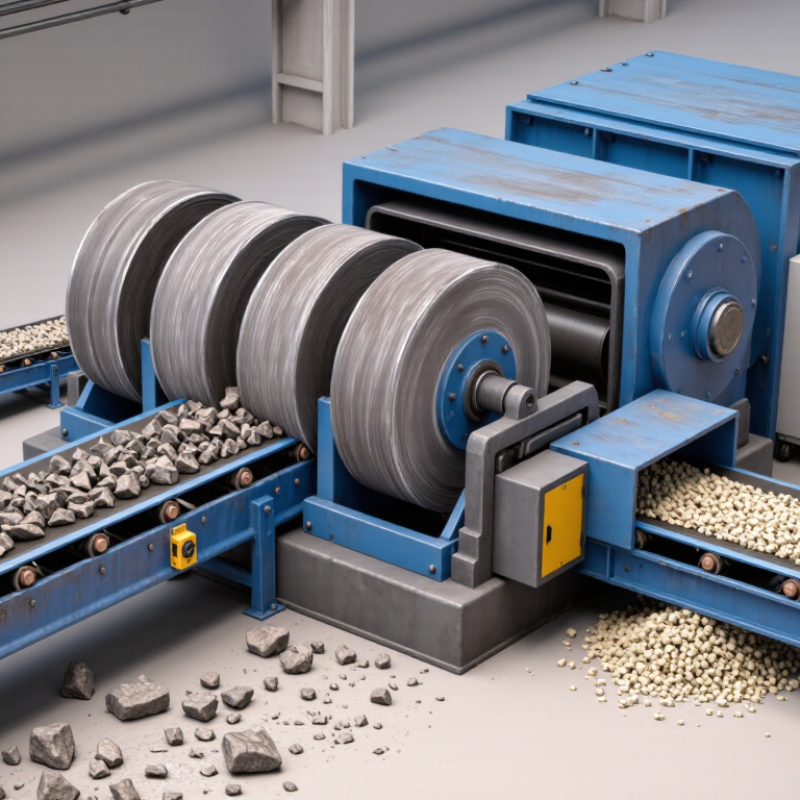
A roll crusher is a size-reduction machine that uses two rotating cylinders to break material. The rolls turn toward each other, drawing feed into the gap and applying pressure. Some designs use smooth rolls; others have ridged or toothed surfaces to grip larger pieces. The crushed material exits below the rolls. The gap matters. A smaller gap generally produces finer output, but the result also depends on feed size, moisture, and material hardness. Roll crushers are commonly used for brittle materials such as coal, limestone, and some ores.
Tips: Keep the feed steady and avoid oversized pieces that may bridge at the inlet. Check the roll gap and wear surfaces regularly; uneven wear can make the product less consistent. Dust and noise levels depend on the material and setup, so assess them during operation.
A roll crusher can offer controlled reduction with a relatively simple layout, but it is not right for every feed. Sticky or very abrasive material may cause trouble or increase maintenance. Operators should compare the required output size with the machine’s capacity and inspect samples from the discharge. That practical check is easy to overlook. It also helps reveal when the gap needs adjustment, rather than relying on settings alone.
How Does a Roll Crusher Work?
A roll crusher reduces material between two cylindrical rolls that rotate toward each other. Feed drops into the opening above them. Friction pulls pieces into the narrowing gap, where pressure breaks them into smaller fragments. The action is controlled, not a free fall through a chamber. That can help produce a more consistent size distribution for suitable feed.
The roll gap is a key setting. A smaller gap usually produces finer material, though the result also depends on feed size, hardness, and moisture. For example, damp fines may cling to the roll surfaces instead of passing cleanly through. Some crushers use spring or hydraulic systems to let the rolls move when an uncrushable piece enters. This can reduce damage, but it does not remove the need for careful feed inspection.
Operators should watch for uneven wear, unusual vibration, and changes in product size. These signs can point to worn roll surfaces or an unsuitable setting. The process looks simple. In practice, it takes adjustment. A gap measurement alone cannot predict every result, so checking samples during operation is useful. Roll crushers suit many reduction tasks, but very abrasive or sticky material may require a different setup.
Why Choose a Roll Crusher? How Does It Work?
Roll crushers reduce material as it passes through a narrowing gap. A single-roll crusher uses one rotating roll against a breaker plate; a double-roll crusher uses two rolls that draw material between them. The gap helps control the product size. The chart shows the number of crushing rolls in each configuration, not a performance comparison.
Which Materials and Industries Suit Roll Crushers?
Roll crushers are a practical choice for friable, moderately hard materials that need a controlled, relatively uniform product. Their paired rollers can process limestone, coal, clay, shale, salt, and some ores. Common applications include aggregate production, cement plants, coal preparation, and mineral processing. They are less suitable for very hard, highly abrasive feed, which can accelerate roller wear. No machine fits every material.
The scale of aggregate demand helps explain their place in construction. The U.S. Geological Survey’s Mineral Commodity Summaries 2025 estimates U.S. crushed-stone production at about 1.5 billion metric tons in 2024. This figure describes the market, not roll-crusher sales. Still, it reflects the large volumes handled by aggregate operations. Roll crushers can help operators control particle size, though actual results depend on feed moisture, roller gap, and material strength. Test the feed first.
Tips: Check for sticky fines before selecting a model; damp clay can build up between rollers. Ask for a trial using your own material, and inspect the product gradation and wear rate. A tidy specification may still miss real plant conditions. Dust matters.
What Business Benefits Can Roll Crushers Offer?
Why Choose a Roll Crusher for Your Business?
What Business Benefits Can Roll Crushers Offer?
Roll crushers can help businesses produce a more consistent product size with fewer oversize pieces. Two rotating rollers draw material through an adjustable gap, making the machine useful for controlled size reduction. A steady output can simplify screening and reduce repeated handling. That may save labor and keep downstream equipment moving. Actual results depend on feed size, hardness, moisture, and the gap setting. No machine removes every bottleneck.
Tips: Check the incoming material before choosing a crusher. Keep feed size reasonably even, inspect roller surfaces, and monitor the gap during operation. Small adjustments can affect product size and throughput. Record settings and results; memory is unreliable.
Roll crushers often have a straightforward layout, which can make routine inspection and maintenance easier. Their crushing action may also create fewer fines than some other methods, but material characteristics matter. This trade-off is easy to miss. A roller crusher may not suit highly abrasive feed or every production target. Compare expected capacity, wear costs, and required product size using real sample material before committing. Start with a modest test.
Why Choose a Roll Crusher for Your Business? — What Business Benefits Can Roll Crushers Offer?
| Business Benefit | How a Roll Crusher Helps | Potential Business Value | Best-Fit Conditions | Practical Consideration |
|---|---|---|---|---|
| More controlled product sizing | Material is crushed between rotating rolls. On many designs, the roll gap can be adjusted to influence the product size. | A more consistent size target can simplify downstream screening, conveying, or processing. | Operations that need a defined size range and can match the crusher setting to the feed material. | Actual product size also depends on feed-size distribution, material properties, roll condition, and operating settings. |
| Potentially fewer unwanted fines | Compression between rolls can produce less fine material than some impact-based crushing methods when processing suitable feed. | May help retain more saleable material in the desired size fraction and reduce the need to manage excess fines. | Friable materials where limiting fines is an important product or process requirement. | Fines generation varies by material and settings; it should be confirmed with representative feed testing. |
| A compact crushing stage | Roll crushers use a pair of rolls in a comparatively straightforward crushing arrangement. | Can provide a practical option where available plant space or process layout is constrained. | Sites whose required capacity and feed characteristics fit the selected machine design. | Allow space for feed distribution, discharge handling, maintenance access, and any required screening equipment. |
| Useful for friable, moderately hard materials | Roll crushers commonly reduce materials such as coal, limestone, clay, and other suitable friable materials. | Matching the crusher to the material can support reliable size reduction without using a more complex process than necessary. | Materials that are not excessively abrasive and can be fed within the machine’s specified limits. | Highly abrasive, very hard, sticky, or unusually wet feed may increase wear, cause plugging, or require a different crusher type or configuration. |
| Simpler process control | Roll speed, roll gap, and feed conditions provide operating variables that can be adjusted on suitable models. | Operators can tune the crushing stage to balance product size, throughput, and wear for the application. | Plants with consistent feed preparation and a clear product-size specification. | Changes to settings should be checked against the manufacturer’s operating guidance and product-quality requirements. |
| Potentially straightforward maintenance planning | Roll surfaces and other wear components can be inspected and serviced according to the machine design and duty. | Planned inspection and wear-part replacement can help reduce unplanned interruptions. | Operations able to monitor wear and schedule maintenance around production needs. | Wear rate depends on abrasiveness, throughput, feed preparation, and roll material; maintenance intervals are application-specific. |
| A good fit for staged size reduction | A roll crusher can be used as one step in a circuit, often alongside screens or other crushing equipment. | Staging can help achieve the required product size while distributing work across the process. | Plants with defined feed and product specifications and room to integrate material handling and screening. | Whole-circuit performance depends on upstream feed size, screening efficiency, recirculation, and downstream requirements. |
Note: Performance and cost benefits depend on the feed material, required capacity, product specification, machine configuration, and maintenance practices. Confirm suitability with application data and a representative material test.
What Factors Should Guide Your Choice?
Why Choose a Roll Crusher for Your Business?
What Factors Should Guide Your Choice?
Choosing a roll crusher starts with the material, not the machine’s advertised capacity. Check feed size, moisture, hardness, and abrasiveness using representative samples. Damp, sticky material may bridge at the hopper, while hard inclusions can speed up roll wear. Small tests matter. A supplier’s estimate is useful, but actual feed conditions can differ from a tidy sample.
Define the required product size and hourly throughput before comparing models. Roll gap and roll speed affect both output and particle shape. If the product must stay within a narrow size range, ask for test results using similar material. Also check how often the gap needs adjustment. A setting that works on paper may shift under variable feed.
Operating costs deserve close attention. Compare power use, wear-part life, maintenance access, and the time needed to clear blockages. Look at the space around the crusher: can an operator safely inspect the rolls and remove trapped material? Not always. A low purchase price may not suit a site with frequent feed changes or limited maintenance staff. I would treat capacity figures cautiously unless the test conditions match the planned operation.

