

Blog
Top Paper Box Manufacturers in China
China’s paper-box industry serves a vast market, from e-commerce shipping cartons to printed retail packaging. The scale is significant. The China Paper Association’s 2023 industry report records 144.05 million tonnes of paper and paperboard production in China that year. FAO’s Global Forest Products Facts and Figures 2022 estimates worldwide paper and paperboard production at about 401 million tonnes. These figures describe the wider material supply—not the number of finished boxes—but they help explain why China is a major sourcing base.
Choosing among the top Paper Boxes manufacturers takes more than comparing unit prices. Buyers should examine board grade, printing consistency, structural strength, sampling procedures, and production capacity. A neat sample is useful. Repeatability matters more. Ask suppliers for verifiable specifications, test records, and clear details about tolerances and lead times. Where relevant, confirm that material or environmental claims are supported by current documentation.
This guide introduces leading manufacturers in China and the capabilities they report, including custom printing, folding cartons, and corrugated packaging. It also considers practical sourcing factors such as minimum order quantities, communication, and quality control. Company rankings can be imperfect; available information may not capture every factory’s current performance. Treat the list as a starting point, then request samples and verify claims directly before placing an order.
Understanding China's Paper Box Manufacturing Industry
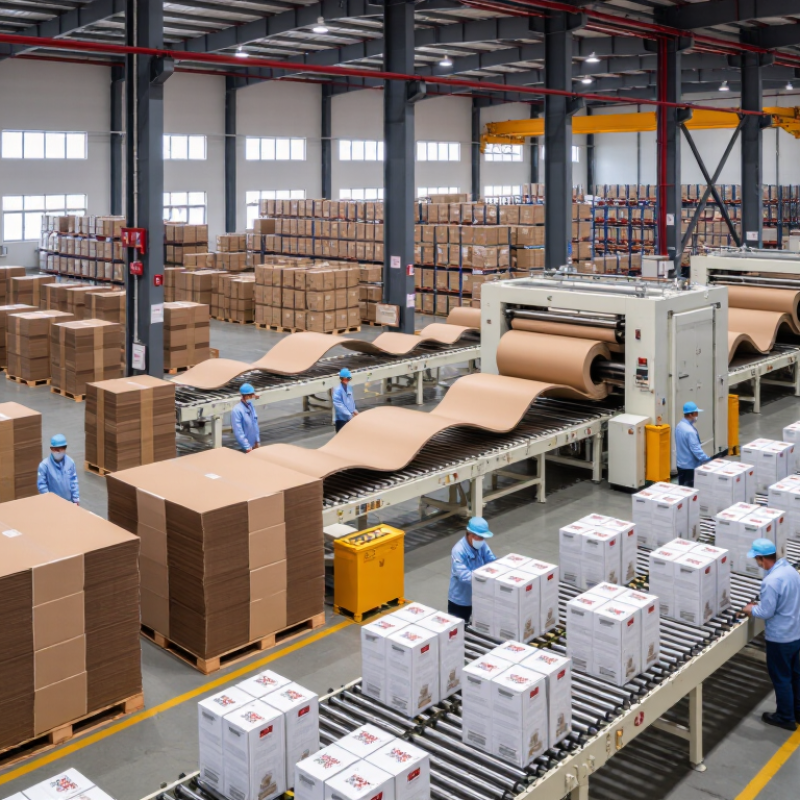
China’s paper box manufacturing industry covers far more than printing and folding. A typical order moves through material selection, artwork checks, printing, die cutting, gluing, and inspection. Each stage affects the final box. A small change in board thickness can alter how a carton folds or stacks. So can humidity. Suppliers may specialize in rigid boxes, folding cartons, or corrugated packaging, and their equipment and quality controls can differ. Ask how samples are approved and how production batches are checked. A polished sample is useful, but it does not guarantee every production run will match perfectly. This part is not always tidy.
Tips: Share the box’s dimensions, intended contents, shipping conditions, and expected order volume before requesting a quote. Ask for a production sample, not just a printed mock-up. Check folds, edges, color, and fit. Also ask whether coatings or laminations affect recycling options.
Material choices involve trade-offs. Recycled paperboard can suit many applications, but its appearance and strength may vary by grade. Specialty finishes can improve presentation, yet add cost and complicate recycling. Request clear specifications for board grade, thickness, print colors, tolerances, and packaging. Compare quotes using the same requirements. If a detail is unclear, get it confirmed in writing; assumptions can become expensive once production starts.
China's Paper Box Manufacturing Industry: Upstream Paper and Paperboard Production
Annual production in China, 2020–2023 (million tonnes)
China's paper and paperboard production rose from 112.6 million tonnes in 2020 to 129.65 million tonnes in 2023. This broad upstream industry measure provides context for paper box manufacturing; it is not a measure of box output. Source: China Paper Association.
How Paper Box Manufacturers Design and Produce Packaging
Top Paper Box Manufacturers in China
Paper box production begins with a practical question: what must the package protect, and how will it be handled? Designers consider product weight, shipping distance, shelf display, and opening experience. A folding carton for tea needs different board and structure than a mailer for a heavy accessory. Small details matter. A few millimeters can affect fit.
The process often starts with a brief and a dieline, followed by a hand-built sample. Teams check dimensions, closure, and how the box feels when opened. Then they select paperboard, set print colors, and prepare cutting and creasing tools. On press, operators monitor ink coverage and registration. After cutting, the pieces are folded and glued, with spot checks for uneven edges or weak seams.
A sample may look clean but fail when packed. Testing with the actual product is more useful.
Production planning also affects quality. Clear artwork files, agreed tolerances, and realistic order quantities reduce avoidable rework. Still, schedules can be tight, and a rushed approval may miss a small flaw in the crease. That deserves a second look. Experienced teams document adjustments between sampling and mass production, then inspect cartons during the run. Exact methods vary by box style, paper grade, and equipment.
Criteria for Identifying Leading Paper Box Manufacturers
Top Paper Box Manufacturers in China
Criteria for Identifying Leading Paper Box Manufacturers
A reliable assessment starts with the box itself. Ask for samples that match your intended paper weight, dimensions, coating, and printing. Feel the board, inspect folded corners, and check whether colors remain consistent across several pieces. A glossy sample alone proves little.
Check how the manufacturer controls production. Request clear specifications, documented inspection steps, and examples of how defects are recorded. Ask whether the same standards apply to repeat orders. Useful details include tolerances for box dimensions, print alignment, and delivery schedules. Keep the answers in writing. Vague promises deserve follow-up.
Capacity matters, but it is not the whole story. Confirm that equipment and staffing suit your order size, then ask about material sourcing and batch traceability. If environmental claims matter, look for current, verifiable evidence rather than broad marketing language. Certifications should match the facility and product under review. Even a careful checklist has blind spots; a strong first sample can still differ from a later run. It takes time. Compare samples with production records, and note where your own criteria may be too strict or too loose.
Profiles of Notable Paper Box Manufacturers in China
China’s paper box manufacturers differ less by appearance than by production focus. Integrated converters typically manage printing, die-cutting, folding, and gluing under one roof. Their plants may run long corrugated-board lines beside smaller machines for rigid gift boxes. Export-oriented factories often emphasize color matching, sample approval, and protective inserts. These details matter: a neat sample does not guarantee consistent results across a large order.
Scale brings opportunity. The FAO’s 2022 Forest Products data put global paper and paperboard production at roughly 401 million tonnes, indicating the broad material base behind packaging supply. But volume alone says little about a factory’s suitability. A useful profile should examine board-grade options, print tolerances, quality checks, and production lead times. Some manufacturers specialize in lightweight shipping cartons; others handle laminated retail boxes with tighter surface-finish requirements. Ask how they test compression and inspect color between batches. Small differences show up.
There are limits to any profile. Public directories rarely verify machine utilization or defect rates, and factory claims deserve checking. A site visit or third-party audit can clarify workflow, storage conditions, and sample-to-order consistency. The process is not always tidy. A capable supplier may still need clearer artwork files or extra time for a custom insert.
Comparing Manufacturers' Services and Production Capabilities
Choosing a paper box manufacturer in China means comparing more than unit price. A useful review looks at service, equipment, quality controls, and how clearly a supplier handles revisions. Ask for a sample made with the intended board grade, finish, and insert. Small differences matter.
Production capability is not just a long machine list. Check whether the factory manages cutting, folding, gluing, and finishing in-house or coordinates several vendors. That distinction can affect lead times and consistency. Request a process map, a monthly capacity range, and recent inspection records. Capacity figures need context: ask how seasonal peaks, minimum order quantities, and rush requests change the schedule. Not every answer will be precise.
Service quality shows up before production. Notice how quickly technical questions receive useful answers, whether dielines are checked, and whether proof changes are documented. For a fair comparison, send each candidate the same box dimensions, artwork, target quantity, and delivery window. Compare sample accuracy and communication alongside price. A low quote can still cost time if specifications remain vague. I would not treat one sample as proof of every future run. That is an easy assumption, and sometimes a wrong one.
Top Paper Box Manufacturers in China - Comparing Manufacturers' Services and Production Capabilities
| Comparison Dimension | Corrugated Carton Manufacturers | Folding Carton Manufacturers | Rigid Box Manufacturers | Specialty Paper Packaging Manufacturers |
|---|---|---|---|---|
| Typical products | Shipping cartons, mailer boxes, die-cut retail packs, and protective inserts. | Folding cartons for consumer goods, food, cosmetics, and pharmaceutical packaging. | Set-up boxes for gifts, electronics, cosmetics, and premium retail products. | Paper bags, sleeves, display packaging, and paper-based protective components. |
| Common materials | Corrugated board made with linerboard and fluting; flute profiles commonly include E, B, C, and combinations such as BC. | Folding boxboard, solid bleached board, and other paperboard grades selected for product and print requirements. | Rigid chipboard or greyboard covered with printed, coated, or decorative paper. | Paper and paperboard selected according to bag strength, appearance, barrier needs, and end use. |
| Printing and finishing | Flexographic printing is common for shipping cartons; offset printing and laminated graphics are available for higher-detail retail packaging. | Offset lithography is commonly used; finishes may include varnish, lamination, foil stamping, and embossing. | Printed wrap papers can be combined with lamination, foil stamping, embossing, and textured finishes. | Printing and finishes vary by product; options may include flexographic or offset printing, coatings, and paper handles. |
| Converting and assembly | Processes may include corrugating, slotting, die-cutting, folding, and gluing or stitching. | Processes commonly include die-cutting, creasing, folding, and gluing. | Board cutting, wrapping, forming, and assembly; some shapes and small runs require more manual work. | Depending on the product, converting may include cutting, folding, gluing, handle attachment, or insert assembly. |
| Customization and prototyping | Custom dimensions, board strength, flute selection, print layouts, and structural samples are commonly offered. | Custom dielines, carton styles, print artwork, and prototypes can be developed for product fit and shelf presentation. | Custom dimensions, opening styles, inserts, wrap materials, and presentation details can be specified. | Customization depends on the item; samples can help verify dimensions, construction, and print appearance. |
| Quality checks | Checks may cover dimensions, print registration, board condition, and compression or stacking performance where specified. | Checks may cover dimensions, print quality, crease accuracy, and carton closure or fit. | Checks may cover box dimensions, squareness, wrapping quality, adhesion, and fit of lids or inserts. | Inspection criteria depend on the product and may include dimensions, appearance, print quality, and assembly. |
| Best suited for | Transit protection, e-commerce shipping, bulk distribution, and larger or heavier products. | Retail packaging that needs printed graphics, a fold-flat format, and efficient packing. | Premium presentation and products that benefit from a sturdy, non-collapsible box. | Packaging programs requiring specific formats, display features, or paper-based components. |
| Key points to verify when sourcing | Board grade, flute combination, load requirements, print method, sample approval, and shipping tests. | Paperboard grade, food-contact or other regulatory requirements, finish compatibility, and folding performance. | Board thickness, wrap-paper specification, assembly consistency, insert fit, and surface durability. | Material specifications, product-specific testing, finishing limits, and whether assembly is included. |
This is a general comparison of common manufacturer capabilities by packaging type, not a ranking or a claim about any individual supplier. Actual equipment, services, materials, certifications, and production capacity vary by factory and should be confirmed directly.

