

Blog
Top 10 JS Concrete Mixer Manufacturers for Global Buyers
Concrete mixers rarely attract attention until a drum stops turning on a crowded jobsite. Yet they influence batching consistency, delivery time, fuel use, and worker safety. The market sits inside a much larger construction economy. The U.S. Geological Survey reported global cement production at approximately 4.1 billion metric tons in 2023. That figure reveals the immense material flow behind modern concrete demand. Equipment choices therefore deserve more than a brochure comparison. The stakes are practical. A dependable mixer must match plant capacity, aggregate moisture, road conditions, power standards, and service access.
This guide introduces the Top 10 Js Concrete Mixer Manufacturers for Global Buyers. JS usually refers to twin-shaft compulsory mixers, valued for rapid and relatively uniform blending. The Global Cement and Concrete Association estimates that roughly 14 billion cubic metres of concrete are used worldwide each year. That scale creates demand for machines that can handle repeated batches without excessive downtime. Our comparison considers mixing performance, discharge design, motor options, spare-parts availability, quality systems, customization, and overseas support. Manufacturer experience matters, but published claims require careful checking.
No ranking is universally perfect. Public specifications can omit real maintenance costs, local technicians, or long-term wear results. A powerful mixer may still disappoint when replacement seals take weeks to arrive. Buyers should request test-batch records, warranty terms, energy data, and customer references before ordering. This article uses established industry reports, manufacturer documentation, and practical purchasing criteria to create a clearer starting point. Readers should still verify each detail for their own materials, climate, regulations, and production targets. That final responsibility remains with the buyer.
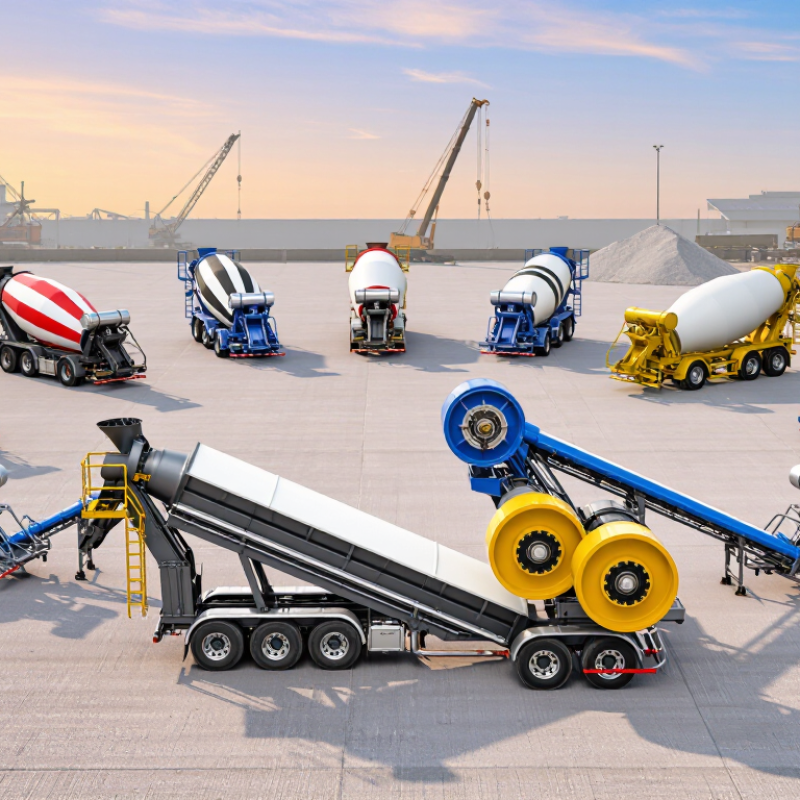
Understanding JS Concrete Mixers and Their Global Applications
JS concrete mixers are twin-shaft, compulsory mixing machines designed for consistent concrete production. Two horizontal shafts rotate with overlapping paddles inside a reinforced chamber. This action distributes cement, aggregates, water, and additives more evenly than many simple drum mixers. The result is usually a denser, more uniform batch.
Global buyers use JS mixers in precast yards, infrastructure projects, commercial buildings, and ready-mix plants. Their strong mixing performance suits dry, stiff, and fiber-reinforced concrete. In coastal regions, corrosion-resistant components can reduce maintenance problems. In cold climates, insulated water systems and protected control cabinets matter more. Local power standards also require careful checking before purchase.
Capacity is only one selection factor. Buyers should examine discharge time, liner material, paddle design, access doors, spare-part supply, and control-system compatibility. A practical factory inspection should include an empty-cycle test and a loaded mixing trial. Watch for unusual vibration, uneven discharge, or material buildup near the corners. Small details often expose larger weaknesses.
No mixer is perfect. Higher output can increase wear and energy use. Poor aggregate grading may still produce inconsistent concrete, even with advanced equipment. Operator training remains essential. Some buyers focus heavily on price and later discover costly delays caused by unavailable wear parts. A reliable supplier should provide clear technical data, realistic production figures, installation guidance, and responsive after-sales support.
Key Criteria for Evaluating Concrete Mixer Manufacturers
When comparing the Top 10 JS concrete mixer manufacturers for global buyers, verify performance beyond catalog capacity. The UNEP 2023 Global Status Report states that buildings and construction produced 37% of global energy and process-related emissions in 2022. Efficient equipment therefore matters. Ask for measured fuel use, mixing-cycle time, discharge consistency, and maintenance intervals under real workloads.
Compliance should be practical, not decorative. Check whether the mixer supports requirements linked to ASTM C94/C94M or EN 206, depending on the project market. Request factory test records, material certificates, welding procedures, and quality-control data. ISO 9001 certification can support process reliability, but it cannot replace independent performance testing. A polished brochure is not evidence.
After-sales capability often decides uptime. Review spare-parts availability, technician response times, remote diagnostics, warranty exclusions, and training arrangements. Compare total ownership cost, not only the purchase price. The World Bank’s Logistics Performance Index 2023 highlights how uneven logistics reliability can affect international supply chains, so local parts storage deserves serious attention. I still check references from contractors using similar aggregates and climates. One blind spot remains: published data may reflect ideal conditions, while dusty sites, cold starts, and overloaded drums expose the real weaknesses.
Top 10 JS Concrete Mixer Manufacturers for International Buyers
International buyers need more than a long manufacturer list when selecting a JS concrete mixer. They need dependable equipment, clear documentation, and support after delivery. A practical evaluation should examine mixing capacity, discharge speed, motor power, drum wear, and batch consistency. These details directly affect labor costs on busy construction sites.
Experienced manufacturers usually provide test records, dimensional drawings, spare-parts lists, and installation guidance. Ask whether the mixer suits local voltage, climate, aggregate size, and transport conditions. In coastal regions, corrosion protection matters. In remote areas, simple maintenance can be more valuable than advanced controls. Check welding quality, gearbox access, safety guards, and emergency-stop performance during a factory inspection.
International buyers should also review export experience, packaging methods, loading plans, and warranty terms. Reliable suppliers explain what the warranty covers and how quickly replacement parts can arrive. Independent inspections can verify materials, electrical components, and trial operation before shipment. Certification should match the destination market, not merely appear in a sales brochure.
No manufacturer performs perfectly in every category. A low price may hide weaker support or higher installation costs. Even a detailed checklist can miss communication problems. I would request references from projects with similar capacity and working conditions. Then compare real operating feedback, not polished photographs. Small details often decide whether a mixer remains productive after several demanding seasons.
Top 10 JS Concrete Mixer Manufacturers for International Buyers
This chart compares ten commonly published JS twin-shaft concrete mixer capacity classes by approximate nominal production output. Actual performance depends on material composition, moisture content, loading efficiency, mixing cycle, and site conditions. The figures are presented without company or brand names to support neutral comparison for global buyers.
Comparing Product Range, Technology, Quality, and Export Capabilities
A credible Top 10 comparison should examine more than drum capacity and painted steel. MarketsandMarkets estimates that the global concrete equipment market will expand steadily through 2028, driven by urban construction and infrastructure renewal. Product range matters because contractors may need compact mixers for narrow sites, truck-mounted units for high-volume pours, and electric models for enclosed projects. A wide range can reduce fleet gaps. It can also complicate spare-parts management.
Technology separates practical equipment from attractive brochures. Automatic weighing, moisture sensors, remote diagnostics, and variable-speed drives can improve mix consistency. The International Energy Agency reports that cement production causes about 7% of global carbon dioxide emissions. Therefore, fuel efficiency and lower idle time deserve serious attention. Battery-powered operation looks promising, but charging access and working hours remain real limitations.
Quality evidence should include factory testing, weld inspection, drum wear data, and documented service intervals. ISO 9001 certification supports process control, but it does not guarantee field performance. Buyers should request independent test records and references from similar climates. Export capability involves more than shipping. It includes multilingual manuals, stable replacement-part supply, corrosion protection, and technicians who understand local standards. UN Comtrade data shows machinery trade is highly dependent on regional logistics and tariff conditions, so delivery promises need written verification. Some comparisons still overvalue price. That is a mistake. Total ownership cost often appears only after the first major repair.
| Rank | Manufacturer Profile | Typical Product Range | Nominal Drum Capacity | Core Technology and Configuration | Quality and Compliance Indicators | Export Capabilities | Typical Buyer Fit |
|---|---|---|---|---|---|---|---|
| 1 | Profile 01 ★★★★★ | Self-loading Truck-mounted Stationary | 0.35–4.0 m³ per batch | Hydraulic loading system, four-wheel drive options, electronically controlled water dosing, and compact chassis layouts for difficult sites. | Welded steel drum; replaceable mixing blades; documented load, hydraulic, and electrical testing available. | Commonly supplied as complete machines or semi-knocked-down units; spare-parts packages and multilingual manuals are normally available. | Remote construction sites, infrastructure projects, rental fleets, and contractors needing on-site batching. |
| 2 | Profile 02 ★★★★★ | Twin-shaft Planetary Pan mixers | 0.5–4.5 m³ per batch | High-intensity forced mixing, abrasion-resistant liners, automated recipe control, and separate aggregate, cement, water, and admixture dosing. | Suitable for precast and high-consistency concrete; wear parts are designed for scheduled replacement and inspection. | Strong fit for containerized plant shipments, turnkey batching systems, commissioning support, and remote technical assistance. | Precast yards, block plants, ready-mix stations, and projects requiring consistent mix uniformity. |
| 3 | Profile 03 ★★★★☆ | Drum mixers Reversible mixers Mini mixers | 0.12–1.5 m³ per batch | Tilting or reversible drum designs, geared drive systems, mechanical or hydraulic discharge, and compact electric or diesel power options. | Simple mechanical architecture supports easy maintenance; drum guards and emergency-stop provisions can be specified for safer operation. | Well suited to palletized shipment and mixed-container loading; replacement components are generally easy to package and transport. | Small contractors, housing projects, agricultural construction, and markets with limited service infrastructure. |
| 4 | Profile 04 ★★★★☆ | Transit mixers Trailer mixers Agitators | 2.0–12.0 m³ per load | Hydraulic drum drive, variable-speed rotation, reinforced mounting frame, water tank integration, and optional washout systems. | Chassis and drum balancing are key inspection points; anti-corrosion coating and weld-quality records may be supplied by configuration. | Available for multiple truck chassis interfaces; export orders commonly require local vehicle-registration and road-compliance checks. | Ready-mix suppliers, urban projects, highway construction, and concrete-delivery operations. |
| 5 | Profile 05 ★★★★☆ | Mobile batching plants Site mixers Silos | 15–60 m³ per hour | Towable or modular plant arrangement, aggregate bins, belt or skip charging, automated weighing, and PLC-based process control. | Load-cell calibration, control-panel testing, and factory trial operation are important acceptance checks before shipment. | Designed for rapid installation; overseas supply often includes layout drawings, foundation guidance, commissioning, and operator training. | Developing markets, temporary infrastructure projects, and contractors moving plants between sites. |
| 6 | Profile 06 ★★★★☆ | Electric mixers Diesel mixers Portable units | 0.18–2.0 m³ per batch | Single-phase or three-phase motors, belt or gearbox transmission, optional diesel engine packages, and manual or hydraulic tipping. | Motor protection, gearbox alignment, frame rigidity, and drum-wall thickness should be checked against the purchase specification. | Flexible power configurations support different electrical standards; crating, spare belts, seals, and wear components are commonly offered. | General building contractors, islands, rural projects, and locations with inconsistent power availability. |
| 7 | Profile 07 ★★★★☆ | Planetary mixers Vertical-shaft mixers Fiber mixers | 0.25–3.0 m³ per batch | Multiple mixing tools, short mixing cycles, high shear action, optional moisture probes, and configurations for dry, stiff, or fiber-reinforced concrete. | Replaceable wear liners and mixing tools reduce lifecycle downtime; suitability should be validated with representative trial mixes. | Often supplied for specialized production lines with technical drawings, electrical documentation, and remote commissioning assistance. | Precast products, paving blocks, dry-cast products, and applications requiring high mixing intensity. |
| 8 | Profile 08 ★★★☆☆ | Small drum mixers Hoist mixers Site equipment | 0.08–0.75 m³ per batch | Compact drum, hoist or wheelbarrow loading, direct-drive or belt transmission, and manual discharge for low-volume work. | Value-focused construction; buyers should verify guarding, electrical protection, drum balance, and availability of replacement components. | Low shipping volume and straightforward assembly make these units suitable for distributor-led export channels. | Small building works, repair projects, farms, workshops, and first-time equipment buyers. |
| 9 | Profile 09 ★★★☆☆ | Recycling mixers Slurry mixers Washout systems | 0.5–3.0 m³ per batch | Reclaim-water circulation, settling or agitation tanks, sludge-handling pumps, and integrated washout management for concrete-return processing. | Corrosion protection, pump compatibility, tank sealing, and environmental operating requirements should be confirmed for each application. | Usually delivered as modular equipment; installation requirements and local wastewater regulations must be reviewed before ordering. | Ready-mix plants, precast facilities, and operations seeking to reduce concrete waste and washout discharge. |
| 10 | Profile 10 ★★★☆☆ | Custom mixers OEM assemblies Replacement drums | 0.3–10.0 m³ per batch or load | Application-specific drum geometry, customized discharge height, selectable hydraulic or electric drive, and integration with customer-supplied chassis or plants. | Performance depends on the approved engineering drawing, material specification, acceptance test, and documented dimensional inspection. | Suitable for private-label or project-specific orders; requires clear technical specifications, Incoterms, packaging plans, and after-sales arrangements. | Engineering contractors, distributors, replacement-equipment buyers, and projects with non-standard space or power requirements. |
Comparison basis: commonly available product configurations, capacity bands, engineering features, quality-control practices, and international supply arrangements in the global concrete-mixer market. Actual specifications, certifications, delivery terms, and after-sales coverage should be verified against the supplier’s current technical documents and quotation.
How to Select the Right JS Concrete Mixer Supplier for Your Project
Choosing a JS concrete mixer supplier requires more than comparing advertised capacity. The Global Cement and Concrete Association reports that roughly 14 billion cubic metres of concrete are produced worldwide each year. This scale makes reliability, not just purchase price, a serious project issue. Ask suppliers for verified batch output, mixing uniformity data, cycle times, and test records. A supplier should explain shaft torque, liner thickness, discharge design, and motor protection in practical terms. Vague answers are warning signs.
Your project conditions must guide the specification. Check aggregate size, moisture variation, required slump, daily production, and available electrical power. A twin-shaft mixer may suit demanding commercial production, but its performance depends on correct loading and maintenance. Request references from projects using similar materials and climates. Review spare-parts availability, technician response time, installation support, and operator training. ISO 9001 certification can support process confidence, but it cannot replace factory inspection or field evidence. Brochures often look perfect. Real operations are less tidy.
Tips: Require a witnessed trial using your actual mix design. Compare discharge residue, mixing time, noise, and cleaning access. Read the warranty exclusions carefully. Also calculate total ownership cost over five years, including liners, blades, electricity, downtime, and freight. I would not select the cheapest offer automatically. That choice can become expensive when one worn part stops the entire batching line.

