
China Top 10 Vacuum Seal Bags Manufacturers?

Choosing reliable vacuum seal bags manufacturers in China requires more than comparing prices. Material quality, sealing performance, production controls, and service consistency all affect the final result. A bag may look strong on a sample table, yet fail when exposed to sharp food edges, freezing temperatures, or repeated handling. Small details matter.

This guide introduces ten notable Chinese manufacturers and examines their practical strengths. The review considers multilayer film structures, oxygen and moisture barriers, seal integrity, thickness options, and food-contact documentation. It also looks at factory experience, quality inspection, export capability, customization, minimum order quantities, and delivery communication. These factors help buyers compare suppliers with clearer expectations.

Real manufacturing experience remains important. A capable supplier should explain resin selection, printing limits, storage conditions, and testing methods without hiding behind vague claims. Buyers should request samples and test them with their own sealing equipment. No supplier is perfect.

Some manufacturers may excel in retail packaging, while others serve industrial, catering, or home-use markets. A low quotation can conceal weaker film, inconsistent dimensions, or limited after-sales support. Certifications also deserve careful checking because documents must match the actual factory and product range. This introduction is not a final verdict. It is a practical starting point for evaluating China’s top 10 vacuum seal bags manufacturers through evidence, communication, and measurable performance.
China Top 10 Vacuum Seal Bags Manufacturers?

What Are Vacuum Seal Bags and How Are They Used?

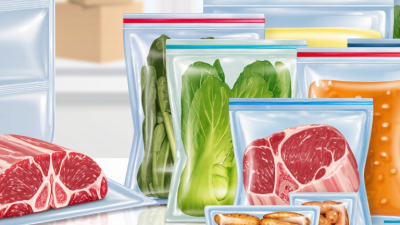
Vacuum seal bags are multilayer plastic pouches designed to remove air around stored items. A heat-sealed edge closes the package after a vacuum machine extracts most oxygen. Less air means less oxidation, fewer freezer-burn crystals, and a tighter, cleaner shape. They are not magic.

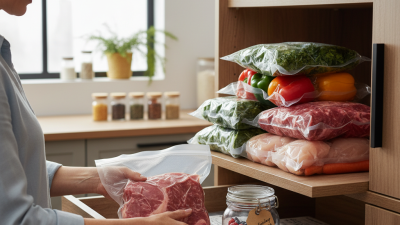
In kitchen use, people seal meat, fish, vegetables, cheese, coffee, and prepared meals before refrigeration or freezing. The bag should match the machine, product temperature, and storage period. Leave enough space above the food so the seal can form evenly. Wipe the opening dry. For sous vide cooking, use bags rated for the intended temperature and follow tested food-safety procedures. Vacuum packing does not make perishable food shelf-stable; refrigeration remains essential.

From practical packing checks, smooth contents and careful alignment prevent many leaks. Bones, shells, and hard corners may puncture the film, so protective wrapping can help. Inspect every seam before storing, especially when liquid approaches the sealing area. A weak seal is easy to miss. I have found that removing too much air can crush soft fruit or delicate pastries. That limitation matters when choosing vacuum storage over ordinary containers. Use labels with dates and contents, and discard packages showing swelling, unusual odors, or damaged seals.

Vacuum seal bags are multilayer plastic bags that remove air and create an airtight seal. They are commonly used to reduce freezer burn, organize food, and preserve product quality. Vacuum sealing does not replace refrigeration or freezing, so perishable foods must still follow safe storage limits.

Source: USDA Food Safety and Inspection Service refrigerator storage guidance. Vacuum-sealed perishable foods require continuous refrigeration or freezing.

Key Criteria for Ranking Chinese Vacuum Seal Bag Manufacturers

China Top 10 Vacuum Seal Bags Manufacturers?

Ranking China’s top ten vacuum seal bag manufacturers requires more than comparing prices. Grand View Research valued the global vacuum packaging market at about US$29.6 billion in 2023. It forecasts roughly 5.8% annual growth through 2030. Smithers also expects the wider flexible packaging market to exceed US$300 billion by 2028. These figures suggest strong demand, but demand alone cannot prove factory capability.

Material performance should carry heavy weight. Check oxygen transmission, moisture resistance, puncture strength, and seal consistency. Request test reports, not attractive samples. ASTM F88 seal-strength testing and ASTM D3078 leak testing provide useful evidence. Food-contact compliance, ISO 9001 systems, and batch traceability should also affect the score. A reliable supplier can identify the resin lot, production date, and inspection record within minutes. That detail matters.

Manufacturing experience needs practical verification. Review film extrusion, printing, lamination, and bag-making capacity separately. Ask for defect rates, corrective-action records, and retained samples from recent orders. Energy use and material reduction deserve attention, too. Smithers identifies lightweighting and recyclable structures as major flexible-packaging directions. Still, a thinner bag is not automatically better. It may fail during transport. My ranking would combine test data, audit results, delivery history, customization skill, and transparent communication. It may still be imperfect. Supplier claims can change after scale production begins. On-site audits remain valuable.

China Top 10 Vacuum Seal Bags Manufacturers? – Key Criteria for Ranking Chinese Vacuum Seal Bag Manufacturers

No. Ranking Criterion Weight Industry Benchmark or Verification Point Recommended Evidence Scoring Focus
1 Food-Contact Compliance 20% Compliance with applicable requirements such as China GB 4806.7, U.S. FDA food-contact provisions, or EU Framework Regulation (EC) No. 1935/2004, depending on the target market. Current declarations of compliance, migration-test reports, material composition records, and third-party laboratory certificates. Legal compliance, report validity, and market coverage.
2 Material Structure and Barrier Performance 15% Use of suitable multilayer structures, commonly including polyethylene sealing layers with barrier layers such as PA or EVOH when higher oxygen or moisture protection is required. Technical data sheets showing thickness, oxygen transmission rate, water-vapor transmission rate, and layer structure. Barrier stability, material consistency, and suitability for the intended food.
3 Seal Strength and Leak Resistance 15% Consistent hermetic sealing under the specified temperature, pressure, dwell-time, and vacuum conditions. ASTM F88/F88M and ASTM D3078 are commonly used test references. Seal-strength test reports, bubble-emission or leak-test records, and production quality-control data. Seal integrity, repeatability, and resistance to channel leaks.
4 Quality Management System 12% A documented quality-management system, preferably supported by a valid ISO 9001 certification and traceable corrective-action procedures. Valid certificate, internal inspection procedures, batch records, nonconformance reports, and audit results. Process control, traceability, and corrective-action effectiveness.
5 Production Capacity and Equipment 10% Adequate film extrusion, printing, laminating, slitting, pouch-making, and vacuum-bag production capabilities for the required specification and volume. Factory audit, equipment list, production-flow records, capacity statement, and maintenance documentation. Capacity reliability, equipment condition, and scalability.
6 Customization Capability 8% Ability to provide custom dimensions, thicknesses, surface finishes, printing, embossed channels, rounded corners, and formats compatible with common vacuum sealers. Approved samples, technical drawings, color-control records, and documented tooling capabilities. Design flexibility, dimensional accuracy, and sample consistency.
7 Production Hygiene and Contamination Control 7% Controlled manufacturing areas, documented cleaning procedures, personnel hygiene rules, pest control, and foreign-material prevention suitable for food packaging. Hygiene audit records, environmental monitoring, cleaning logs, and food-packaging safety procedures. Cleanliness, contamination prevention, and audit performance.
8 Order Flexibility and Minimum Order Quantity 5% Practical minimum order quantities, manageable artwork or tooling requirements, and clear procedures for samples and trial orders. Official quotations, sample-order terms, tooling schedules, and written production conditions. Suitability for both trial orders and recurring procurement.
9 Delivery and Supply-Chain Reliability 5% Documented production planning, raw-material control, export experience, packaging protection, and shipment tracking procedures. On-time delivery records, supply-chain procedures, export documentation, and customer-reference checks. Delivery consistency, communication, and continuity of supply.
10 Technical Support and Total Cost 3% Transparent pricing that considers material grade, thickness, printing, tooling, testing, packaging, freight, and waste rather than unit price alone. Detailed quotation, technical support records, warranty terms, complaint response process, and cost breakdown. Value for money, responsiveness, and after-sales support.
Total Evaluation Weight 100% Manufacturers should be ranked only after document review, sample testing, and verification of production capability.

China’s Top 10 Vacuum Seal Bag Manufacturers

China’s Top 10 Vacuum Seal Bag Manufacturers

China’s vacuum seal bag sector is expanding with global demand for longer shelf life and reduced food waste. Grand View Research reported that the global vacuum packaging market reached about USD 29.39 billion in 2023. It also expects steady growth through 2030. Mordor Intelligence estimated a market value of roughly USD 32.91 billion in 2024. These figures explain why Chinese manufacturers continue investing in high-barrier films, automated pouch making, and export-quality testing.

A useful top-ten evaluation should examine more than production volume. The strongest manufacturers usually offer multilayer PA/PE structures, stable seal strength, and consistent film thickness. Some factories also provide embossed bags, smooth bags, rolls, and custom dimensions. Practical testing matters. ASTM F88 supports seal-strength testing, while ASTM F1929 helps identify channel leaks in flexible packaging. Food-contact documentation, batch traceability, and migration reports should be checked before purchasing.

Factory visits often reveal important details. Clean storage rooms, calibrated seal testers, and well-controlled temperature settings indicate better process discipline.

Yet rankings can mislead. Public production data is uneven, and some manufacturers publish impressive capacity figures without showing defect rates. Buyers should request recent inspection records, sample aging results, and shipment references. A lower price may hide weaker seals or inconsistent thickness. That risk deserves attention.

Product Types and Industries Served by Leading Manufacturers

China’s leading vacuum seal bag manufacturers produce several formats for different packing conditions. Embossed bags work well with home and small commercial vacuum machines. Smooth pouches suit chamber machines and faster production lines. Manufacturers also supply rolls, flat bags, gusseted bags, shrink bags, and heavy-duty pouches. Each type uses a different balance of film thickness, flexibility, puncture resistance, and sealing performance.

Food processors commonly use these bags for beef, poultry, seafood, cheese, vegetables, and prepared meals. Seafood packers often need stronger films because shells and bones can damage weak packaging. Meat processors may prefer shrinkable structures that fit closely around irregular cuts. Agricultural businesses use vacuum bags for seeds, dried foods, and specialty produce. Some industrial companies protect metal parts, tools, and moisture-sensitive components during storage and transport. Medical and laboratory applications require stricter material control, documented cleanliness, and destination-specific compliance.

Reliable manufacturers normally verify seal strength, oxygen transmission, puncture resistance, and material consistency. They should provide batch records, technical data, and test reports from qualified laboratories. Food-contact applications also need appropriate migration testing and regulatory documentation. A practical buyer should test bags on the actual machine, product, and storage cycle. No single bag fits every line. A thicker film may improve durability but increase cost and waste. That trade-off deserves honest review. Even experienced suppliers can miss a problem when testing uses clean, dry products only. Real production is messier. Wet surfaces, sharp edges, and uneven sealing temperatures can change the result.

How to Choose the Right Chinese Vacuum Seal Bag Supplier

China Top 10 Vacuum Seal Bags Manufacturers?

Choosing the right Chinese vacuum seal bag supplier requires more than comparing prices. Start with the bag’s intended use, thickness, seal strength, and barrier performance. Ask for clear material specifications, including nylon, polyethylene, or multilayer structures. Reliable manufacturers should provide sample bags and test data. Check whether the samples match the final production version.

Factory experience matters. Review production equipment, quality-control procedures, and traceability records. A capable supplier should explain how they inspect seal width, puncture resistance, odor, and dimensional accuracy. Confirm minimum order quantities, lead times, payment terms, and export packaging before signing an agreement. Video inspections can help, but an independent factory audit offers stronger evidence. No supplier is perfect, and communication can still fail after approval.

Tips: Request three sample sizes and test them with your own sealing machine. Leave filled bags for several days, then inspect leaks, wrinkles, and seal separation. Ask for a written replacement policy. Do not rely on polished photos alone. A low quotation may hide thinner film, slower production, or weaker support. I would rather pay slightly more for stable quality than repeat an entire shipment, although this judgment should be supported by test results. Choose a supplier that answers technical questions directly and records every agreed detail.