

Blog
China Top 10 Milling Machinery Manufacturers
China’s Milling Machinery sector has moved far beyond low-cost production. Today, manufacturers compete through spindle stability, control integration, process consistency, and after-sales support. The best machines must perform reliably, not only look impressive in a showroom.
This guide, “China Top 10 Milling Machinery Manufacturers,” examines companies supplying vertical mills, horizontal machining centers, CNC milling systems, and customized production lines. It considers practical evidence, including machine structure, spindle speed, positioning accuracy, thermal control, software compatibility, and service response. A clean factory floor is useful, but it does not prove long-term performance. Test-cut records matter more.
Professor Yusuf Altintas, a leading authority in machining dynamics, has stated, “Machining is a science as well as an art.” That idea remains important when evaluating Milling Machinery. A rigid cast-iron bed may reduce vibration, while a strong controller can improve toolpath accuracy. However, neither feature guarantees excellent parts without skilled programming and maintenance.
The companies discussed here are assessed through technical capability, industry experience, product range, certifications, and customer support. Where public information is limited, that limitation deserves attention. Supplier claims can sound precise, yet real results depend on material, tooling, operators, and factory conditions.
Some rankings may still be debatable. That is acceptable. A manufacturer serving aerospace components may not suit a small workshop producing aluminum parts. Readers should compare machine samples, service terms, delivery records, and total ownership costs before choosing a supplier. Small details often decide the outcome.
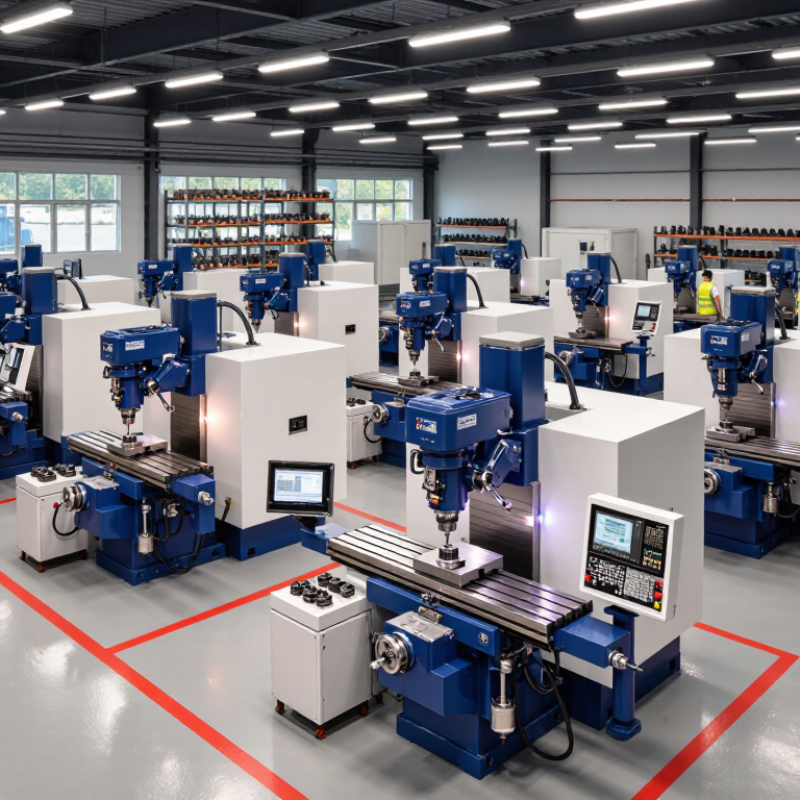
Scope of China’s Milling Machinery Manufacturing Industry
China’s milling machinery manufacturing industry extends well beyond stand-alone milling machines. It includes CNC machining centers, vertical and horizontal mills, spindles, control systems, cutting tools, software, and maintenance services. The National Bureau of Statistics reported that China’s manufacturing value added reached about RMB 33.5 trillion in 2023. This industrial base creates strong demand for accurate metal-cutting equipment.
Automation is expanding the market. The International Federation of Robotics reported 276,288 industrial robot installations in China during 2023, representing 51% of global installations. Many milling lines now combine robotic loading, tool monitoring, and digital production records. Demand comes from automotive components, aerospace parts, energy equipment, medical devices, and general engineering. Production is concentrated in major industrial regions, while smaller workshops increasingly seek compact five-axis equipment.
China’s supply chain is broad, but quality remains uneven. The China Machine Tool Industry Association has repeatedly identified precision, reliability, and high-end control technology as important development areas. That point deserves attention. A low purchase price may hide higher calibration and maintenance costs. Export opportunities are growing, yet certification, technical support, and local service can determine long-term performance. Industry forecasts often show steady CNC market expansion, but their methods differ. Therefore, reported market values should be compared carefully before investment decisions.
How to Evaluate Chinese Milling Machinery Manufacturers
China Top 10 Milling Machinery Manufacturers
Evaluating Chinese milling machinery manufacturers requires more than comparing catalog prices. Request a live cutting test using your actual material and tooling. Check dimensional accuracy, surface finish, spindle runout, and cycle time. Numbers matter. Ask for inspection records, calibration dates, and sample workpieces measured with traceable instruments.
A reliable manufacturer should explain machine structure, controller options, thermal control, and maintenance intervals clearly. Visit the production site when possible. Observe assembly cleanliness, wiring quality, component storage, and final testing procedures. A polished showroom proves little. Speak with recent customers about delivery accuracy, training, spare-part response, and problems after installation. Do not rush.
Review technical drawings carefully before signing any specification. Confirm working envelope, axis travel, spindle power, positioning accuracy, repeatability, and electrical standards for your facility. Request a written acceptance protocol with measurable tolerances. Export experience also matters, but it should be supported by documentation, not confident language. An independent factory audit can reveal gaps that brochures hide. I would also test communication during a minor technical question; delayed or vague replies may become expensive later. No evaluation is perfect. Even experienced buyers can overvalue a low quotation and underestimate commissioning time. Keep a risk register, compare evidence, and leave room for unexpected training or tooling adjustments.
China’s Top 10 Milling Machinery Manufacturers
China’s top 10 milling machinery manufacturers should be assessed through measurable capability, not advertising reach. A practical review examines machining accuracy, spindle stability, automation, export experience, and after-sales response. CMTBA’s 2023 industry statistics reported a 1.8% year-on-year decline in operating revenue among key machine-tool enterprises. That pressure makes engineering efficiency more important than factory size.
CNC integration remains a central benchmark. The China Machine Tool Industry Association has repeatedly identified numerical-control equipment as a major direction for industrial upgrading. Export records also show China remains a significant supplier of metalworking machinery worldwide, according to UN Comtrade trade data. The strongest manufacturers typically provide five-axis optionspallet systemsthermal compensationremote diagnostics. These features matter on shop floors where a few microns affect rejection rates.
No ranking is perfect. A smaller producer may deliver better service for a specific alloy or production volume. I would verify test-cut results, positioning accuracy, and delivery records before accepting any top-ten claim. Buyers should request machine samples, maintenance schedules, and documented quality procedures. ISO 9001 certification helps, but it does not replace factory inspection. Real performance appears during long cutting cycles, not showroom demonstrations.
Key Products and Technologies in Milling Machinery
China Top 10 Milling Machinery Manufacturers
China’s leading milling machinery manufacturers supply vertical machining centers, horizontal mills, gantry systems, and compact CNC units. These machines serve automotive, aerospace, mold-making, medical, and general engineering applications. Buyers should match machine structure with material, part size, tolerance, and production volume.
Key technologies include three-axis and five-axis interpolation, high-speed spindles, automatic tool changers, probing systems, and linear guideways. Five-axis equipment reduces repositioning and can improve access to curved surfaces. High-rigidity castings help control vibration during heavy cutting. Ceramic bearings and balanced spindles support faster operation, but speed alone does not guarantee better results.
Smart functions matter too. Load monitoring can detect tool wear before surface quality declines. In-process probing checks dimensions without removing the workpiece. Digital production records also improve traceability and maintenance planning. Good machines need more than impressive specifications. They need stable software, accessible components, accurate calibration, and responsive technical support.
Small details decide performance.
During machine evaluation, I would inspect chip evacuation, coolant delivery, guarding, and actual test cuts. A brochure may show excellent accuracy, yet installation quality can change outcomes. Floor stability, temperature control, operator training, and tool selection remain important. This is where some comparisons become incomplete. Manufacturers should publish repeatability data, energy performance, service response times, and long-term maintenance requirements.
Market Trends and Selection Considerations
China Top 10 Milling Machinery Manufacturers: Market Trends and Selection Considerations
China’s milling machinery market is moving toward automation, tighter tolerances, and connected production. The International Federation of Robotics reported 276,288 industrial robots installed in China during 2023. That figure represented over half of global installations. Demand is therefore shifting beyond basic cutting capacity. Buyers increasingly assess spindle stability, tool-change speed, thermal compensation, and software compatibility. Grand View Research estimates the broader global machine tools market will expand steadily through 2030, with digital monitoring supporting this growth. However, market forecasts combine several machine categories. They should not replace a factory-level evaluation.
A practical selection process starts with the workpiece. Check material hardness, maximum dimensions, required surface finish, and daily cycle time. Request test cuts using your own drawings and tooling. Measure accuracy under realistic temperatures, not only in a showroom. ISO 230-2 testing can help verify positioning performance. Service response also matters. A low purchase price becomes less attractive when one unavailable spindle delays production for a week. I have seen specifications look excellent, yet poor chip evacuation created repeated stoppages. That risk deserves more attention.
Tips:
Compare three-year ownership costs, including electricity, tooling, maintenance, training, and downtime. Ask for documented acceptance-test results. Confirm local spare-parts coverage and operator training. Do not choose solely by maximum spindle speed. In many workshops, rigidity and repeatability deliver better value. Be careful with optimistic energy-saving claims; request measured data from comparable cutting conditions.

