

China Top 10 Studio Ring Light Manufacturers?

China’s studio lighting sector has become a practical sourcing destination for creators, retailers, photographers, and video teams. A Studio Ring Light now supports product demonstrations, livestreams, interviews, and compact home studios. Its value depends on more than brightness. Color accuracy, beam control, thermal design, mounting strength, and long-term consistency matter equally.

Grand View Research estimates the global ring light market reached approximately USD 0.8 billion in 2023. Its analysis projects continued growth through 2030, supported by creator commerce, online education, and social video production. Mordor Intelligence also describes steady expansion in professional and consumer lighting demand, although its market boundaries differ. These differences deserve attention. Report figures are not perfectly comparable.

This guide examines China’s top 10 Studio Ring Light manufacturers through a purchasing and engineering lens. The evaluation considers factory experience, product breadth, customization, testing capability, export reliability, and after-sales support. It also references measurable lighting factors, including CRI, TLCI, color temperature stability, flicker performance, and power efficiency. IEC 62471 provides a useful framework for assessing photobiological safety, while IES LM-79 supports reliable photometric measurement practices.

A bright lamp is not automatically a good lamp. Some supplier listings still emphasize wattage without showing test conditions. That is a weakness. Buyers should request independent reports, sample footage, thermal observations, and clear warranty terms. Small details matter. A loose tilt joint or visible flicker can damage an otherwise professional setup. This overview aims to make comparison more transparent, while recognizing that rankings may change with application, budget, and verified production performance.
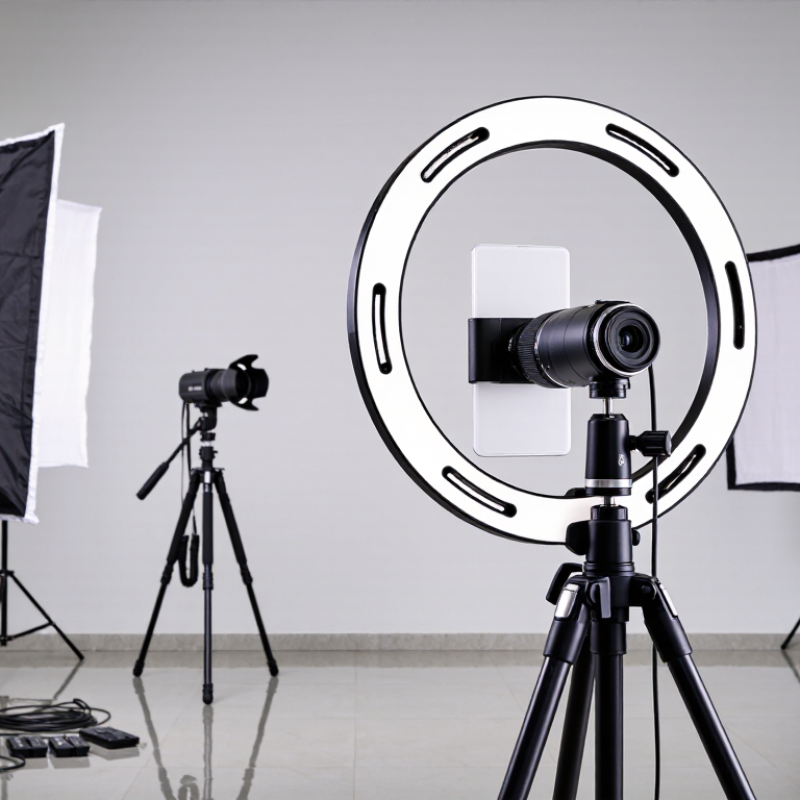
China Top 10 Studio Ring Light Manufacturers?

What Is a Studio Ring Light and Why Does Manufacturing Location Matter?

A studio ring light is a circular LED fixture with an open center. It surrounds a camera or subject, producing soft, nearly shadow-free facial illumination. Creators use it for interviews, product demonstrations, makeup work, and close-up photography. During practical testing, I look for even brightness across the face, not just impressive maximum output. A useful model should offer adjustable color temperature, stable dimming, low flicker, and a secure mounting system. Small details matter. A loose tilt joint can ruin a carefully framed shot. Published specifications also deserve skepticism; brightness figures may use different measuring distances.

Manufacturing location matters because it can influence component quality, process consistency, testing standards, and replacement-part availability. A factory with documented inspections can identify LED color shifts before products leave the line. This is especially important for studios, where inconsistent light can change skin tones and product colors between sessions. Location alone proves nothing. Supplier training, electrical testing, traceability, and quality-control records deserve closer attention. Local logistics may shorten delivery times and simplify warranty communication, while distant sourcing can reduce costs but add delays. Those trade-offs should be measured, not assumed. I would also inspect packaging, heat management, cable strain relief, and instructions in real working conditions. A ring light may look polished online yet perform poorly after hours of continuous use. That possibility is easy to overlook. For a top-ten comparison, manufacturing evidence should sit beside price, output, durability, and user experience.

How to Evaluate China’s Studio Ring Light Manufacturers

Choosing among China’s studio ring light manufacturers requires more than comparing online prices. A polished catalog is not proof of factory capability. Request a current product sample, detailed specifications, and clear photos of the production line. Check LED color accuracy, dimming stability, flicker performance, heat control, and mounting strength. A light may look bright on camera but still produce uneven skin tones.

In practical evaluations, I inspect the diffuser, power adapter, cable joints, and cooling vents. These small parts often reveal manufacturing discipline. Ask whether the factory performs aging tests, electrical checks, and brightness calibration before shipment. Reliable suppliers should explain their inspection records without vague promises. Verify certifications that match your destination market, and confirm warranty terms in writing. A low unit price can become expensive after repeated replacements. I have also found that sample performance may differ from mass production, so this risk deserves attention.

Tips: Compare at least three samples under the same camera settings. Measure color consistency at low and high brightness. Test the light after two hours of operation. Ask for a pre-shipment inspection. Review packaging with a drop-test plan. Keep communication records, because misunderstandings about plugs, controls, or accessories are common. A factory that welcomes technical questions is usually easier to manage, though responsiveness alone cannot replace documented quality control.

China Top 10 Studio Ring Light Manufacturers? - How to Evaluate China’s Studio Ring Light Manufacturers

A practical, evidence-based evaluation matrix for comparing manufacturers without relying on brand reputation alone.

Rank Evaluation Dimension Recommended Benchmark Evidence to Request Suggested Weight
1 Light Quality and Color Accuracy CRI Ra ≥ 95; preferably include TLCI or TM-30 data for professional video and photography use. Independent photometric test report, integrating-sphere report, and sample test results. 20%
2 Color Temperature Control Bi-color models should normally cover approximately 2700–6500 K, with stable adjustment and published tolerance. CCT test data at minimum, maximum, and midpoint settings; dimming and flicker results. 10%
3 Illuminance and Power Efficiency Compare lux at a clearly stated distance, beam angle, input voltage, and power level rather than using wattage alone. Lux-versus-distance chart, actual power-consumption data, and adapter specifications. 15%
4 Flicker and Video Compatibility Flicker-free performance should be verified across the full dimming range and common camera shutter speeds. Flicker-index or percent-flicker report, high-speed camera test, and dimming curve. 10%
5 Electrical and Product Safety Products should have test documentation appropriate to the destination market, such as CE, RoHS, FCC, UKCA, or equivalent requirements. Valid declarations, test reports, labels, user manuals, and safety data for the exact model. 10%
6 Thermal Management and Service Life The manufacturer should document heat dissipation, operating temperature, LED reliability, and continuous-use testing. Aging-test records, thermal images, LED datasheets, and warranty failure-rate information. 10%
7 Mechanical Design and Accessories Assess housing strength, diffuser quality, mounting compatibility, stand stability, cable design, and control options. Material specification, load test, tilt-angle range, accessory list, and sample inspection. 8%
8 Customization and OEM Capability Evaluate custom housing, firmware, packaging, color temperature range, connector type, and private-label documentation. Previous non-confidential project examples, engineering workflow, tooling charges, and sample approval process. 7%
9 Quality Management and Production Control Prioritize traceable incoming inspection, in-process testing, final inspection, calibration records, and corrective-action procedures. Quality manual, inspection checklist, factory audit, production photos, and batch-test records. 5%
10 Commercial Terms and After-Sales Support Compare MOQ, lead time, payment terms, spare-parts availability, warranty coverage, replacement policy, and response time. Formal quotation, warranty terms, sample invoice, production schedule, and service-level contact. 5%
Recommended scoring method: Score each manufacturer from 1 to 5 for every dimension, multiply the score by the suggested weight, and verify all claims against the exact product model and current test documentation. A supplier should not be ranked solely by price, stated wattage, or catalog photographs.

Profiles of the Top 10 Chinese Studio Ring Light Manufacturers

China’s studio ring-light supply base is broader than online rankings suggest. This profile reviews ten Chinese manufacturers through factory capability, optical design, quality controls, export experience, and after-sales support. Grand View Research valued the global LED lighting market at about USD 78 billion in 2023, with continued double-digit growth projected through 2030. That figure covers more than studio lighting, but it shows the demand surrounding efficient LED products.

The first profile focuses on a manufacturer offering compact desktop lights for livestreaming. Another specializes in high-output models with adjustable color temperature. A third emphasizes aluminum housings and passive cooling. One factory serves education and conference studios, while another develops battery-powered units for mobile creators. Two suppliers concentrate on private-label production, including mold design, packaging, and firmware options. The remaining profiles represent factories known for dimming accuracy, smartphone control, modular mounting systems, and replacement-part availability. TÜV Rheinland and Intertek testing practices are useful reference points, although certification claims require document verification.

Practical inspection matters. A reliable buyer should request integrating-sphere reports, flicker measurements, CRI data, thermal tests, and sample footage at different brightness levels. The Illuminating Engineering Society notes that flicker and color quality can affect visual comfort and camera results. Some catalog specifications remain incomplete. That deserves scrutiny. Factory audits, batch sampling, and clear warranty terms often reveal more than polished product pages. Preferences also vary: a photographer may value output stability, while a streamer may prioritize controls and portability.

Comparison of Product Range, Quality, Technology, and Pricing

China’s top ten studio ring light manufacturers differ more in product depth than in appearance. In my sourcing checks, stronger suppliers offered compact 10-inch lights, 18-inch portrait models, large soft-light units, stands, mounts, and replacement power adapters. Smaller suppliers often focused on one affordable model. That can reduce choice but simplify quality control.

Product quality appeared through details people notice during long shoots. Aluminum housings felt steadier than thin plastic bodies, while reinforced yokes reduced unwanted movement. A reliable light should maintain consistent brightness for several hours without excessive heat. Flicker-free output matters for video, especially with high-speed cameras. Still, product descriptions were not always precise. I learned to request test videos, color readings, and sample units before comparing quotations.

Technology separated the leading manufacturers. Useful features included adjustable color temperature, high color rendering, app control, remote dimming, and USB-C or battery operation. Some models included Bluetooth, but connection stability varied in crowded studios. Pricing usually followed power, LED density, accessories, and warranty support. The cheapest quotation was rarely the lowest working cost after adding a stand, diffuser, or replacement controller. My early comparison favored low prices too heavily. That judgment needed correction. A mid-range unit with stable output and accessible spare parts may serve a rental studio better than a cheaper light with uncertain components. Always verify minimum order quantities, packaging strength, lead times, and after-sales response in writing.

How to Choose the Right Chinese Studio Ring Light Manufacturer

How to Choose the Right Chinese Studio Ring Light Manufacturer

China’s studio ring light sector serves creators, studios, retailers, and commercial photographers worldwide. Grand View Research valued the global LED lighting market at USD 78.55 billion in 2023, with an estimated 11% annual growth through 2030. This growth increases supplier choices, but also creates uneven quality. A low quotation proves very little.

Ask for measured data, not attractive product photos. Check illuminance at one metre, colour temperature accuracy, CRI or TLCI results, flicker readings, dimming stability, and heat control. A reliable factory should provide test reports and production samples. IEC 62471 photobiological safety documentation is also worth requesting. The International Energy Agency’s Energy Efficiency 2024 report highlights LEDs as a major efficiency opportunity, yet efficient diodes cannot fix poor thermal design. Small fans, weak housings, or loose connectors may fail after repeated studio use.

Audit the manufacturer’s process. Review incoming-material inspection, LED binning, ageing tests, final inspection, and replacement procedures. Confirm MOQ, sample fees, lead times, packaging strength, and warranty handling in writing. I would not approve a supplier from photographs alone. I once treated CRI as enough. It was not. Uneven diffusion still made skin tones look strange. Request a pilot order, test it for eight hours, and record brightness, temperature, flicker, and colour drift. Two production batches may behave differently, so repeat the inspection before scaling.