

Blog
7 Tips for Choosing the Best Tyre Pyrolysis Machine?
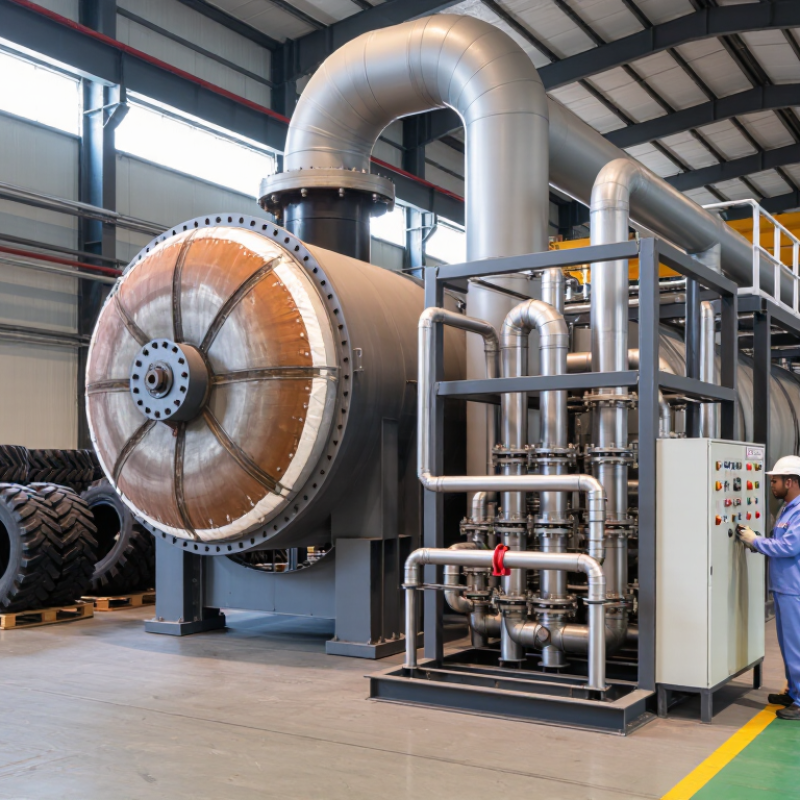
Choosing the right Tyre Pyrolysis Machine is not a simple price comparison. It is a technical decision involving feedstock quality, thermal control, product consistency, safety, and long-term maintenance. A machine may look impressive in a showroom, yet perform poorly with wet, steel-rich, or unevenly cut tyres. Real operating conditions matter more than polished photographs.
Dr. S. K. Sharma, a waste-to-energy researcher, offers a useful warning: “A machine is only as valuable as the quality and consistency of its output.” This principle should guide every purchase. Examine the reactor design, heating method, condenser efficiency, emission-control system, and automation level. Ask for verified production data, not broad promises. A practical inspection should include weld quality, insulation thickness, control-panel layout, and access to replacement parts.
Small details can become expensive problems. For example, weak seals may cause oil vapour leakage, while poor cooling can reduce oil recovery. Some buyers focus too heavily on capacity. That can be a mistake. Stable operation is often more valuable than an ambitious daily figure. The best Tyre Pyrolysis Machine should match your tyre supply, energy access, workforce, and local environmental requirements.
The following seven tips provide a realistic evaluation framework. They also leave room for doubt, because no machine is perfect. Ask difficult questions. Check references. Visit an operating plant when possible. A careful decision today can prevent years of avoidable repairs, inconsistent output, and disappointing returns.
Define Your Processing Goals and Required Capacity
Choosing the best tyre pyrolysis machine starts with a clear processing goal. Decide whether you need tyre volume reduction, fuel oil, recovered carbon material, or steel recovery. Each output requires different operating controls and downstream equipment. Do not treat every waste tyre as identical. Passenger tyres, truck tyres, moisture, and steel content can change production results.
Define capacity using real supply data, not an attractive brochure number. Record available tyres by month, then estimate daily feedstock and operating hours. A machine rated at 1.5 tonnes per hour may not process 24 tonnes in a 16-hour shift. Loading, heating, cooling, cleaning, and unexpected stoppages reduce effective capacity. My early estimates were too optimistic.
Leave practical room. A 10–20% capacity buffer can absorb seasonal changes and routine maintenance. Check whether the reactor accepts whole tyres or requires pre-cutting. Measure electricity, fuel, labour, and storage needs before comparing machines. The reactor is only one part of the system. Condensers, gas handling, cooling, emissions control, and residue management also affect output.
Request a documented test using tyres similar to your own feedstock. Review oil yield, carbon quality, steel cleanliness, energy use, and cycle time. Ask how operators monitor temperature and pressure during each stage. A reliable supplier should provide maintenance schedules, safety procedures, and verifiable test records. Small details matter. Record your assumptions, then challenge them before signing a purchase agreement.
7 Tips for Choosing the Best Tyre Pyrolysis Machine? – Define Your Processing Goals and Required Capacity
| Tip | Processing Goal | Typical Feedstock | Recommended Capacity | Suitable Machine Configuration | Key Selection Criteria |
|---|---|---|---|---|---|
| 1 | Start with a clearly defined output objective | End-of-life passenger-car and truck tyres | Small pilot: 5–10 tonnes per day | Batch reactor with basic oil, gas, and char collection | Confirm whether the priority is tyre volume reduction, recovered oil, recovered carbonaceous material, steel recovery, or fuel-gas utilization. |
| 2 | Match the reactor size to the available tyre supply | Mixed passenger-car tyres, commonly containing about 60–75% rubber and polymer material by mass, with steel and textile reinforcement | Commercial entry level: 10–20 tonnes per day | Batch or semi-continuous unit with mechanized feeding | Use a realistic operating schedule. A nominal 10-tonne-per-day rating may require multiple batches and does not equal 24-hour continuous output. |
| 3 | Plan for higher throughput when supply is stable | Large truck, off-road, or pre-shredded tyres | Medium scale: 20–50 tonnes per day | Multiple batch reactors or a continuous-feed system | Check feeding rate, heat-transfer performance, cooling time, loading method, unloading time, and planned annual operating hours. |
| 4 | Choose the right level of tyre preparation | Whole tyres, stripped tyres, or tyres cut into sections | Any capacity; preparation requirements increase with throughput | Whole-tyre batch system or pre-shredding line with continuous feeding | Whole tyres reduce preprocessing equipment but require more reactor space. Shredding improves feeding and heat transfer but adds power use, wear, and maintenance. |
| 5 | Define the desired product quality | Tyres with varying rubber composition, moisture, steel content, and textile content | Usually 10–50 tonnes per day, depending on market demand | Reactor plus oil condensation, gas cleaning, char discharge, and steel separation | Pyrolysis oil commonly requires filtration or further upgrading before use. Recovered carbonaceous material may require milling, pelletizing, or additional purification. |
| 6 | Evaluate energy and utility requirements | Dry tyres are generally preferred because moisture increases heating demand | Small to large commercial systems | Insulated reactor with heat-recovery and non-condensable-gas recirculation options | Review installed heating capacity, electricity demand, cooling-water or air-cooling needs, fuel consumption, gas-reuse controls, and emergency shutdown systems. |
| 7 | Verify environmental, safety, and maintenance requirements | All tyre types, including mixed and contaminated feedstock | Scale according to local permits and operating staff | Enclosed process line with condensers, gas treatment, dust control, pressure monitoring, and automated safety interlocks | Request emissions data, pressure-vessel documentation, fire protection, leak detection, maintenance intervals, spare-parts availability, operator training, and waste-handling procedures. |
Compare Reactor Designs, Heating Systems, and Energy Efficiency
Choosing a tyre pyrolysis machine starts with reactor design, not advertised capacity. WBCSD reported that more than one billion end-of-life tyres arise globally each year, increasing pressure on reliable recovery systems. A rotary kiln handles mixed tyre sizes well and tolerates feed variation. Fixed-bed reactors offer simpler operation but usually need smaller, more uniform chips. Auger reactors provide steady feeding, although their seals demand careful maintenance.
Heating design directly affects energy efficiency. Indirect heating keeps combustion gases away from the reactor and can produce cleaner process vapours. Direct heating may reduce equipment cost, but it can complicate temperature control. A 2021 review in Waste Management reported typical tyre pyrolysis yields of about 35–45% oil, 30–40% char, and 10–20% gas, depending on temperature and feed preparation. Reusing non-condensable gas can reduce external fuel demand. Still, insulation quality, heat recovery, and start-up losses often matter more than brochure figures.
USTMA’s 2023 End-of-Life Tire Report indicated that roughly 71% of recovered scrap tyres in the United States entered recognised end-use markets. That figure does not prove pyrolysis efficiency. It does show why output quality and traceability matter. Ask for measured fuel consumption per tonne, continuous temperature records, and data from comparable feedstock. I would not trust a perfect efficiency claim without a mass-and-energy balance. Real plants lose heat. They also need downtime.
Check Safety Features, Emission Controls, and Environmental Compliance
Choosing the best tyre pyrolysis machine requires more than comparing reactor capacity.
The U.S. EPA estimated about 290 million scrap tyres were generated annually in its 2019 market report. That volume increases the importance of controlled processing. Inspect pressure relief valves, automatic temperature interlocks, emergency shutdowns, and fixed gas detectors. Small details matter. Ask for documented testing, not attractive photographs.
Emission controls deserve equal attention. A reliable system should manage particulate matter, sulfur compounds, volatile organic compounds, and combustion gases. Depending on local permits, this may require condensers, scrubbers, filters, gas monitoring, and a properly engineered thermal oxidizer. The European Commission’s Best Available Techniques reference documents stress monitoring, maintenance, and recorded operating conditions for waste treatment facilities. However, pyrolysis equipment is not automatically compliant because it is marketed as “clean technology.”
Check whether the supplier provides stack-testing methods, calibration records, and an environmental management plan. The Basel Convention’s technical guidelines emphasize traceability and environmentally sound management for waste tyres. Confirm how pyrolysis oil, recovered carbon material, wastewater, and residues will be stored and tested.
Walk around the machine during inspection. Look for hot surfaces, awkward access points, exposed wiring, and unclear labels. I have found that impressive automation can hide weak maintenance planning.
A practical selection should include operator training, spare parts, alarm histories, and independent commissioning tests.
Compliance is a process, not a certificate.
Evaluate Product Quality, Automation, Maintenance, and Operating Costs
Choosing the best tyre pyrolysis machine requires more than comparing reactor prices. Product quality should be visible in welds, refractory lining, pressure gauges, temperature sensors, and documented factory testing. Ask for trial data using tyre feedstock similar to yours. A polished brochure is not evidence.
Automation affects both safety and consistency. Look for automatic temperature control, gas routing, alarm systems, emergency shutdowns, and clear data logging. These features can reduce manual errors, but excessive automation may complicate repairs. Keep controls understandable. During a site visit, observe how operators respond to a sensor fault or unstable temperature. That practical test often reveals more than a presentation.
Maintenance planning deserves equal attention. Check whether seals, valves, sensors, and filters are easy to inspect and replace. Request a spare-parts list, service schedule, warranty terms, and realistic response times. Operating costs include electricity, fuel, labor, cooling water, cleaning, and unexpected downtime. Calculate these costs over several years, not only during the first month. A low purchase price can become expensive when parts arrive slowly. I would also question optimistic output figures, because feedstock moisture and tyre composition can change results. The spreadsheet may still be wrong. Reliable suppliers should explain limitations clearly and provide independent inspection records where appropriate.
7 Tips for Choosing the Best Tyre Pyrolysis Machine
Recommended evaluation weight for product quality, automation, maintenance, and operating costs
Product quality receives the highest weight because reactor durability, sealing performance, and oil-condensation efficiency directly affect safety and output stability. Automation helps reduce labor and process variation, while maintenance and operating costs determine long-term availability and profitability. Use these percentages as a practical comparison framework when evaluating machines from different suppliers.
Verify Supplier Expertise, Certifications, Warranty, and Technical Support
Choosing the best tyre pyrolysis machine starts with supplier expertise, not a glossy capacity figure. Ask how many comparable installations are operating, where they are located, and what materials they process. Request commissioning records, maintenance logs, and customer references you can contact directly. A site visit helps. Look closely at feeding systems, reactor seals, condensers, control panels, and safety instruments. These details reveal engineering maturity better than polished sales language.
Certifications should match the machine, not merely the supplier’s office or another product. Check certificate numbers, issuing bodies, test scope, and validity dates with the original source. Ask whether the design follows applicable pressure, electrical, fire, and environmental requirements in your location. Paperwork can be incomplete. Treat that as a warning, not a minor inconvenience. The warranty should clearly cover the reactor, seals, sensors, electrical parts, and labor. Clarify exclusions, response times, spare-part availability, and shipping responsibilities.
Technical support matters after installation, when a temperature sensor fails or output quality changes unexpectedly. Require training, operating procedures, troubleshooting guides, remote diagnostics, and scheduled inspections. Speak with the proposed service engineer, not only a sales representative. Their answers should be specific. A realistic supplier will admit limits, such as reduced performance with wet or contaminated feedstock. Support must be reachable. Do not ignore small doubts. A lower purchase price may become expensive through downtime, unclear warranty terms, or delayed assistance. Record every promise in the contract, because memory is a poor maintenance system.

