

Blog
How to Choose the Right Side Tipper Truck in 2026?
Choosing the right Side Tipper Truck in 2026 requires more than comparing prices and advertised payloads. Quarry dust, wet clay, steep access roads, and repeated loading cycles can expose weaknesses quickly. A truck that looks efficient on a dealer’s yard may struggle after six months of harsh work.
Fleet engineer Ian Wright offers a practical reminder: “The best tipper is the one that matches the work, not the brochure.” This principle guides the decisions explored in this article. Buyers should examine payload, body volume, chassis strength, tipping stability, hydraulic performance, tyre configuration, and service access. Small details matter. A reinforced floor can reduce damage when loading sharp aggregate. A fast hydraulic cycle can shorten waiting time at busy construction sites.
The operating route matters too. A Side Tipper Truck used on smooth highways needs different specifications from one working on uneven mine roads. Consider axle limits, turning space, ground clearance, driver visibility, and local maintenance support. Fuel use deserves attention. So does resale value.
There is no perfect specification. Even experienced fleet managers can misjudge seasonal conditions or future workloads. That uncertainty deserves honest planning. Buyers should review real operating data, not only sales claims. Speak with drivers and workshop technicians. Their comments may reveal recurring faults that brochures never mention.
This guide examines the key selection factors for 2026. It aims to support a safer, more reliable, and commercially sensible purchase. Mistakes remain possible. Better questions simply make them less expensive.
What Is a Side Tipper Truck and How Does It Work?
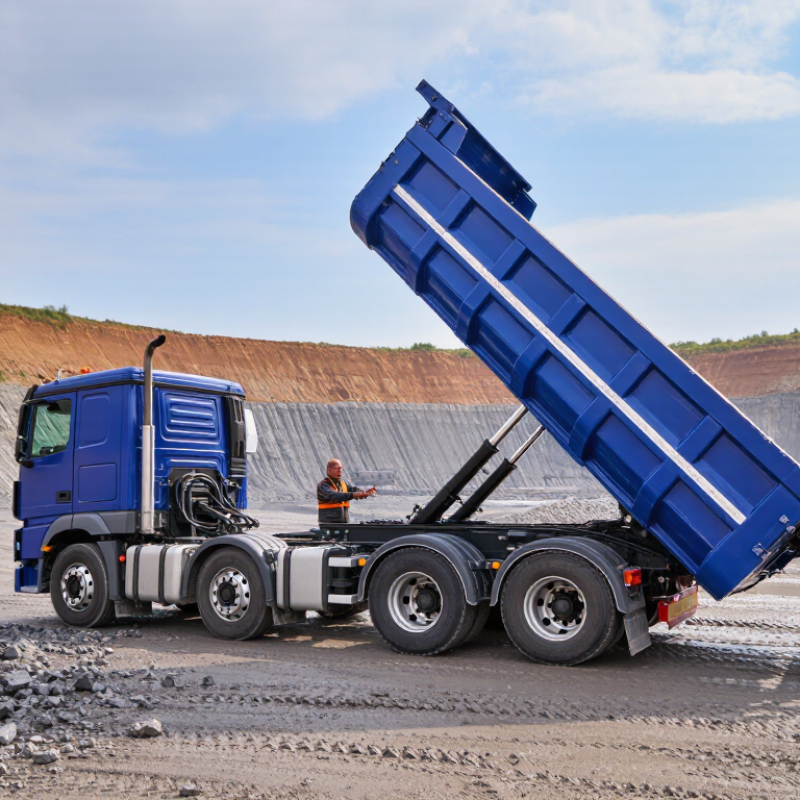
A side tipper truck carries bulk materials and unloads them through a controlled sideways movement. Unlike a rear dumper, its body tilts left or right from a hinge along the chassis. This design suits narrow sites, roadside work, and locations with limited reversing space. The body stays seated. That detail matters.
During unloading, a hydraulic cylinder lifts one side of the body. Gravity then guides the material toward the lowered side. The operator must stop on firm, level ground before raising the load. Uneven soil can shift the center of gravity and increase rollover risk. Experienced fleet managers check the hinge, hydraulic hoses, locking pins, and body floor before each shift. Small defects can become expensive failures.
When choosing a side tipper truck in 2026, match the body volume with the actual payload, not only the advertised maximum. Sand, gravel, soil, and wet material behave differently during discharge. A high body may carry more, but it can raise stability concerns when fully loaded. I would also compare axle ratings, suspension strength, cylinder capacity, turning clearance, and unloading speed. The wrong combination may look efficient on paper. It may perform poorly on rough ground. Operators should test the tipping angle with a representative load and inspect how completely the material leaves the body. Some residue is normal, but excessive buildup suggests an unsuitable body shape or material condition.
How to Choose the Right Side Tipper Truck in 2026? - What Is a Side Tipper Truck and How Does It Work?
| Evaluation Dimension | Typical Data or Specification | Why It Matters | Recommended Selection Guidance |
|---|---|---|---|
| Basic definition | A side tipper truck is a dump truck that unloads bulk material by tilting its body sideways instead of lifting the body vertically. | It can discharge material in areas where overhead clearance is limited. | Choose this configuration when unloading beside roads, rail lines, tunnels, buildings, or low-clearance structures. |
| Operating principle | A hydraulic cylinder or hydraulic tipping mechanism pushes the cargo body laterally until the load slides out through the open side. | The unloading direction and tipping angle affect stability, cycle time, and material flow. | Specify the preferred discharge side, tipping angle, hydraulic pressure, and control system before purchase. |
| Common payload range | Approximately 10–40 tonnes, depending on the chassis, axle configuration, body construction, and local legal limits. | Payload determines the amount of material moved per trip and directly affects productivity. | Select the smallest legal payload that meets the required daily output to avoid unnecessary purchase and operating costs. |
| Body volume | Common body capacities are about 10–35 m³, with actual usable volume depending on body height, length, and material density. | Low-density materials fill the body before reaching the weight limit, while dense materials may reach the weight limit first. | Match body volume to the bulk density of materials such as soil, sand, gravel, coal, grain, or demolition waste. |
| Suitable materials | Sand, gravel, soil, crushed stone, coal, grain, construction debris, and other free-flowing bulk materials. | Material flow characteristics influence unloading speed and the risk of material sticking inside the body. | For wet clay, sticky soil, or cohesive waste, consider a body liner, steeper tipping angle, or an alternative unloading design. |
| Chassis and axle configuration | Typical configurations include 4×2, 6×4, 8×4, and off-road multi-axle layouts. | More axles can increase payload capacity, traction, and load distribution but may increase purchase and maintenance costs. | Use a lighter configuration for paved roads and moderate loads; choose more axles for heavy-duty work, rough terrain, or higher legal payloads. |
| Tipping direction | Single-side, dual-side, or selectable-side discharge systems are available. | The discharge arrangement determines site flexibility and the space needed for positioning. | Choose dual-side or selectable-side tipping when the truck must work in changing site layouts or on both sides of a road. |
| Tipping angle | Many side-tipping bodies operate within an approximate range of 30°–50°, depending on design and load type. | A larger angle can improve discharge of difficult materials but may increase the stability requirements. | Prioritize stability and ground conditions over maximum angle; confirm the manufacturer's operating limits. |
| Hydraulic system | Key factors include hydraulic pump capacity, working pressure, cylinder size, control valves, hoses, and emergency controls. | The hydraulic system controls tipping speed, lifting force, reliability, and maintenance requirements. | Request rated pressure, cycle time, hose protection, overload protection, and access to replacement hydraulic parts. |
| Ground and site conditions | Side tipping requires adequate lateral clearance and a firm, reasonably level surface during unloading. | Uneven or soft ground can increase the risk of body movement, rollover, or chassis stress. | Avoid tipping on steep cross-slopes; verify ground bearing capacity, clearance, and traffic-control procedures. |
| Legal dimensions and weight | Permitted gross vehicle weight, axle load, width, height, and length vary by jurisdiction and road classification. | A truck that exceeds local limits may require permits, restricted routes, or additional compliance measures. | Check local road regulations before finalizing the chassis, body dimensions, and payload specification. |
| Loading compatibility | The body should be compatible with wheel loaders, excavators, conveyors, hoppers, or other loading equipment used on site. | Poor loading compatibility can cause uneven weight distribution, body damage, and longer cycle times. | Match body height, width, loading clearance, and target payload with the existing loading equipment. |
| Body material and wear protection | High-strength steel can reduce tare weight; abrasion-resistant liners can protect surfaces exposed to stone and demolition materials. | Material selection affects payload, durability, repair frequency, and service life. | Use reinforced floors and replaceable wear plates for abrasive materials; avoid over-specifying reinforcement for light-duty work. |
| Safety equipment | Important features include tipping interlocks, stability controls, emergency stop functions, warning alarms, side guards, and visibility aids. | Side tipping changes the vehicle's center of gravity and creates a work-zone hazard during discharge. | Prioritize documented safety procedures, operator training, tipping interlocks, and clear exclusion zones around the vehicle. |
| Maintenance requirements | Routine service normally includes hydraulic inspections, lubrication, structural checks, tire maintenance, brake service, and body-wear inspections. | Regular maintenance reduces downtime and helps identify hydraulic leaks, cracks, and fastener loosening early. | Choose a design with accessible service points, available spare parts, clear maintenance intervals, and qualified local technicians. |
| Best application match | Construction, quarrying, mining support, agriculture, road maintenance, waste handling, and bulk-material transport. | Each application has different requirements for payload, durability, maneuverability, clearance, and discharge speed. | Define material type, daily trips, route surface, unloading space, climate, and legal limits before comparing truck specifications. |
| 2026 purchase checklist | Confirm payload, body volume, axle layout, tipping direction, hydraulic cycle time, safety systems, legal compliance, warranty, and service support. | A complete specification prevents mismatches between the truck and the operating environment. | Compare total operating cost—not only purchase price—including fuel, tires, maintenance, downtime, insurance, and expected service life. |
Note: Payload, body volume, tipping angle, dimensions, and legal limits vary by vehicle configuration, material density, operating conditions, and local regulations. Always verify final specifications with applicable authorities and the vehicle manufacturer.