How to Choose the Right Packing Machine for Your Business Needs?
Choosing the right packing machine can feel overwhelming. Many businesses struggle with this decision. The wide variety of options available raises several questions.
Consider the specific needs of your operation. Think about your product size, weight, and packaging material. A small bakery requires a different packing machine than a large factory. A single machine may not fit all. Inadequate planning can lead to inefficient processes and increased costs.
Take your time to research different machines. Look for models that suit your production rate. The wrong choice can slow down operations. It's important to weigh every option carefully. Investing in the right packing machine is essential for business growth. Reflect on your packing needs to make the best decision.
Identifying Your Business Packaging Requirements
When choosing a packing machine, understanding your business packaging requirements is vital. Identify the products you need to package. Consider their size, shape, and weight. Will you package liquids, solids, or both? This clarity helps you narrow your options.
Tips: Analyze your production speed. A slow machine might clog your workflow. If your output increases, ensure your machine can keep up. Simultaneously, contemplate the types of materials you want to use. Are you planning to use plastic, paper, or eco-friendly materials? Each type may require different machinery.
It’s essential to consider the future. Is your business likely to grow? Will you need to package new products? Flexibility in a packing machine can save you from costly upgrades later. Sometimes, a machine that seems perfect now may not accommodate future needs. Reflect on the long-term vision for your business.
Understanding Different Types of Packing Machines
When selecting a packing machine, understanding the types available is essential. There are various machines, each serving different needs. For instance, manual packing machines require human intervention. They work well for small operations but can be slow and labor-intensive. This could lead to inconsistent packing quality. Automated machines, on the other hand, increase production speed significantly. However, they come with a higher upfront cost.
Another option is semi-automatic machines. These provide a balance between manual and fully automated systems. They can adapt to different product sizes and shapes, but may need frequent adjustments, which can disrupt workflow. Choosing the right machine relies on your production volume and budget constraints. It’s crucial to weigh the potential downtime against the efficiency gains.
Moreover, consider the type of materials you are packing. Does your product require special handling? The wrong machine could damage items during the packing process. Often, businesses find themselves changing machines frequently when they outgrow their initial choice. Reflecting on these factors can save time and resources in the long run.
Evaluating Machine Specifications and Features
Choosing the right packing machine is crucial for business efficiency. When evaluating machine specifications, consider your product type and packaging needs. The dimensions of your products dictate the size of the machine required. A machine too small will lead to delays. Conversely, one too large may waste resources.
Speed is another vital feature. Look for a machine that matches your production volume. Some may claim high speeds, but it's essential to verify these claims through real-world tests. Remember, reliability is integral. A machine that frequently breaks down can lead to costly downtime.
Think about additional features like automation. Fully automated systems can boost efficiency. However, they require a larger upfront investment. Manual or semi-automatic machines may suit smaller operations. Yet, they can be labor-intensive and slow. Weigh the pros and cons, and reassess your choices. Your packing needs may evolve, requiring flexibility in your equipment.
Choosing the Right Packing Machine Based on Features
This chart illustrates a comparative analysis of different packing machines based on critical specifications including speed, precision, versatility, ease of use, and cost. Assessing these characteristics helps in making informed decisions for business needs.
Considering Budget and Cost-Effectiveness
When selecting a packing machine, budget and cost-effectiveness are crucial. Finding the right machinery shouldn't drain your finances. Start by setting a realistic budget. Analyze initial costs versus long-term savings. Sometimes, cheaper machines have hidden costs.
Consider the machine's maintenance needs. Regular maintenance can add up in expenses. A low purchase price might mean higher upkeep. Look for machines that require less frequent servicing. This can save you money over time.
Tips:
-
1. Always factor in your production volume. A machine fit for small batches may become costly in the long run.
-
2. Evaluate energy efficiency. A machine that uses less power can significantly reduce costs.
-
3. Don't forget to account for training costs. Sometimes the best machines require specialized training, increasing your initial investment.
Reflect on your specific needs. What do you prioritize: speed or precision? A machine that excels in one may fall short in the other. It's essential to
align the machine with your business goals. Balance upfront costs with potential savings for a smarter investment.
Assessing Manufacturer Support and Customer Service
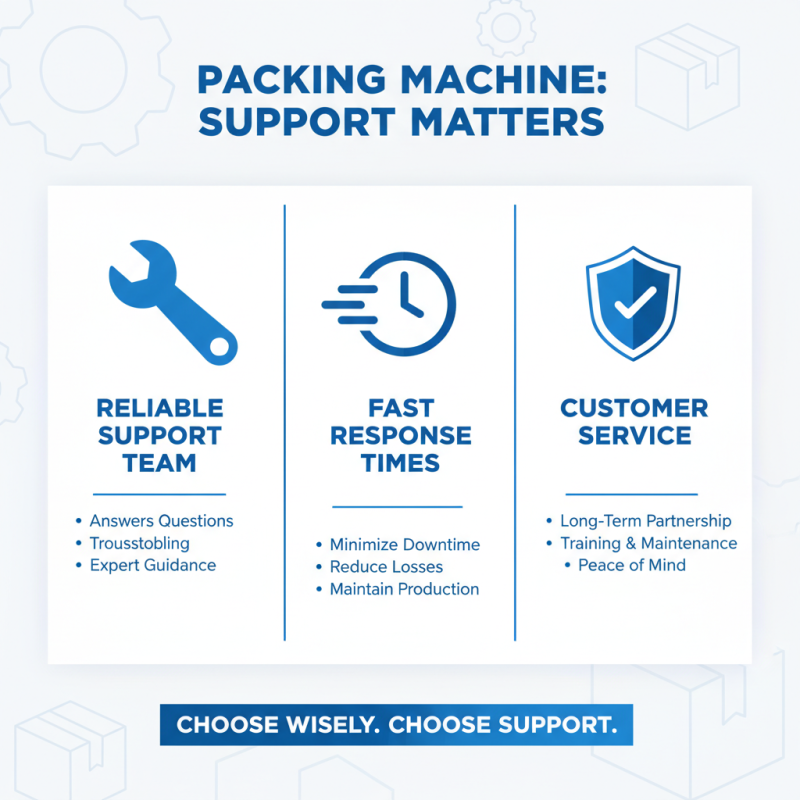
Selecting the right packing machine is crucial. A key aspect to consider is manufacturer support and customer service. A reliable support team can make a big difference. They can answer questions when something goes wrong. Fast response times are important. Waiting days for a solution can lead to losses.
When choosing a machine, look for companies with good customer feedback. Read reviews and testimonials. Ask about their service history. Some manufacturers boast great machines but lack support. You might buy a high-quality machine. However, poor service could turn your investment into a headache.
Consider warranty and maintenance options, too. A strong warranty can bring peace of mind. Regular maintenance help avoid breakdowns. Sometimes, extra costs sneak in during repairs. If support isn’t proactive, you may find yourself in trouble down the line. Evaluate these aspects carefully. Ignoring them might lead to regrets.