How to Choose the Right Oil Steam Boiler for Your Needs?
Choosing the right Oil Steam Boiler begins with understanding how your facility actually operates. A small bakery, textile workshop, hospital, or manufacturing plant may require very different steam performance. Start with demand, not the catalogue. Record peak steam load, operating hours, required pressure, fuel availability, and available installation space. These details often reveal whether a compact packaged boiler or a larger industrial unit fits better.
I have seen equipment selected by rated capacity alone. That approach can create wasted fuel, unstable pressure, and expensive maintenance. A reliable choice should balance efficiency, burner control, heat-transfer design, water quality, and operator experience. Ask manufacturers for verified performance data, service arrangements, spare-part availability, and compliance with applicable safety standards. A qualified engineer should also check ventilation, chimney design, electrical connections, pressure protection, and site conditions before purchase.
Safety matters every day.
Fuel quality deserves attention. Contaminated oil can foul burners and reduce combustion stability. Poorly treated boiler water can cause scale inside tubes, where damage may remain hidden until efficiency falls. These problems are not always dramatic at first. They develop quietly.
There is no universal “best” Oil Steam Boiler. The most suitable model depends on real operating patterns, local requirements, and long-term support. Even careful calculations can miss seasonal demand or future expansion. Recheck the assumptions. A dependable decision considers today’s output, tomorrow’s workload, and the practical skills of the people maintaining the system.
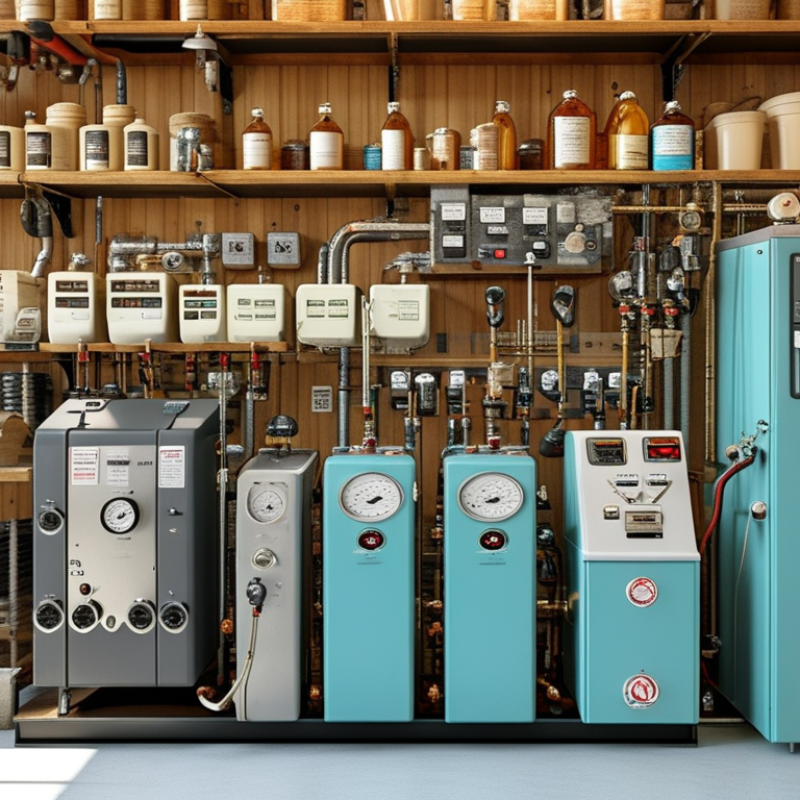
Understanding How Oil Steam Boilers Work
How to Choose the Right Oil Steam Boiler for Your Needs?
Understanding How Oil Steam Boilers Work
An oil steam boiler converts fuel energy into heat through controlled combustion. The burner sprays fine oil droplets into a combustion chamber. An ignition system then starts the flame. Simple, but precise.
The flame heats water inside tubes or a vessel. As the water absorbs heat, it becomes steam and rises toward the steam outlet. A pressure control system regulates burner operation when steam demand changes. Safety valves release excessive pressure, while water-level controls help prevent dangerous dry firing. In practical inspections, unstable flame color often signals poor atomization, blocked filters, or incorrect air adjustment.
Choosing the right boiler begins with your actual steam load. Estimate peak demand, operating pressure, fuel availability, and daily running hours. A boiler rated far above demand may cycle excessively and waste oil. An undersized unit may run continuously without reaching pressure. A neat calculation can still be wrong if future expansion is ignored.
Check thermal efficiency, burner turndown, insulation quality, and access for cleaning. Fuel viscosity and storage temperature also affect reliable operation. Water treatment deserves equal attention because scale acts like a blanket on heat-transfer surfaces. It increases fuel use and stresses metal. Ask for documented test data, clear maintenance intervals, and applicable safety certifications. I would also leave room for uncertainty; site conditions rarely match a spreadsheet perfectly.
Assessing Your Heating and Steam Requirements
Before choosing an oil-fired steam boiler, measure your real heating demand. Do not rely only on building size or old equipment ratings. Record room temperatures, insulation quality, outdoor conditions, and operating hours. A boiler that is too small may struggle during cold mornings. An oversized unit can cycle frequently and waste fuel.
Steam demand needs closer attention. List every steam user, including heaters, tanks, sterilizers, and production equipment. Note each device’s required pressure and steam flow in kilograms per hour. Add the startup load, because several machines may operate together. I have found that peak demand often differs sharply from average demand. Small details matter.
Check whether condensate returns to the boiler, and estimate its temperature and volume. Clean, warm condensate can reduce fuel consumption and improve response time. Steam quality also matters for process control. Wet steam may damage equipment or create inconsistent heating. A qualified heating engineer should verify pipe sizes, pressure controls, burner modulation, ventilation, and local safety requirements. Fuel storage and water treatment deserve attention as well. Neglecting them can shorten service life.
I once assumed a stable factory schedule would simplify sizing. It did not. Breaks, cleaning cycles, and seasonal changes altered demand more than expected. Leave enough capacity for practical peaks, but question every safety margin. A measured load study is usually more reliable than a generous guess.
How to Choose the Right Oil Steam Boiler for Your Needs? - Assessing Your Heating and Steam Requirements
| Application Profile | Typical Steam Demand | Recommended Boiler Output | Common Operating Pressure | Approximate Oil Consumption* | Recommended Efficiency Range | Key Selection Considerations |
| Small Commercial Facility | 100–300 kg/h | 300 kg/h | 6–8 bar(g) | Approximately 24–27 L/h | 88–92% | Suitable for small laundries, kitchens, workshops, and light process heating. Allow additional capacity for start-up loads. |
| Medium Food Processing Line | 500–1,000 kg/h | 1,000 kg/h | 8–10 bar(g) | Approximately 78–85 L/h | 88–92% | Check whether steam demand is continuous or intermittent. A properly sized feedwater system and condensate return can reduce fuel use. |
| Textile or Drying Process | 1,500–2,500 kg/h | 2,500 kg/h | 10–12 bar(g) | Approximately 195–210 L/h | 89–93% | Confirm the required steam pressure at the equipment inlet and account for distribution losses, peak production periods, and moisture removal requirements. |
| Large Industrial Process | 4,000–6,000 kg/h | 6,000 kg/h | 12–16 bar(g) | Approximately 465–510 L/h | 90–94% | Consider staged or multiple-boiler operation for variable loads. Include burner turndown, water treatment, blowdown control, and emissions requirements. |
| Peak-Demand Operation | Variable; short-term peaks above normal demand | Normal demand plus 10–20% reserve | Based on the highest equipment requirement | Depends on actual steam load | At least 88% | Use a steam accumulator, modular boilers, or a controlled reserve margin instead of significantly oversizing a single boiler. |
| Low-Load or Seasonal Operation | Below 40% of rated capacity for extended periods | Match the minimum stable firing rate to the operating load | Based on process requirements | Depends on load and burner cycling | Prefer stable low-load efficiency | Verify burner turndown ratio, cycling frequency, standby losses, and control response. Multiple smaller units may improve seasonal performance. |
| *Approximate oil consumption assumes light fuel oil with an energy content of about 10 kWh per litre, approximately 90% boiler efficiency, and saturated steam production from feedwater near 80°C. Actual consumption varies with fuel properties, feedwater temperature, steam pressure, blowdown rate, burner tuning, and operating conditions. |
Comparing Boiler Types, Sizes, and Fuel Options
Choosing the right oil steam boiler begins with comparing its construction, output, and operating demands. Fire-tube boilers are often practical for small or medium facilities. Hot gases pass through tubes surrounded by water, creating steady steam with relatively simple maintenance. Water-tube boilers suit larger loads and higher pressures. They respond quickly, but installation and water treatment require greater technical control. Modular units can improve flexibility when demand changes during the day.
Size should follow measured steam demand, not a rough guess. Check the peak load, startup requirement, operating pressure, and expected future expansion. A slightly oversized boiler feels safe, but it may cycle frequently and waste fuel. Undersizing is worse. Production can slow when steam pressure falls. A qualified engineer should review heat-loss calculations, condensate return, and safety controls before approval. Real buildings rarely match a perfect chart.
Fuel choice also affects storage, maintenance, emissions, and running cost. Light fuel oil usually supports dependable combustion, while lighter distillates may simplify cold starts in some systems. Approved biodiesel blends can reduce fossil fuel use, but compatibility must be verified with seals, burners, tanks, and local regulations. Fuel quality matters. Water or sediment in a tank can cause unstable flames and filter problems. Leave room for inspection, ventilation, spill control, and safe delivery access. The cheapest fuel is not always the cheapest operation.
Evaluating Efficiency, Safety, and Installation Needs
Choosing the right oil steam boiler requires more than comparing price and heat output. Efficiency starts with correct sizing. An oversized unit cycles frequently, wastes fuel, and creates uneven room temperatures. The U.S. EPA ENERGY STAR specification requires qualifying oil-fired boilers to reach at least 87% AFUE. That figure is useful, but it is not the whole story. Poor controls, dirty burners, or weak insulation can reduce real-world performance.
Safety should guide every installation decision. NFPA 31 addresses oil-burning equipment, fuel storage, ventilation, and clearances. A certified technician should check the burner, chimney draft, emergency shutoff, and pressure controls. Install carbon monoxide alarms near sleeping areas. This is basic protection. The International Energy Agency reports that buildings consume about 30% of global final energy. Reducing heat loss can therefore matter as much as selecting a higher-rated boiler. I sometimes see buyers focus on efficiency labels while ignoring old windows and leaking ducts. That choice deserves reconsideration.
Tips: Match the boiler to a room-by-room heat-loss calculation, not the previous unit’s capacity. Confirm chimney compatibility, oil-tank condition, floor drainage, service access, and local permitting requirements. Leave enough clearance for cleaning and emergency inspection. Ask for documented combustion-test results after commissioning. A smaller boiler may perform better, though only when the heat-loss estimate is accurate.
Choosing a Reliable Boiler and Maintenance Plan
Choosing an oil-fired steam boiler should begin with the maintenance plan, not the catalog price. A reliable unit must match your building’s peak heat demand, chimney draft, water quality, and operating schedule. Oversizing creates short cycling, smoky combustion, and unnecessary fuel use. Proper sizing matters.
Ask for combustion testing after installation. A technician should check burner efficiency, flue-gas temperature, draft, and carbon monoxide levels. The U.S. Department of Energy’s steam-system guidance identifies failed traps, damaged insulation, and poor condensate return as common energy-loss points. These details are easy to overlook.
A practical plan includes monthly visual inspections and seasonal burner servicing. Check the low-water cutoff, pressure controls, safety valve, oil filter, nozzle, and feedwater condition.
Record pressure, temperature, water treatment results, and repair dates. ENERGY STAR’s Operations and Maintenance Best Practices Guide estimates that effective maintenance can reduce building energy use by 5–20%. The IEA reports that buildings consume approximately 30% of global final energy, so small boiler losses deserve attention.
I would not promise perfect savings. Fuel quality, weather, and operator habits change results. Still, a boiler with clear service intervals and accessible replacement parts usually performs more predictably than a cheaper unit with weak support.
Keep spare filters and seals nearby. It prevents rushed decisions during a cold morning.