How to Choose Soup Kettles for Global Sourcing in 2026?
Choosing Soup Kettles for global sourcing in 2026 requires more than comparing prices. Buyers must examine capacity, heating performance, materials, controls, cleaning access, and after-sales support. A kettle that looks efficient in a catalog may struggle during a crowded lunch service.
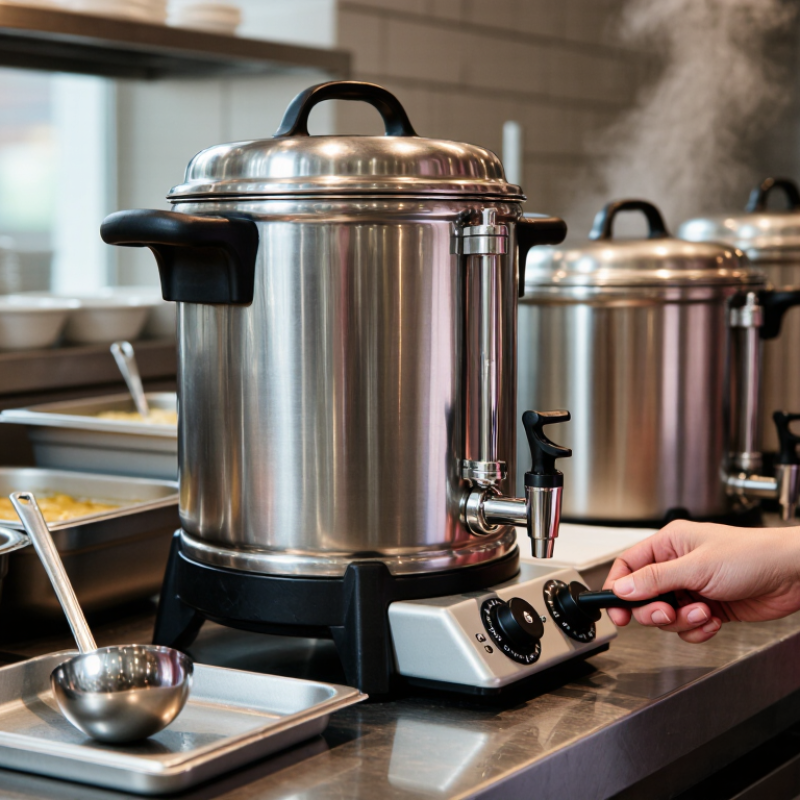
Real operating conditions matter. Consider a stainless steel unit holding 10 to 20 liters beside a busy serving counter. Can staff refill it safely? Does the thermostat maintain steady soup temperature without scorching the bottom? Are the handles comfortable after repeated use? Small details often affect labor, waste, and customer satisfaction.
This guide explains the practical decisions behind reliable Soup Kettles. It compares countertop and floor models, wet and dry heating systems, electrical requirements, insulation, and common commercial features. It also discusses supplier evaluation, sample testing, packaging, lead times, spare parts, and communication across regions.
Experience suggests that the cheapest quotation rarely shows the full purchasing cost. Freight dimensions, replacement thermostats, voltage differences, and delayed documentation can change the result. Verify current import, electrical, food-contact, and safety requirements in each destination market. Requirements vary.
Supplier claims need evidence. Ask for technical sheets, test records, clear warranty terms, and production photos where appropriate. A factory may provide excellent samples but inconsistent bulk units. That risk deserves attention.
No sourcing plan is perfect. Forecasts can be wrong, and kitchens can be harsher than expected. Careful testing, realistic specifications, and documented inspections help reduce avoidable surprises. This approach supports safer purchasing decisions and more dependable service in 2026.
Map Demand with 4–40 L Capacities, Batch Yield, and Serving Volume
Soup kettle sourcing in 2026 should begin with demand mapping, not maximum capacity. A 4 L kettle suits small cafés, tasting counters, and limited seasonal menus. A 10–20 L model supports steady lunch service. Larger 30–40 L units fit hospitals, hotels, and central kitchens. The 2024 National Restaurant Association report forecasts US restaurant sales above 1 trillion dollars, but demand remains uneven by location and service format.
Batch yield needs a practical calculation. One litre usually produces about four 250 ml servings, before evaporation and portion variation. Therefore, a 20 L kettle may deliver 70–76 servings in real operation. A 40 L kettle can exceed 150 servings, but only when turnover is fast. Holding too much soup increases waste and may reduce texture. The UNEP Food Waste Index Report 2024 estimated 1.05 billion tonnes of food waste in 2022. That figure makes over-sizing difficult to defend. It is not always better.
Tips: Match kettle size with peak-hour sales, not daily totals. Record actual ladle volume for one week. Check recovery time after refilling. Confirm that temperature controls support the FDA Food Code 2022 hot-holding benchmark of 57°C or above. Leave space for stirring and safe handling. A smaller kettle may need two batches, which can be inconvenient. Still, two fresh batches may outperform one oversized, tired batch. Supplier specifications should also state working capacity, heating power, drain design, and tested batch yield.
How to Choose Soup Kettles for Global Sourcing in 2026? - Map Demand with 4–40 L Capacities, Batch Yield, and Serving Volume
| Nominal Capacity | Recommended Working Fill | Usable Soup per Batch | 250 ml Servings | 300 ml Servings | 350 ml Servings | Typical Demand Fit | Sourcing Planning Use |
| 4 L | 85% / 3.4 L | 3.4 L | 13 | 11 | 9 | Sampling and low-volume service | Suitable for tasting counters, small cafés, and pilot menus |
| 6 L | 85% / 5.1 L | 5.1 L | 20 | 17 | 14 | Low-volume daily service | Useful where menu variety matters more than long holding time |
| 8 L | 85% / 6.8 L | 6.8 L | 27 | 22 | 19 | Small-batch service | Balanced option for compact foodservice operations |
| 10 L | 85% / 8.5 L | 8.5 L | 34 | 28 | 24 | Moderate service volume | Appropriate for a single popular soup during a meal period |
| 12 L | 85% / 10.2 L | 10.2 L | 40 | 34 | 29 | Medium-volume service | Good fit for cafés, buffet stations, and staff dining |
| 16 L | 85% / 13.6 L | 13.6 L | 54 | 45 | 39 | High-volume single-batch service | Reduces refill frequency during busy lunch periods |
| 20 L | 85% / 17.0 L | 17.0 L | 68 | 56 | 48 | High-demand meal periods | Useful for canteens, hotels, and high-turnover counters |
| 24 L | 85% / 20.4 L | 20.4 L | 81 | 68 | 58 | Large-batch service | Appropriate when consistent output is more important than flexibility |
| 30 L | 85% / 25.5 L | 25.5 L | 102 | 85 | 72 | Institutional and catering demand | Supports event service, central kitchens, and large buffets |
| 40 L | 85% / 34.0 L | 34.0 L | 136 | 113 | 97 | Very high-volume production | Best for central production and large-scale catering operations |
Calculation basis: Usable soup is estimated at 85% of nominal kettle capacity to allow headspace and reduce splash or boil-over risk. Serving counts are calculated by dividing usable volume by the stated serving size and rounding down to whole servings. Actual output may vary with recipe density, evaporation, ladle size, operating temperature, and refill policy.
Compare Electric 2–10 kW, Gas BTU, Induction, and Heating Uniformity
Global soup-kettle sourcing in 2026 requires more than comparing purchase prices. Electric models from 2–10 kW suit sites with stable power and limited ventilation. Using NIST SP 811 conversion data, that range equals roughly 6,824–34,121 BTU per hour before efficiency losses. Confirm the actual heating load, circuit rating, plug standard, and recovery time. A 6 kW kettle may struggle during repeated lunch-service refills.
Gas kettles offer high heat input, but BTU figures can mislead without efficiency data. ENERGY STAR commercial foodservice guidance reports approximate cooking efficiencies of 84% for induction, 74% for electric resistance, and 38% for gas. These figures support induction in energy-sensitive kitchens, though vessel shape and control quality still matter. Ask suppliers for tested recovery curves, not only rated power. Real kitchens are messier.
Heating uniformity deserves direct testing. Request temperature readings at the center, corners, and near the base after 15 minutes. ASHRAE Handbook—HVAC Applications, 2023, links appliance heat release with ventilation design, so gas equipment may increase extraction requirements. Induction can heat quickly, but magnetic compatibility and pan contact remain practical weaknesses. I would also test a thick soup at low simmer. Some specifications look precise, yet omit stirring frequency, fill level, and ambient temperature. That omission can change the buying decision.
Check NSF/ANSI 4, UL 197, CE, and EN 60335-2-15 Requirements
How to Choose Soup Kettles for Global Sourcing in 2026?
When sourcing soup kettles, confirm the required market before comparing prices. A kettle for a hotel kitchen faces different checks than one for a small café. NSF/ANSI 4 covers commercial cooking equipment, including sanitation, cleanability, and functional performance. Inspect welds, drain valves, lids, and food-contact surfaces. Hidden crevices can hold soup residue. Stainless steel alone does not prove compliance.
For North American orders, request documentation related to UL 197. This standard addresses electrical safety for commercial cooking appliances, including wiring, controls, heating systems, and abnormal operation. For European sales, CE marking requires conformity with applicable EU legislation. It is not a single safety certificate. Ask for the Declaration of Conformity and supporting test records. EN 60335-2-15 covers safety for appliances heating liquids and normally works with EN 60335-1. Check whether the tested model matches the offered kettle.
Tips: Ask for the exact standard editions, test scope, rated voltage, plug type, and factory inspection date. Request photos of internal wiring and the nameplate. A sample test is wiser than trusting a polished PDF. I have seen documents list similar models, not identical ones. That gap matters. Also verify leakage protection, over-temperature cutoffs, grounding, and cleaning instructions. Regional voltage differences can quietly damage heating elements. Certification language can be confusing, and suppliers may misunderstand it. Recheck everything.
Soup Kettle Sourcing Compliance Map for 2026
This screening chart shows the primary role of each compliance reference when sourcing soup kettles. NSF/ANSI 4 focuses on commercial food-equipment sanitation, UL 197 addresses commercial electric cooking-equipment safety in North America, CE represents the EU conformity route rather than a single product standard, and EN 60335-2-15 covers particular safety requirements for appliances intended for heating liquids. Applicability depends on the product design, intended use, voltage, market, and certification route.
Assess 110/220–240 V, 50/60 Hz, Plug Types, and Local Installation Codes
When sourcing soup kettles in 2026, match voltage and frequency before comparing capacity. IEC 60038 identifies standard supply voltages, but local networks still vary. A 110 V, 2,000 W kettle draws about 18.2 amps. The same load at 230 V draws about 8.7 amps. That difference affects circuit size, heat, and installation cost. Frequency also matters. Confirm whether the heating controller supports 50 Hz, 60 Hz, or both. Do not assume a 220–240 V label guarantees universal compatibility.
The International Energy Agency’s Electricity 2024 report forecasts strong global electricity demand growth through 2025. Commercial kitchens therefore need realistic load planning, not only appliance-level testing. Request the technical sheet, rated current, leakage-current limits, earthing method, and plug configuration. Then compare them with local electrical codes and inspection rules. A Type G plug may fit physically, yet its protective requirements may not fit the site. IEC 60335-2-15 provides relevant safety requirements for appliances heating liquids, but national adoption can add stricter provisions. Local authorities may also require RCD or GFCI protection, dedicated circuits, minimum conductor sizes, and approved cord assemblies.
Tips: Build a country-by-country matrix for voltage, frequency, plug type, breaker rating, earthing, and inspection documents. Ask for a sample unit before placing a bulk order. Test it under full water load. I would not trust a plug photo alone. One overlooked assumption can delay commissioning. Also, conversion transformers increase complexity and losses, so a correctly rated local-voltage model is usually the safer procurement choice.
Model Total Cost from Energy Use, Duty Cycle, Freight, and 3-Year Warranty
How to Choose Soup Kettles for Global Sourcing in 2026?
For global sourcing in 2026, a soup kettle’s purchase price is only the visible cost. Model energy use across a realistic duty cycle, not the maximum heating rate. A 10-liter kettle may draw 3 kW during warm-up, then cycle intermittently. Record hours at full power, holding temperature, and idle periods. Multiply measured consumption by local electricity rates. Test with a loaded kettle. Empty demonstrations can mislead. Kitchen staff may open lids more often than specifications assume. Small losses add up.
Include customs duty, freight, and warranty exposure in the landed-cost model. Duty depends on classification and declared value, so verify details with a qualified customs broker. Freight calculations should include carton size, gross weight, port charges, inland delivery, and insurance. For the three-year warranty, check parts coverage, labor, shipping responsibility, exclusions, and response times. Estimate downtime and temporary replacement costs. One failed thermostat can erase a low purchase price. Forecasts are never perfect. Fuel surcharges, exchange rates, and seasonal demand can change the result.
Tips: Build a spreadsheet with low, expected, and high scenarios. Use supplier test data, but confirm it with field measurements. Compare cost per operating hour, not just unit price. Keep notes from real kitchens. Your assumptions may be wrong. Recheck them after three months.