

Blog
How to Choose Composite Wall Panels in 2026?
Choosing Composite Wall Panels in 2026 requires more than comparing colors, prices, and surface finishes. A panel may look impressive in a showroom, yet fail when moisture enters a poorly sealed joint. Real project conditions matter. Consider the building’s climate, wall structure, fire requirements, insulation target, acoustic needs, and installation method before selecting a product.
Building-science expert Joseph Lstiburek states, “The perfect wall has all of the control layers on the exterior of the structure.” His principle remains useful when evaluating modern Composite Wall Panels. A reliable system should manage water, air, vapor, and heat through clearly defined layers. Ask suppliers for verified thermal values, fire-test documentation, wind-load data, coating warranties, and installation details. Do not rely on a brochure alone. Check the certificates. Check the joints.
Experience also reveals practical issues that product tables often miss. A panel can be lightweight, but difficult to cut accurately around windows. A premium coating can still show scratches during transport. Poorly aligned fasteners may create visible waves across a large façade. Small details become expensive repairs.
The best choice is rarely the cheapest panel. It is the system that fits the site, the installer, and the maintenance plan. Still, no selection guide is perfect. Product testing may not reflect every coastal storm, winter freeze, or rushed installation. That uncertainty deserves attention. This guide examines the key specifications, risks, and selection questions that can help buyers make a more informed decision in 2026.
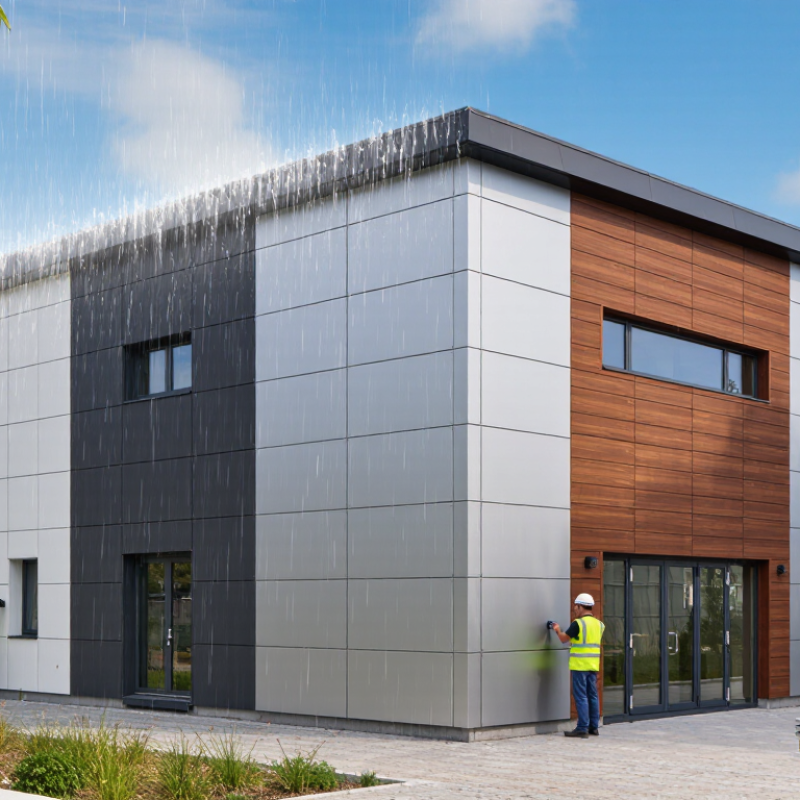
Understanding Composite Wall Panel Types and Core Materials
How to Choose Composite Wall Panels in 2026?
Composite wall panels differ mainly by skin, core, and intended environment. Insulated sandwich panels usually combine metal skins with PIR, PUR, EPS, or mineral wool cores. Aluminum composite panels use thin aluminum sheets around a polymer or mineral-filled core. HPL panels offer a decorative, impact-resistant surface, while honeycomb panels reduce weight. The core matters most. PIR and PUR often provide strong thermal performance in thin sections. Mineral wool offers better fire resistance and acoustic absorption. EPS costs less, but its moisture and fire performance require closer evaluation.
The International Energy Agency reports that buildings consumed about 30% of global final energy in 2022. Thermal resistance should therefore guide panel selection, not appearance alone. Check the declared U-value, joint design, thermal bridging, and condensation risk. A cold metal fastener can create a small but persistent damp mark. It is easy to miss.
Fire classification, moisture exposure, and impact loads also deserve site-specific review. The 2023 Global Status Report for Buildings and Construction identifies buildings as responsible for about 37% of global energy-related emissions. Better insulation supports efficiency, but poor installation can erase the benefit. Ask for tested assembly data, not only individual material claims. Some specifications still overvalue low price. That can be a costly mistake. Consider maintenance access, replacement cycles, recyclability, and local code requirements before approving the final core.
Assessing Thermal, Acoustic, Fire, and Moisture Performance
How to Choose Composite Wall Panels in 2026?
Assessing Thermal, Acoustic, Fire, and Moisture Performance
Choosing composite wall panels requires more than comparing insulation values. In occupied buildings, performance depends on joints, fasteners, penetrations, and installation quality. I have seen excellent panels perform poorly because installers left small gaps around service openings. Request tested assembly data, not only isolated core figures. Compare thermal transmittance, thermal bridging, and expected indoor temperature swings.
Acoustic performance also needs practical attention. A panel’s laboratory rating may not reflect doors, corners, or ceiling connections. Ask for sound transmission data using the construction’s actual thickness and joint design. For offices, classrooms, and bedrooms, low-frequency noise deserves special testing. It is often overlooked. A heavier lining or resilient connection can improve comfort more effectively than simply adding insulation.
Fire performance should be checked through current, relevant tests for the complete wall system. Confirm reaction-to-fire classification, fire resistance duration, smoke behavior, and permitted installation details under local building regulations. Moisture assessment should include vapor movement, rain exposure, condensation risk, and drainage paths. Closed-cell cores may resist water absorption, but trapped moisture can still damage interfaces. Inspect sample joints after wet-cycle testing. This step is easy to skip. It should not be. Some specifications also appear precise while ignoring site workmanship, so allow qualified professionals to review drawings, test reports, and maintenance access before procurement.
| Performance Dimension | Mineral Wool Core Panel | PIR Core Panel | PUR Core Panel | EPS Core Panel | Phenolic Foam Core Panel |
|---|---|---|---|---|---|
| Typical core density | Approximately 80–150 kg/m³ | Approximately 30–40 kg/m³ | Approximately 35–45 kg/m³ | Approximately 15–25 kg/m³ | Approximately 35–60 kg/m³ |
| Declared thermal conductivity, λD | 0.034–0.041 W/m·K | 0.020–0.026 W/m·K | 0.021–0.028 W/m·K | 0.032–0.040 W/m·K | 0.018–0.023 W/m·K |
| Indicative core R-value at 100 mm | 2.44–2.94 m²·K/W | 3.85–5.00 m²·K/W | 3.57–4.76 m²·K/W | 2.50–3.13 m²·K/W | 4.35–5.56 m²·K/W |
| Indicative panel U-value at 100 mm | Approximately 0.32–0.40 W/m²·K | Approximately 0.20–0.26 W/m²·K | Approximately 0.21–0.28 W/m²·K | Approximately 0.30–0.39 W/m²·K | Approximately 0.18–0.23 W/m²·K |
| Thermal performance assessment | Good Requires greater thickness for the same R-value. | Very good High insulation value in relatively thin panels. | Very good Efficient insulation with good thickness-to-performance ratio. | Good Cost-effective insulation, generally thicker than PIR or phenolic foam. | Excellent Very low conductivity, but edge and joint detailing remain important. |
| Typical airborne sound insulation, Rw | Approximately 30–40 dB | Approximately 25–34 dB | Approximately 25–34 dB | Approximately 23–32 dB | Approximately 25–34 dB |
| Acoustic performance assessment | Best among listed cores Higher density and fibrous structure generally improve sound absorption and transmission loss. | Moderate to good Performance depends strongly on sheet thickness, joints, and panel mass. | Moderate to good Usually requires additional linings or resilient layers for demanding acoustic spaces. | Moderate Lightweight construction can limit airborne sound insulation. | Moderate to good May need a heavier lining system for high acoustic targets. |
| Typical reaction-to-fire classification | A1 or A2-s1,d0 for suitable non-combustible mineral wool systems | B-s1,d0 to B-s2,d0 for tested systems; formulation and facings are decisive | B-s2,d0 to C-s3,d0 for tested systems; formulation and facings are decisive | E to B-s2,d0 depending on density, flame-retardant treatment, and complete system | B-s1,d0 to B-s2,d0 for tested systems; product formulation is critical |
| Fire-resistance potential | Highest potential Suitable assemblies can achieve extended fire-resistance periods; joints and fixings must be tested. | Good when tested Fire resistance depends on panel thickness, joint design, facings, and tested assembly. | Good when tested Requires verified system data because combustible foam can affect fire development. | Limited to moderate Combustible core; use only where the complete tested system meets the required code level. | Good when tested Low flame spread is possible, but smoke and toxicity data must also be reviewed. |
| Moisture resistance | Generally resistant to liquid water when faced and detailed correctly; prolonged wetting can reduce thermal performance. | Low water absorption in closed-cell foam; damaged facings or unsealed joints can permit moisture ingress. | Low water absorption in closed-cell foam; protection from water and ultraviolet exposure is required. | Low water absorption in short-term exposure; prolonged wetting may increase moisture content and reduce insulation value. | Low water absorption, but open cuts, joints, and damaged facings must be sealed. |
| Water-vapour control | Usually vapour-permeable; a separate vapour-control layer may be needed in cold or humid assemblies. | Relatively vapour-resistant; joint continuity is essential to limit air and vapour leakage. | Relatively vapour-resistant; verify condensation risk at panel joints and penetrations. | Moderate vapour resistance; design the wall build-up to prevent interstitial condensation. | High vapour resistance; careful dew-point and drying-potential analysis is recommended. |
| Typical service-temperature considerations | Strong resistance to high temperatures; binder and facing limits still apply. | Protect from sustained temperatures that exceed the manufacturer’s tested service range; often around 100°C maximum for continuous exposure. | Protect from sustained high temperatures; continuous service limits are commonly around 100°C, subject to the system design. | Lower heat tolerance than mineral wool; avoid heat sources and high-temperature applications unless specifically tested. | Good thermal efficiency, but prolonged high-temperature exposure can cause shrinkage or degradation. |
| Best-fit applications | Fire-sensitive buildings, industrial enclosures, schools, hospitals, and projects requiring stronger acoustic performance. | Cold stores, warehouses, commercial buildings, and projects prioritizing high thermal efficiency at reduced thickness. | General industrial and agricultural buildings where thermal efficiency and cost balance are important. | Budget-sensitive buildings and moderate-risk applications where code requirements permit combustible insulation. | Space-constrained façades and high-performance envelopes requiring very low thermal conductivity. |
| Key selection checks for 2026 projects | Verify fire classification, fire-resistance test report, joint design, water repellency, and acoustic test results. | Verify reaction-to-fire classification, smoke rating, thickness-specific U-value, joint air-tightness, and condensation analysis. | Verify fire test evidence, dimensional stability, moisture protection, joint detailing, and long-term thermal design value. | Verify flame-retardant treatment, complete-system fire classification, water exposure limits, and local building-code acceptance. | Verify fire and smoke data, dimensional stability, vapour-control strategy, joint sealing, and service-temperature limits. |
Note: The values shown are representative ranges for generic insulated sandwich-panel systems, not product certifications. Actual performance varies with core density, panel thickness, metal facings, joints, fasteners, penetrations, installation quality, temperature, humidity, and test method. Confirm project-specific values using independent test reports and the applicable standards, such as EN 14509, EN 13501-1, EN 13501-2, EN ISO 10140, ASTM E90, ASTM E84, or the locally adopted equivalents.
Matching Panel Specifications to Building Use and Climate
How to Choose Composite Wall Panels in 2026?
Panel selection should begin with building use, not appearance. A refrigerated warehouse needs continuous insulation, tight joints, and low moisture migration. An office façade may prioritize acoustic control, daylight coordination, and fire performance. The 2024 Global Status Report for Buildings and Construction, published by UNEP and GlobalABC, states that buildings consume about 32% of global energy. Better envelope decisions can therefore reduce operational demand, although real savings depend on installation quality.
Climate changes the specification. In cold regions, review the panel’s R-value, thermal bridges, and interior vapor control. In hot, humid areas, prioritize drainage, air sealing, and resistance to condensation. Coastal projects need corrosion-resistant faces and carefully protected cut edges. High-wind sites require tested fastening patterns, not generic spacing. Fire classification must match the building height, occupancy, and local code. ASHRAE 90.1-2022 remains a useful energy benchmark, but it cannot replace project-specific hygrothermal analysis.
Field inspections often find gaps around corners, windows, and penetrations. Those small gaps can undermine impressive laboratory results. The cheapest panel is rarely cheap. A 2023 International Energy Agency report also emphasizes that efficiency gains depend on the whole building system, rather than insulation alone. I would request verified U-values, fire-test evidence, wind-load data, and installation details before approval. Data can vary between laboratories. That deserves a second check.
How to Choose Composite Wall Panels in 2026?
Matching panel specifications to building use and climate
Lower thermal conductivity generally means better insulation performance at the same thickness. PIR and phenolic cores are suitable where high thermal performance is required in cold climates or where wall thickness is limited. Mineral wool is commonly selected for buildings requiring strong fire resistance, while EPS is often used for cost-sensitive projects in mild climates. Final panel selection should also be checked against local fire, structural, moisture, and energy codes.
Comparing Durability, Installation Methods, and Maintenance Needs
Composite wall panels should be judged against the building’s exposure, not only its appearance. A coastal facade faces salt, wind, and intense sunlight. An interior partition faces impacts, stains, and frequent cleaning. Check the panel’s core, surface coating, fire classification, moisture resistance, and published test conditions. Ask for recent test reports, not vague claims. Durability is not permanent. Even a strong panel can fail when joints trap water.
Installation method affects performance as much as panel quality. Mechanical fastening allows easier replacement and clearer inspection. Adhesive systems can create clean lines, but they demand dry, level substrates and careful temperature control. Measure twice. Small alignment errors become obvious across a long wall. Experienced installers leave movement gaps and seal exposed edges according to the system instructions. In practice, schedules are sometimes too tight, and this is where workmanship suffers. A cheaper installation may create expensive repairs later.
Maintenance begins with access. Choose finishes that tolerate the cleaners used by occupants. A textured surface may hide minor marks, yet it can hold dust near busy entrances. Smooth coatings wipe faster, but scratches show sooner. Inspect corners, fasteners, sealants, and drainage paths at least annually, or more often in harsh climates. Use soft cloths and approved diluted cleaners; abrasive pads can damage the protective layer. Keep spare panels if color matching matters. This is often overlooked. Review the maintenance log after the first season. It may reveal that the selected panel was durable, but inconvenient to service.
Evaluating Costs, Standards, Suppliers, and Long-Term Value
How to Choose Composite Wall Panels in 2026?
Cost should mean more than the purchase price. A panel’s core, coating, thickness, and installation method affect the final budget. The UNEP 2024 Global Status Report states that buildings and construction consume 32% of global energy. Better insulation can therefore reduce operating costs, especially in warehouses and cold-storage facilities. Yet thermal claims need evidence. Ask for tested U-values, joint details, and installation tolerances. Small gaps can weaken a strong specification.
Standards protect decisions from attractive but incomplete brochures. For fire performance, request classifications under EN 13501-1 or test results under ASTM E84, where applicable. Moisture exposure also matters. ASTM C518 can support thermal-conductivity testing, while ISO 4892-3 helps assess weathering for exposed applications. Requirements differ by region. A certificate without its test scope is not enough. Check the assembly, not only the panel.
Supplier quality deserves a physical review. Examine production records, batch traceability, warranty terms, and replacement lead times. Request samples with real joints, fasteners, and corner details. Compare embodied carbon data when available, because the 2024 Global Status Report links construction materials to a major share of sector emissions. Long-term value is still difficult to predict. Not every spreadsheet survives the first winter. A sensible assessment includes cleaning needs, repairs, recyclability, and local technical support. The cheapest panel may be the least economical choice.

