

Blog
7 Tips for Choosing a Child Proof Metal Box
Choosing a Child Proof Metal Box is not just a matter of picking the thickest steel or the most complicated lock. The right option depends on what needs to be stored, where the box will sit, and who may be able to reach it. A small box on a low shelf, for example, presents different practical challenges from a heavier model kept in a secured cabinet.
Details matter. Check how the latch closes, whether the hinges feel sturdy, and if the box can be anchored without weakening its structure. Consider the opening mechanism, too: adults should be able to use it reliably, while children should not be able to open it through casual handling. No box is a substitute for attentive supervision or safe storage habits.
A lock is one layer.
This guide shares seven practical tips for comparing materials, locking systems, size, portability, and everyday usability. It also explains why product descriptions alone may not answer every question. Look for clear specifications, credible testing information, and care instructions from the manufacturer. If those details are missing, pause and investigate before buying. Real homes are messy; a box may be moved, bumped, or used in a hurry. That deserves thought, not guesswork.
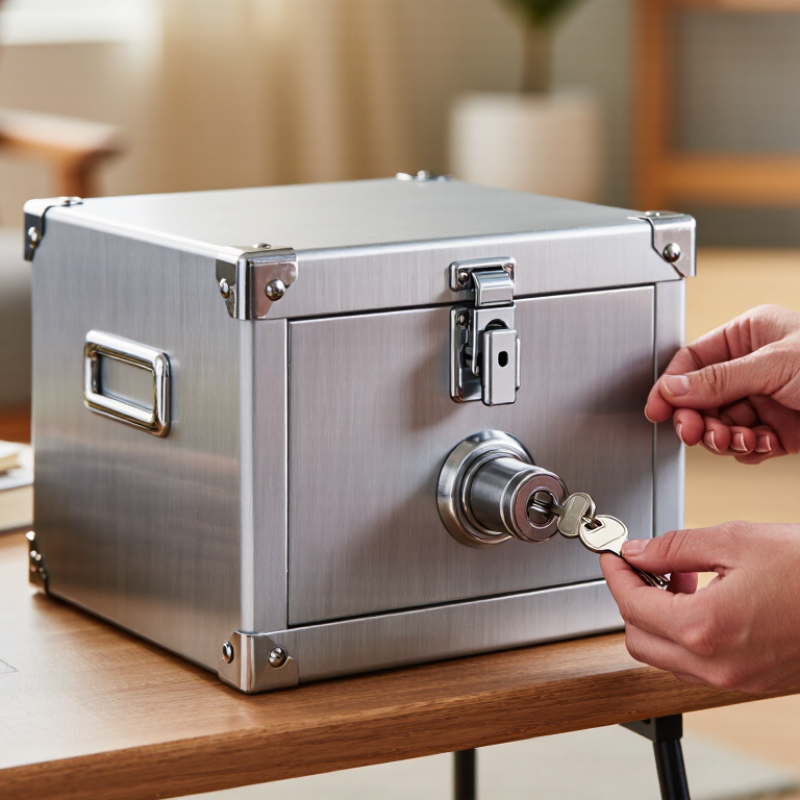
Understand What a Child-Proof Metal Box Is Designed to Protect
A child-proof metal box is designed to slow a child’s access to selected items, not make them impossible to reach. Its purpose depends on what you plan to store: small parts, household tools, or other objects that should stay out of curious hands. Define the risk first. A box for loose screws needs a different interior layout from one holding a sharp craft tool.
Look closely at the opening mechanism. A lid that needs two coordinated actions can be harder for a young child to operate, while remaining manageable for an adult. Test the latch several times, and check whether it catches fully when the lid closes. No latch is perfect. Metal walls can resist bending, but they do not automatically make a box fireproof, waterproof, or safe from determined tampering. Check tested claims rather than guessing from the box’s weight.
The box should also protect against everyday handling. Smooth edges, sturdy hinges, and a stable base help prevent pinched fingers or tipping. Keep it on a high, fixed shelf when possible, and store keys or access codes separately from children. Consider the child’s age and habits; a curious toddler may explore a latch differently from an older child. I would not rely on the label alone. Review the box as your child grows, because what feels secure today may not stay secure next year.
Identify the Items and Risks the Box Must Address
Begin with a real inventory: prescription and over-the-counter medicines, cleaning products, button batteries, small magnets, and sharp household tools. Note each item’s size, quantity, and original packaging. Small parts matter. A child may reach a low shelf, open a loose lid, or find a key left nearby. CDC guidance estimates that about 300 children in the United States receive emergency-department care for poisoning each day. That risk makes the contents—not the box’s appearance—the starting point for choosing protection.
Match the box to the hazard. Medicines and household chemicals should stay in their labeled containers, so check that they fit without crushing packages or obscuring instructions. Keep liquids upright, and consider whether a spill could leak through seams. For tools, inspect the box for rough edges and hinges that could pinch fingers. Test the latch repeatedly, including with the box loaded; a lock that works only when empty is not much help. Consider where it will sit, too. A heavy box may need secure mounting, while damp storage can damage contents. It is easy to assume “out of sight” means safe; it does not. Recheck the contents as household needs change.
Compare Locking Mechanisms and Child-Resistance Features
A child-resistant metal box should make access difficult for small hands without frustrating responsible adults. Compare the actual locking action, not just the number of buttons or the weight of the lid. A keyed lock is simple to understand, but a key left nearby defeats its purpose. A combination lock avoids a loose key, though adults may forget the code or leave it written beside the box. Push-button mechanisms can be convenient, but check whether their sequence is easy to guess or operate by touch.
Test the mechanism with dry hands and in ordinary room lighting. Does the latch fully engage? Can a child pull the lid open after it clicks? Small details matter. Hinges should not expose sharp edges, and the lid should not slam shut. Child resistance is not the same as being childproof. No lock can replace thoughtful placement and adult supervision.
Look for clear, independent information about testing and intended use; vague claims are not enough. If possible, inspect the box in person and try opening it several times, since stiff locks can become unreliable with daily use. That trade-off is easy to miss. Store the key or access code separately, and check the latch periodically for wear, corrosion, or loosened screws. A durable metal shell helps, but the locking mechanism is the part that needs the closest attention.
7 Tips for Choosing a Child Proof Metal Box - Compare Locking Mechanisms and Child-Resistance Features
| Tip | Lock or Feature | How It Works | Child-Resistance Considerations | What to Check Before Buying |
|---|---|---|---|---|
| 1. Choose a locking method that suits your household. | Keyed cam lock | Turning the key moves a cam behind the lid or frame to hold the box closed. | A child cannot open it without the key, but the lock alone does not prevent prying or access to a misplaced key. | Check that the cam engages securely and that spare keys can be stored out of children’s reach. |
| 2. Inspect the hasp and the box together. | Hasp with a separate padlock | A padlock secures a hasp attached to the lid and body; padlocks may use a key or combination. | Security depends on the padlock, hasp, fasteners, and metal around the mounting points—not just the lock. | Look for firmly attached hardware, protected fasteners, and a shackle that cannot be easily reached when closed. |
| 3. Consider whether you can manage a combination reliably. | Mechanical combination lock | A dial or set of number wheels releases the latch when the correct combination is entered. | There is no key to find, but a combination may be observed or shared. A lock’s child resistance varies by design and installation. | Choose a model with a reset process you understand, and keep the combination private and inaccessible to children. |
| 4. Check power and backup-access arrangements. | Electronic keypad lock | A PIN operates an electronic latch; some models include battery alerts, a lockout feature, or emergency access. | Features differ by model. A stored override key or written PIN can become an access route if not secured. | Read the instructions for battery replacement and backup access, and store any override key separately and securely. |
| 5. Look for deliberate, reliable opening steps. | Two-step or dual-action latch | The user must perform more than one action, such as pressing a release while moving a latch. | Multiple actions can make opening less straightforward, but a dual-action latch is not automatically certified or child-resistant. | Test that an adult can operate it consistently, and do not rely on a difficult latch as the only safeguard. |
| 6. Evaluate the lid, seams, and hinges—not only the lock. | Construction and hinge design | A sturdy body, well-fitted lid, secure hinge attachment, and protected closure points help the box remain closed as intended. | A strong lock may offer limited protection if the lid, hinge, or mounting area can be forced or comes loose. | Check for loose parts, accessible fasteners, gaps around the lid, and damage that could affect closure. |
| 7. Verify claims and plan safe storage. | Testing, placement, and key or code control | A product’s instructions or test documentation should explain what was assessed and how the box is intended to be used. | There is no single child-resistance rating that applies to every metal box. A lockable box is not a substitute for keeping hazardous items inaccessible. | Ask for evidence supporting child-resistance claims, follow the manufacturer’s instructions, and keep the box secured out of children’s reach. |
Choose a Suitable Size, Material, and Construction
A child-proof metal box should fit its intended contents without leaving them loose or forcing the lid shut. Measure the items and allow a little room for easy placement. Then check where the box will sit: a deep model may not fit on a narrow shelf. Too much empty space can also make contents shift. Small details matter.
Choose sturdy metal with a smooth, corrosion-resistant finish. Inspect the edges for burrs, the seams for gaps, and the lid for a firm, even fit. A well-made hinge should move without wobbling. The latch matters most: look for a child-resistant mechanism that adults can operate reliably, even with slightly damp hands. Try it several times before use. No box is completely childproof.
Construction quality can be easy to overlook. A heavy lid may feel reassuring, but it should not slam or pinch fingers. Check that screws stay secure and that the box does not tip when opened. It is tempting to judge safety by weight alone; that is not enough. Keep the box out of children’s reach, and follow the maker’s care instructions. Recheck the latch and hinges over time, since wear can change how securely they close.
7 Tips for Choosing a Child-Proof Metal Box: Compare Material Density
How to use this chart: Density affects a box’s weight, but it does not determine strength or child resistance on its own. Consider the box’s size, wall thickness, lid fit, hinge design, and a secure child-resistant closure. Values are approximate material densities at room temperature; specific alloys may vary.
Check Safety Standards, Placement, and Ease of Use
7 Tips for Choosing a Child Proof Metal Box
Check the safety claims carefully. “Child-resistant” should be supported by clear test information, not just a sturdy look. Packaging rules do not automatically certify a storage box. Ask what testing was performed and whether it involved children and adult users. America’s Poison Centers’ 2022 Annual Report recorded more than two million human exposure cases across all ages and causes. That figure is not specific to boxes, but it shows why secure storage deserves attention. No box is foolproof.
Tips: Place the box out of reach, away from furniture a child could climb. Choose a stable spot, and secure the box if it might tip or slide. Check that the lid closes fully and the latch engages every time. Keep keys or access codes inaccessible to children, while ensuring responsible adults can reach them quickly. Try the lock before purchase; a stiff mechanism may be secure, but frustrating in daily use. Small details matter.
Look for smooth edges, sturdy hinges, and a latch that does not loosen after repeated use. Avoid boxes that pinch fingers or open when pulled at the corners. Consider where the box will sit: a damp basement may cause corrosion, while a crowded shelf can make access awkward. A quick monthly check helps catch wear. It is easy to forget.

