

Blog
Best Equipment Vibration Isolator Supplier in China?
Choosing the best Equipment Vibration Isolator supplier in China takes more than comparing prices or browsing polished product photos. The right supplier should understand the machine, its operating speed, load, and installation conditions. A small pump on a concrete floor needs a different solution from a heavy press that starts and stops throughout the day. Details matter.
Robert D. Blevins, an engineer known for his work on vibration analysis, offers a useful principle. Paraphrased from his engineering approach: “Understand the vibration source before selecting the support.” That is practical advice, not a verified verbatim quotation. Ask suppliers how they determine isolator stiffness, expected deflection, and suitability for the machine’s operating frequency. Request material specifications, load ranges, test records, and installation guidance. A clear answer is worth more than a confident sales claim.
Look closely at the details. Do product dimensions match your drawings? Can the supplier explain how rubber hardness or spring rate affects performance? Will samples or technical documents be available before a large order? These questions help separate capable manufacturers from intermediaries with limited engineering support. Still, no catalogue can replace a proper site assessment. That part is often overlooked. Even a well-made Equipment Vibration Isolator can perform poorly if it is incorrectly selected, installed, or maintained. A reliable supplier should be willing to discuss those limits, not promise perfect results.
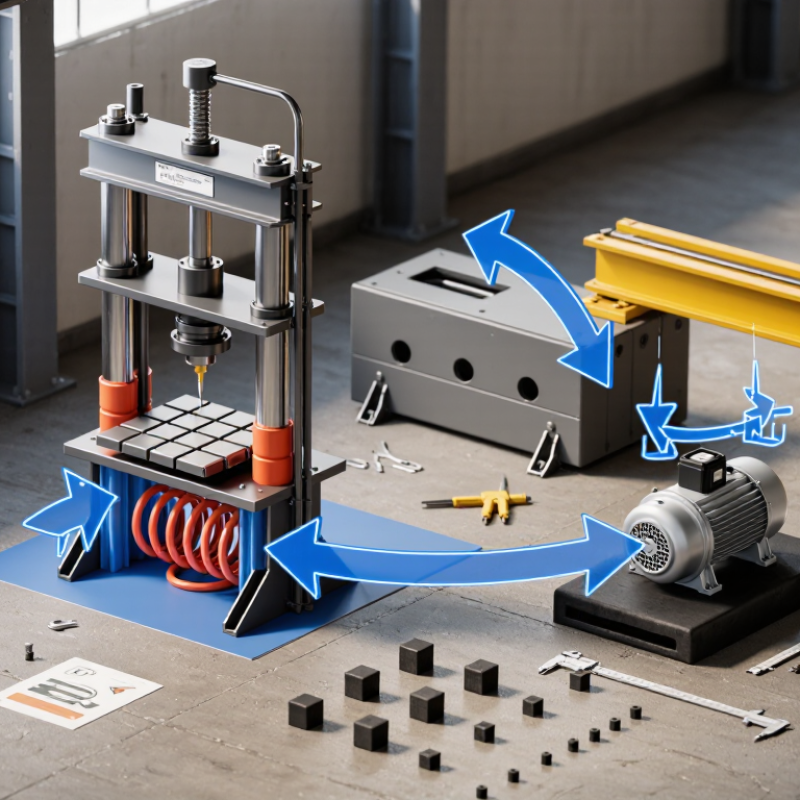
What Equipment Vibration Isolators Do
Equipment vibration isolators sit between a machine and its supporting structure. Their job is to limit how much vibration passes into floors, frames, or nearby equipment. A compressor, for example, may shake during each operating cycle. Properly selected mounts absorb some of that motion before it travels through the concrete floor.
They can also help reduce structure-borne noise and protect sensitive components from repeated movement. This matters for equipment with rotating parts, such as pumps and fans, where vibration may affect fasteners, bearings, or alignment over time. The isolator must match the machine’s weight and operating speed. Too soft, and the equipment may rock. Too stiff, and vibration can pass through almost unchanged. Small details matter.
Installation counts, too. Mounts need even loading, and pipes or cables should not pull the machine out of position. A common mistake is choosing an isolator by appearance or load rating alone. That can be misleading. Actual vibration measurements and operating conditions provide better guidance, though they are not always available. In that case, the selection should be checked carefully, then observed after installation. A noticeable change in movement may call for a closer look.
Common Isolator Types and Their Applications
Rubber and other elastomer mounts are compact, affordable, and useful for pumps, fans, and small compressors. They help reduce transmitted vibration and absorb minor shocks. Their performance can change with temperature, load, and age, so inspect them for cracking or compression. There is no perfect mount.
Steel spring isolators suit heavier equipment, including chillers and industrial presses. They can provide low-frequency isolation when selected for the machine’s operating weight and vibration range. Air mounts offer a softer alternative for sensitive instruments or precision machinery, but they need a stable air supply and careful setup. The U.S. Department of Energy’s 2014 motor-system sourcebook estimates that motor-driven systems account for about 70% of electricity use in U.S. manufacturing. That figure is not an isolator-performance measure, but it shows why reliable equipment operation matters.
Tips: Record the machine’s weight, speed, and mounting points before comparing suppliers. Ask for load-deflection data and test conditions, not just a “high isolation” claim. Check nearby pipes and cables, too; rigid connections can bypass the isolators. A good specification helps, but installation mistakes still happen.
Best Equipment Vibration Isolator Supplier in China? - Common Isolator Types and Their Applications
| Isolator Type | How It Works | Typical Applications | Key Advantages | Selection Considerations |
|---|---|---|---|---|
| Elastomeric Rubber Mount | Rubber or a rubber-like elastomer deforms under load to reduce the transmission of vibration and structure-borne noise. | Pumps, fans, motors, compressors, small generators, and general-purpose machinery. | Compact, simple to install, and available in multiple shapes and stiffnesses; can also help limit shock transmission. | Check supported load, operating temperature, oil or chemical exposure, and expected elastomer aging. Isolation performance depends on the mount’s stiffness and the supported equipment’s operating speed. |
| Steel Spring Isolator | A helical steel spring supports the equipment and allows controlled vertical movement, reducing the transfer of low-frequency vibration. | HVAC chillers, air-handling units, large fans, pumps, and other heavy equipment. | Suitable for relatively heavy loads and can provide low natural frequencies when properly selected. | Confirm load distribution, spring deflection, lateral stability, and whether restraints or damping are needed. Springs alone provide limited damping and may require additional measures to control movement. |
| Spring Isolator with Neoprene Element | A steel spring provides compliant support while a neoprene element helps reduce high-frequency vibration and adds damping. | Building services equipment where both low-frequency isolation and some high-frequency attenuation are required. | Combines spring compliance with an elastomeric interface; commonly used where equipment is mounted on a floor or structural base. | Review the complete assembly’s load rating and deflection. The neoprene element does not eliminate the need for correct spring selection, anchoring, or movement restraints. |
| Wire-Rope Isolator | Metal wire rope is formed into a flexible element that deforms in several directions to absorb shock and vibration. | Transported equipment, outdoor enclosures, electronics, marine equipment, and applications exposed to shock or multi-axis vibration. | Can accommodate vibration and shock from multiple directions and is generally resistant to corrosion when suitable materials are specified. | Match the isolator to the load and shock environment. Check mounting geometry, allowable displacement, and whether the wire-rope construction suits the operating environment. |
| Pneumatic (Air) Isolator | Compressed air supports the load in a flexible chamber, creating a low-stiffness support system for sensitive equipment. | Optical tables, precision instruments, metrology equipment, and vibration-sensitive laboratory systems. | Can provide effective isolation of low-amplitude vibration when correctly configured and maintained. | Requires a suitable air supply or self-contained system, correct leveling, and attention to air leakage and maintenance. Performance depends on the equipment, floor, and disturbance frequencies. |
| Cork-Rubber or Composite Pad | A compressed resilient pad made from cork, rubber, or a composite material deforms beneath the equipment to reduce vibration transmission. | Light machinery, cabinets, small pumps, and applications needing a simple pad beneath a base or support. | Low-profile and straightforward to install; can distribute load over a contact area. | Check allowable compressive load, pad thickness, creep, moisture exposure, and temperature. Pads are not a universal substitute for engineered mounts on heavy or vibration-sensitive equipment. |
| Viscoelastic Damping Mount | A viscoelastic material dissipates vibration energy as it deforms, reducing resonance response over its intended operating range. | Panels, instrument housings, electronic assemblies, and machinery components where resonance or panel vibration is a concern. | Provides energy dissipation and can be useful where controlling resonant motion is more important than achieving very low-frequency isolation. | Verify material compatibility, temperature range, load, and frequency-dependent behavior. Damping performance can change with temperature and operating conditions. |
How Chinese Suppliers Design and Manufacture Isolators
Chinese suppliers typically begin isolator design with equipment weight, operating speed, and the vibration reaching nearby structures. A pump running at 1,500 rpm needs different support from a slow press. Engineers use these details to estimate natural frequency, deflection, and load distribution. They may select rubber, spring, or combined isolators based on the operating environment. Heat, oil, dust, and available installation space also affect material and shape. Small details matter.
Manufacturing turns the design into a repeatable part. Rubber compounds are mixed and tested, while metal components are cut, formed, and checked for dimensions. During assembly, workers bond or fit the elements, then inspect height, alignment, and visible defects. Load and compression tests can reveal differences between batches. A good supplier should explain its test method and share relevant data, not just quote a maximum load. Still, factory checks cannot recreate every floor or machine condition. That limitation deserves attention.
Tips: Provide the machine’s weight, speed, mounting layout, and site conditions when requesting a recommendation. Ask how samples are tested, and confirm whether stated load ratings apply per isolator or per set. If possible, review a trial installation. Measurements may expose a mismatch that drawings miss.
Criteria for Evaluating Equipment Vibration Isolator Suppliers
Best Equipment Vibration Isolator Supplier in China?
Criteria for Evaluating Equipment Vibration Isolator Suppliers
Choosing a supplier is less about catalogue breadth than verified performance. Ask for load-deflection curves, natural frequency, transmissibility data, and test conditions for the actual isolator model. The U.S. Department of Energy’s 2002 Industrial Electric Motor Systems Market Opportunities Assessment estimated that motor-driven systems used about 70% of U.S. industrial electricity. The figure is an older estimate, but it shows why controlling machine vibration can matter across industrial facilities.
Compare suppliers using consistent technical evidence. ISO 20816-1:2016 outlines general procedures for measuring and evaluating machine vibration; it does not certify an isolator or replace application-specific testing. Request reports that identify the equipment load, frequency range, temperature, and measurement method. Check whether the supplier can explain installation limits and material ageing, not just quote a low price. In practice, this is easy to overlook. A polished catalogue is not proof that the isolator suits a compressor, pump, or precision instrument.
Tips: Send suppliers the machine weight, operating speed, mounting layout, and expected environment. Ask for test data and a clear warranty scope. I would still verify the assumptions with an independent engineer when failure would be costly. A spreadsheet can help, but it cannot fix a poor installation.
Steps for Selecting and Verifying a Supplier in China
Best Equipment Vibration Isolator Supplier in China?
Steps for Selecting and Verifying a Supplier in China
Start with operating conditions, not a product photo. Record equipment mass, speed range, mounting points, floor type, and working temperature. A capable supplier should ask for these details before recommending an isolator. If a quotation lists only dimensions and price, request the load per mount and expected natural frequency. Small details matter.
Ask for material specifications, production tolerances, and test data for the proposed load range. Check whether the test sample matches the quoted material and design. Request the test setup, including load, frequency, and temperature. A chart without these details is weak evidence. Ask for a sample and check its dimensions, finish, and fit during a controlled trial. Not just a catalog.
Verify the factory address, inspection records, production capability, and batch traceability. A video walkthrough helps, but it may not reveal every process; consider an independent inspection for a high-risk order. Confirm lead time, packaging, and the process for handling defects in writing. I would not treat a polished presentation as proof. Even a good sample cannot guarantee every batch, so a small pilot order is a sensible check.
Best Equipment Vibration Isolator Supplier in China? Steps for Selecting and Verifying a Supplier
Suggested evaluation weights for comparing suppliers. These are planning guidelines, not measured supplier or industry data; adjust them to your equipment, risk level, and project requirements.
How to use: Request product specifications and application guidance; verify quality-system records, test methods and reports, material and batch traceability, production capacity and lead times, and warranty or technical-support terms. Score each supplier against the same evidence-based checklist before making a decision.

