

Blog
What Is the Best Chrome Iron Furnace for 2026?
Choosing the best Chrome Iron Furnace for 2026 is not a matter of chasing the largest capacity or the newest control panel. The right choice depends on the alloy, production volume, energy supply, and consistency your operation needs. A furnace that performs well on a specification sheet may struggle when feed quality changes or a long shift exposes temperature swings.
Metallurgist Fathi Habashi is known for his work in extractive metallurgy. The following is an editorial selection principle, not a verified quotation from him: “Judge a furnace by the stability of its process, not by its headline capacity.” That distinction matters. Stable heat, dependable refractory performance, accessible maintenance points, and clear process monitoring can shape daily output more than a single impressive rating.
Look closely at the working details. Can operators inspect the lining without a disruptive teardown? Does the control system show useful temperature trends, or only a target value? Are service support, spare parts, and commissioning included in the offer? Small answers add up.
This guide compares furnace designs and selection criteria for 2026, with attention to operating conditions rather than marketing claims. There is no universal winner. A compact unit may suit a specialized line, while a larger installation could make sense for steady, high-volume production. The trade-offs are real—and sometimes the available data is incomplete. Verify performance figures with suppliers, request references from comparable plants, and match every claim to your own process requirements.
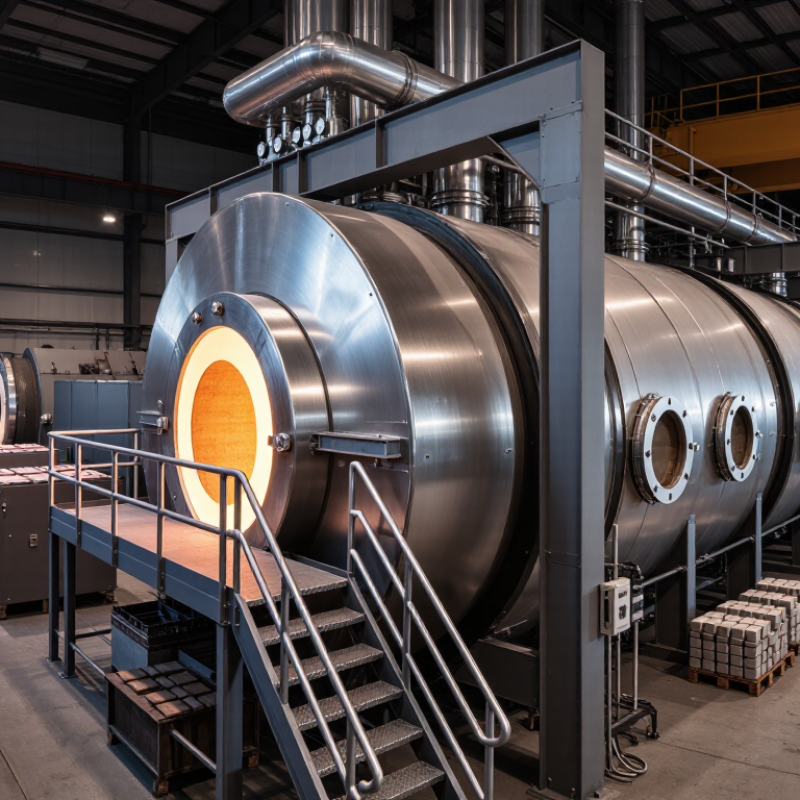
Understanding Chrome Iron Furnaces and Their Role
A chrome iron furnace, more commonly called a ferrochrome furnace, converts chromite ore into an alloy used mainly in stainless steel. A submerged-arc electric furnace uses carbon reductants, such as coke, to separate chromium and iron from the ore. Its electrodes, hot burden, and flowing slag are not abstract details; they shape recovery, energy use, and product consistency. The USGS Mineral Commodity Summaries 2024 estimated global chromite mine production at about 41 million metric tons in 2023. That figure describes ore, not finished alloy, but it shows the scale of the feedstock chain. A furnace choice should therefore reflect ore chemistry, target carbon content, capacity, and available power—not just rated output.
For 2026, compare furnace designs using measured operating data: specific electricity consumption, chromium recovery, electrode use, and downtime. Ask for results from comparable ore and operating conditions. A higher nominal capacity can look impressive, yet unstable feed or poor slag control may reduce usable production. I would not treat any single efficiency figure as decisive; plant conditions differ, and published performance can be difficult to reproduce.
Tip: Request a mass-and-energy balance, plus a trial plan using your own ore. Check how operators monitor electrode position, furnace temperature, and off-gas. Small details matter.
What Is the Best Chrome Iron Furnace for 2026? - Understanding Chrome Iron Furnaces and Their Role
| Furnace configuration | How it works | Typical feed and product | Key strengths | Main considerations | Best suited to |
|---|---|---|---|---|---|
| Closed submerged arc furnace (SAF) | Electric arcs form beneath the burden, while carbonaceous reductants reduce chromium and iron oxides. The sealed furnace collects carbon monoxide-rich process gas. | Prepared chromite ore or agglomerates, reductant and flux; commonly used to produce high-carbon ferrochrome. | Enables controlled off-gas collection and can support energy recovery or use of furnace gas when suitable systems are installed. | Requires reliable feed preparation, gas handling, sealing and process control. Ore chemistry and burden permeability affect stable operation. | Large-scale production where consistent feed preparation and comprehensive gas-management systems are available. |
| Semi-closed submerged arc furnace | Uses submerged-arc smelting with a partially enclosed furnace roof and hood arrangement to capture much of the process gas. | Prepared chromite burden and reductant; commonly used for ferrochrome smelting. | Provides a balance between gas capture and access for furnace operation and maintenance. | Gas capture and workplace exposure performance depend on hood design, furnace practice and maintenance. | Operations seeking substantial fume collection with a configuration that allows routine access to the furnace top. |
| Open submerged arc furnace | Electric arcs operate below the burden, while the furnace top is not fully sealed; local extraction systems collect fumes around the furnace. | Prepared chromite burden, reductant and flux; used in ferrochrome production. | Offers direct access to the furnace top for charging and operating tasks. | Requires effective local fume extraction. Process gas is generally not captured as a sealed, concentrated stream. | Sites where open-top operation is established and suitable fume-control systems are in place. |
| DC arc furnace | Uses direct current and an electric arc, typically between an electrode and a conductive furnace hearth or bath, to supply heat for smelting. | May process chromite fines or other prepared chromium-bearing feed, depending on furnace design and operating practice. | Can offer flexibility for certain fine feeds and process configurations. | Application, feed requirements, electrode arrangements and operating economics are project-specific; it is not the default choice for every ferrochrome plant. | Projects where feed characteristics and technical studies support a DC smelting route. |
| Furnace selection: ore and burden preparation | Not a furnace type; this is a core design factor for choosing and operating a smelting furnace. | Chromite grade, particle size, gangue composition, moisture and the availability of lump ore, pellets or briquettes. | Matching the burden to furnace requirements can support stable electrical and chemical operation. | Fine or variable feed may require agglomeration or other preparation. Chromium recovery and slag composition depend on the full burden recipe. | All projects; representative ore testing and process design should precede equipment selection. |
| Furnace selection: energy and environmental systems | Compares power supply, electrode system, cooling, gas collection, dust removal and any off-gas energy-recovery equipment. | Applies to any furnace route and its site infrastructure. | Whole-plant evaluation can identify practical opportunities for energy efficiency and emissions control. | Performance depends on local electricity supply, plant layout, permitting requirements and the design of auxiliary systems. | All projects; compare total plant performance rather than furnace purchase specifications alone. |
Selection note: There is no universally best chrome iron furnace for 2026. The appropriate choice depends on ore characteristics, target ferrochrome grade, production scale, power availability, feed preparation, emissions requirements and total operating cost.