

Blog
2026 Best A105 Valve Body Suppliers for Global Buyers?
Choosing the right A105 Valve Body supplier in 2026 takes more than comparing unit prices. Global buyers must assess material traceability, manufacturing capability, inspection records, and delivery reliability. ASTM A105 is commonly used for forged carbon-steel pressure components, but the required body design and service conditions still need careful review.
Ask suppliers for material test certificates that match the ordered grade and heat numbers. Check whether their machining, welding, and testing processes suit your drawings and purchase specifications. Details matter. Clear records make it easier to verify what was supplied and investigate a mismatch later. A polished catalog alone is not proof of consistent production.
International orders add practical concerns. Confirm lead times, export packaging, documentation, communication channels, and how the supplier handles changes or nonconforming parts. Where project risk justifies it, buyers can arrange independent inspection before shipment. Not every buyer needs the same level of oversight. A small maintenance order and a critical project may call for different checks.
This guide examines potential A105 Valve Body suppliers through criteria that buyers can compare, rather than relying on broad claims or a single ranking. Supplier capabilities and available evidence can change, so verify current information directly before placing an order. The best choice is not automatically the largest or cheapest manufacturer. It is the supplier whose documented capabilities, product quality, and service fit your actual application.
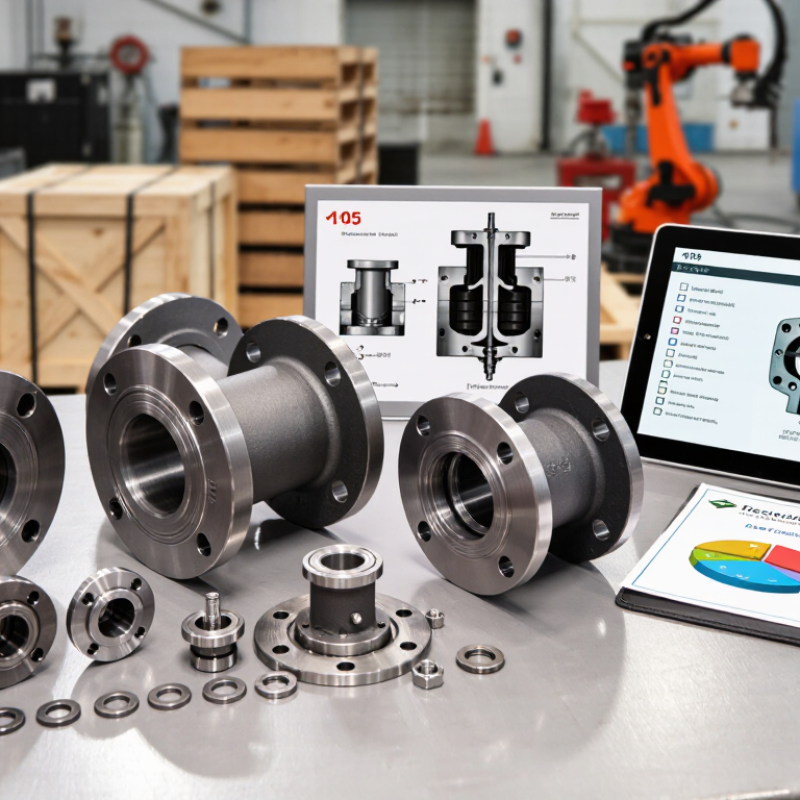
Understanding ASTM A105 Valve Bodies and Their Applications
ASTM A105 covers forged carbon-steel components for piping service at ambient and higher temperatures. Valve bodies made from A105 are common in process lines carrying oil, gas, steam, or water. Forging creates a dense body suited to pressure-containing service, but the material grade alone does not establish a valve’s safe operating limits. Check the design rating, temperature range, applicable piping code, and traceability documents. A heat-number match matters. So does the inspection record.
The World Steel Association’s October 2024 Short Range Outlook projected global steel demand at 1,793 million tonnes in 2024, up 1.7% from 2023. It forecast 1,815 million tonnes for 2025. This is broad steel-market context, not a measure of valve demand. Buyers should assess each A105 body against its actual service conditions. Look for clear markings, verified material test reports, and consistent dimensional inspection. A bright machined surface can look reassuring, yet it cannot prove internal soundness. I would also question any supplier claim that treats “A105” as a complete quality guarantee. The specification is only one part of the evidence.
ASTM A105 Valve Bodies: Specified Chemical Composition Limits
ASTM A105 is a forged carbon steel specification used for piping components, including valve bodies, in ambient- and higher-temperature service. This chart shows selected maximum heat-analysis limits in weight percent; manganese is shown at its upper specified limit. These chemistry limits alone do not determine pressure-temperature suitability, which depends on the applicable design code and component rating.
Key Standards and Quality Requirements for Global Buyers
For A105 valve bodies, verify the complete material designation, heat number, and test reports—not merely a supplier’s “A105” label. ASTM A105/A105M specifies minimum tensile strength of 70 ksi (485 MPa) and yield strength of 36 ksi (250 MPa), subject to its test conditions and product requirements. Small details matter. Match the body’s pressure class and temperature range to the applicable ASME B16.34 requirements. A certificate that cannot be traced to the delivered heat leaves a real gap.
Quality checks should connect documents to the finished valve. Ask for material test reports, dimensional inspection results, and pressure-test records prepared to the agreed edition of API 598. Confirm the test medium, duration, acceptance criteria, and sampling plan before purchase. For example, compare casting or forging identification on the body with the heat number on its report, then check flange dimensions against the purchase specification. A polished dossier is useful, but it does not prove every body was inspected. I would still clarify who witnessed testing and how nonconforming units are handled; this step is easy to overlook.
How to Evaluate A105 Valve Body Suppliers in 2026
When evaluating A105 valve body suppliers in 2026, look beyond price and polished catalogs. A105 is a forged carbon steel specification, so confirm the proposed manufacturing route and material grade match your drawing and purchase requirements. Ask for material test reports tied to each heat number, with chemical composition and mechanical properties clearly recorded. Details matter.
Compare suppliers on machining control, dimensional inspection, and their ability to maintain traceability after cutting and processing. Request sample inspection records for critical features such as flange dimensions, bore size, and wall thickness. Confirm whether heat treatment, non-destructive examination, or pressure testing is required for your specific order; these checks should match the applicable design documents, not vague sales claims. Ask for evidence.
Delivery reliability also needs proof. Review a recent production schedule, packaging method, and the supplier’s process for reporting delays or nonconformities. A small trial order can reveal how carefully drawings are followed and how quickly questions receive useful answers. It is tempting to rank vendors by lead time alone, but an unrealistically short promise may hide capacity limits. Compare documented performance, communication, and quality records before committing to repeat orders.
Supplier Capabilities, Certifications, and Regional Coverage
For global buyers, evaluating an A105 valve body supplier means looking beyond price and delivery promises. Ask how the supplier controls forging, heat treatment, machining, and material traceability. A clear material test report should identify the heat number and match the marking on the part. Check dimensional records against the approved drawing, especially around flange faces, bore size, and wall thickness. Small discrepancies can delay assembly. Request evidence of the quality system and confirm that any product-specific approvals match your application; a general certificate is not proof that every item meets your specification. No checklist removes every risk.
Regional coverage is practical, not just a map of sales offices. Confirm typical production lead times, export packing, shipping routes, and who handles questions across time zones. Ask whether the supplier can provide inspection records and replacement parts without lengthy coordination. Requirements differ by project and destination, so agree on applicable standards, documentation, and inspection points before ordering. A video call from the production floor may clarify capacity, but it cannot replace verified records or an independent inspection when one is needed. Some details get missed. That deserves a second look.
2026 Best A105 Valve Body Suppliers for Global Buyers? — Supplier Capabilities, Certifications, and Regional Coverage
An anonymized sourcing guide comparing supplier types rather than named companies. Capability ranges and market coverage vary by manufacturer; verify them against current product documentation and the specific purchase order.
| Supplier profile | Typical capability to assess | Relevant standards and documentation | Potential regional fit | Key checks before shortlisting |
|---|---|---|---|---|
| Integrated forging and machining manufacturer | Controls forging, heat treatment, machining, and inspection in-house or through documented processes. May offer closer traceability across manufacturing steps. | Confirm material specification and grade, such as ASTM A105/A105N where specified; request material test reports and traceability records. Valve design and testing standards depend on product type and order. | Potentially suitable for buyers seeking direct factory coordination across Asia, Europe, the Middle East, or the Americas; actual export markets must be confirmed. | Check forging origin, heat-treatment records, material identification, dimensional inspection, and whether subcontracted processes are controlled. |
| Specialist forged-steel valve manufacturer | Focuses on forged-steel valve production and may provide bodies as part of complete gate, globe, or check valves. Confirm whether standalone valve bodies are available. | Depending on valve design, ask whether ASME B16.34 applies. For applicable small forged-steel valves, confirm the specified edition and scope of API 602. Do not assume a standard applies to every body. | Potential fit for industrial projects requiring standardised valve assemblies in multiple destination markets, subject to the supplier’s export record and local requirements. | Match pressure class, end connection, design, inspection, and testing requirements to the project specification; request applicable conformity documents. |
| Project-oriented valve and component supplier | May coordinate custom dimensions, documentation packages, inspection plans, and delivery schedules through manufacturing partners. | Review the quality-management certificate’s issuing body, scope, and validity. ISO 9001 certification concerns a quality-management system; it does not by itself certify a particular valve or material batch. | Potentially useful for international EPC or maintenance buyers needing consolidated documentation and logistics; confirm manufacturing locations and destination-country experience. | Identify the actual manufacturer and manufacturing site; agree on inspection hold points, document list, change control, and responsibility for nonconformities. |
| Regional stockist or service-centre supplier | May offer local inventory, shorter replenishment routes, and smaller order quantities. Stock availability and traceability are item- and batch-specific. | Request original mill or manufacturer records, batch traceability, and any required inspection or test reports. Verify that certificates correspond to the supplied items. | Can be a practical option when local availability, replacement lead time, or regional support is more important than direct factory sourcing. | Confirm stock location, storage and preservation practices, document continuity through the supply chain, and whether the supplier is authorised to resell the products. |
| Export-focused manufacturer | May have experience preparing export packaging, shipping documents, and project-specific inspection dossiers. Export experience does not establish technical compliance on its own. | For EU-market equipment, determine whether the product falls within the scope of the Pressure Equipment Directive 2014/68/EU and what conformity route applies. Requirements depend on product classification and use. | Potential fit for buyers importing across borders, provided the supplier can support the destination’s applicable regulatory, language, and documentation requirements. | Verify the applicable legal requirements for the destination and service, shipping terms, packaging, document language, and any required third-party inspection. |
| Custom-machining and low-volume supplier | May support prototype, replacement, or low-volume requirements when drawings and tolerances are clearly defined. Confirm forging availability and material control separately. | Use the purchase specification to define material, dimensional tolerances, inspection method, surface condition, and required records; do not rely on a material name alone. | Potential fit for repair, retrofit, or special-project work where a standard stocked configuration is unavailable. | Approve drawings before production; verify material substitution controls, first-article inspection, critical dimensions, and acceptance criteria. |
Buyer note: ASTM A105 is a specification for carbon-steel forgings for piping applications; confirm the exact material grade and any supplementary requirements in the order. Supplier profiles above are sourcing categories, not rankings or claims about specific companies. Certifications, product scope, regional coverage, and current availability should be independently verified for each supplier and shipment.
Comparing Pricing, Lead Times, and After-Sales Support
2026 Best A105 Valve Body Suppliers for Global Buyers?
A competitive A105 valve body quote is more than a unit price. Ask whether it includes machining, inspection, protective packing, and export documentation. Compare offers against the same drawing, pressure class, quantity, and delivery terms. Otherwise, a lower figure may simply leave important costs outside the quote. That matters.
Lead times depend on stock availability, forging schedules, machining capacity, and inspection requirements. Request a written schedule with key milestones, not just an estimated ship date. For example, confirm when production starts and when dimensional checks are completed. Ask suppliers to identify possible delays early. A short promised lead time is not useful if it lacks detail.
After-sales support deserves equal scrutiny. Clarify how the supplier handles dimensional discrepancies, missing records, or damage found on arrival. Check that material test certificates and inspection reports match the ordered parts. Response times should be agreed before purchase, especially when parts support a planned maintenance window. Price comparisons can still miss the point: the cheapest offer may work well, or it may create costly uncertainty. Buyers should weigh documented quality, realistic delivery, and accessible technical support together. There is no perfect scorecard, but a clear comparison makes trade-offs easier to see.

