

Blog
Why Choose HDPE Bottles for Packaging?
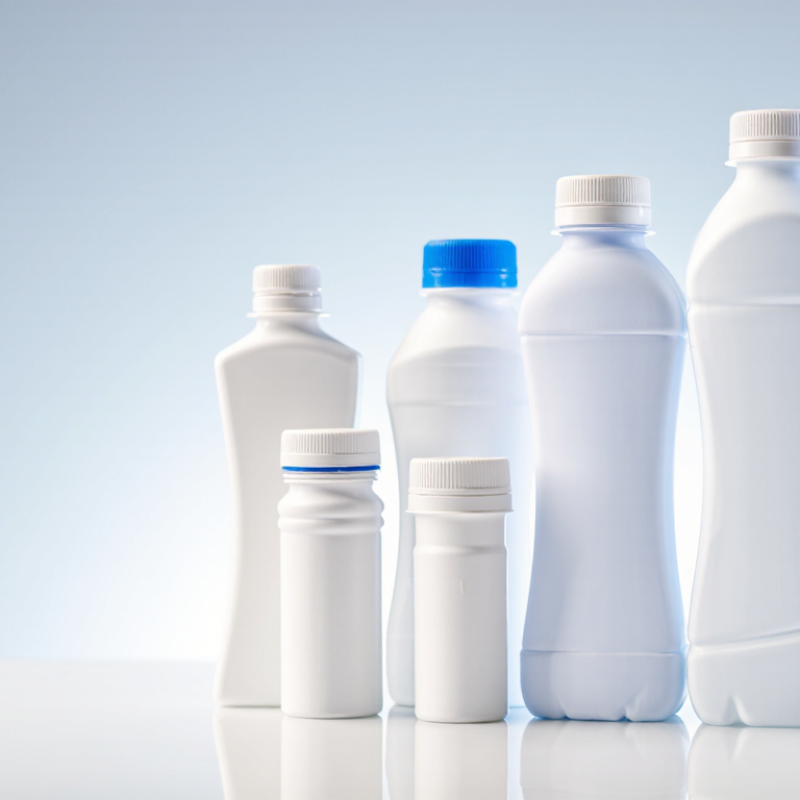
An hdpe bottle is valued for practical reasons: it is lightweight, impact-resistant, and suited to packaging many household, personal-care, and food products. Its familiar shape also works well with common closures and labels. But material choice alone does not make packaging sustainable. Bottle design, local collection, sorting, and end markets all affect what happens after use.
The scale of the challenge is clear. The OECD’s Global Plastics Outlook (2022) estimated that just 9% of plastic waste worldwide was ultimately recycled in 2019. That figure covers plastics broadly, not HDPE bottles alone. Still, it is a useful reminder that recyclability depends on the whole system. Ellen MacArthur, founder of the Ellen MacArthur Foundation, has expressed the wider circular-economy goal: “We need to eliminate the plastic we don’t need, innovate so all plastic we do need is designed to be safely reused, recycled, or composted, and circulate everything we use to keep it in the economy and out of the environment.” For a packaging team, that means examining resin choice alongside bottle color, wall thickness, label materials, and access to recycling infrastructure. Small details matter. A dark bottle or hard-to-remove label may complicate sorting in some systems. HDPE is not a universal fix, either; its real-world performance varies by region and package design. This introduction explores why manufacturers choose HDPE bottles, where they offer clear advantages, and which trade-offs deserve closer scrutiny. One caveat remains: good packaging claims need evidence, not just confident wording.
Define HDPE Bottle Resin: ASTM D883 Density Is Typically ≥0.941 g/cm³
High-density polyethylene (HDPE) bottle resin is commonly defined by a density of at least 0.941 g/cm³ under ASTM D883 terminology. That number describes the resin, not the finished bottle. Density helps distinguish HDPE from lower-density polyethylene, but it does not tell a packager everything. That matters. Two resins above the threshold can behave differently during extrusion blow molding. One may produce a stiffer shoulder, while another may allow easier squeezing, depending on its grade and processing conditions.
For packaging teams, density is a useful first check when reviewing a resin specification or supplier certificate. Then test the actual bottle: feel the side panel, inspect the neck finish, and check wall consistency. These details can affect stacking, dispensing, and resistance to everyday drops. Do not treat 0.941 g/cm³ as a guarantee of strength or chemical compatibility. Resin structure, additives, bottle geometry, and molding conditions also influence performance. Small differences show up. In practice, this figure can receive too much attention; a datasheet cannot replace trials on the filling line. Record the test method and sample conditions when comparing density values, since measurements depend on how testing is performed.
Why Choose HDPE Bottles for Packaging?
HDPE bottle resin is commonly classified as high-density polyethylene at a density of 0.941 g/cm³ or greater.
The bars show commonly referenced lower density boundaries for polyethylene classes, not the exact density of every resin grade. Actual bottle-resin density varies by grade and should be confirmed with the supplier’s technical data.
Assess Strength and Chemical Compatibility Using Grade-Specific ASTM Tests
Why Choose HDPE Bottles for Packaging?
HDPE bottles are valued for their toughness and broad chemical resistance, but performance depends on the resin grade and bottle design. Small differences matter. A practical evaluation tests the selected grade under conditions that resemble real use, rather than relying on a generic material description.
For strength, ASTM D638 can measure tensile properties of plastic specimens, while ASTM D1693 evaluates environmental stress-crack resistance under defined conditions. These results help compare grades, but they do not predict every bottle’s performance on their own. Wall thickness, molding quality, corners, and sustained load can change how a finished container behaves. A bottle may pass a resin test and still need testing in its actual shape.
Chemical compatibility deserves the same care. ASTM D543 can assess plastics exposed to chemical reagents, but the test liquid, concentration, temperature, and exposure time should reflect the intended contents. Inspect for swelling, softening, cracking, leakage, or changes in appearance. Closures and stressed bottle areas matter too. No test removes every uncertainty. A lab result can look reassuring, yet storage conditions may differ; record those limits and verify with filled-bottle trials before choosing a grade.
Why Choose HDPE Bottles for Packaging? — Assess Strength and Chemical Compatibility Using Grade-Specific ASTM Tests
| Assessment dimension | Relevant ASTM method | Test article and focus | Data to record | How to use the result |
|---|---|---|---|---|
| Tensile properties of the resin | ASTM D638 — Tensile Properties of Plastics | Standardized plastic specimens made from the specific HDPE resin grade; measures tensile behavior under controlled conditions. | Tensile strength, elongation, and tensile modulus, together with specimen preparation and test conditions. | Compare candidate grades using specimens prepared consistently. D638 results characterize the tested specimens and do not, by themselves, establish bottle performance. |
| Impact resistance of the bottle | ASTM D2463 — Drop Impact Resistance of Blow-Molded Thermoplastic Containers | Blow-molded containers tested using the method’s specified drop-impact procedure. | Impact outcomes under the selected procedure, including the number and type of failures and the test conditions. | Use results to compare bottle designs or production lots under the same conditions. Bottle size, wall distribution, closure, fill, and conditioning can affect performance. |
| Container compression strength | ASTM D2659 — Column Crush Properties of Blown Thermoplastic Containers | Blown thermoplastic containers subjected to compressive loading. | Load and deformation data, including the reported column-crush result and relevant test details. | Helps assess resistance to compressive loads during stacking or handling; evaluate the actual bottle geometry and test setup. |
| Resistance to chemical reagents | ASTM D543 — Resistance of Plastics to Chemical Reagents | Plastic specimens exposed to specified chemical reagents using defined exposure conditions. | Reagent identity and concentration, exposure time and temperature, visual changes, and changes in selected physical properties. | Use the results for the particular HDPE grade and exposure conditions. They do not establish compatibility with every formulation, concentration, temperature, or duration. |
| Environmental stress-cracking resistance | ASTM D1693 — Environmental Stress-Cracking of Ethylene Plastics | Notched specimens of ethylene plastics tested under the method’s specified stress-cracking conditions. | Failure observations or time-to-failure data, with the specimen, conditioning, and test conditions documented. | Provides a comparative measure under the specified method conditions. It is not a substitute for testing the finished bottle with its actual contents and use conditions. |
| Grade and bottle traceability | Record alongside the selected ASTM tests | Document the resin grade, specimen or bottle source, manufacturing details, and conditioning for every test series. | Grade identification, lot, bottle design, wall or specimen details, temperature, exposure duration, and test-method revision. | Keeping these details consistent makes comparisons meaningful and supports evaluation of the specific packaging application. |
Compare Oxygen and Moisture Barriers with ASTM D3985 and D7709
HDPE bottles are often chosen for their toughness and practical moisture resistance, but they are not perfect barriers. To compare performance, ASTM D3985 measures oxygen transmission through plastic film or sheeting using a coulometric sensor. ASTM D7709 evaluates water-vapor transmission through flexible barrier materials. These methods can help assess the bottle material, but they do not automatically predict how a finished package will perform.
Keep test conditions consistent. Compare specimens with the same thickness, exposed area, temperature, and humidity. A thicker HDPE wall may slow transmission, while warmer storage can change the result. Small differences matter. Record them. Also consider the cap, neck finish, and seal: oxygen or moisture can enter through the closure even when the bottle wall performs well. A material result alone is not the whole story.
For a useful packaging decision, pair standardized material testing with whole-bottle evaluation under expected storage conditions. Check filled packages over time, especially if the contents are sensitive to oxygen or moisture. Lab data can look reassuring. Real distribution is messier. A single test condition may not reflect every warehouse or shipment, so document the limits of the comparison before selecting a bottle.
Trace Recycling Identification: HDPE Is Resin Code #2 Under ASTM D7611
When a bottle carries Resin Identification Code #2, it identifies its main plastic as high-density polyethylene, or HDPE. ASTM D7611 standardizes this resin identification system. The mark is often molded into the bottle’s base or lower side, where sorters can locate it. A clear code helps people recognize the material. It is not a grade of quality.
HDPE suits many packaging uses because bottles can be sturdy without feeling excessively heavy. They may also resist moisture and many everyday products, depending on the formulation and intended use. For packaging teams, code #2 provides a useful material clue when comparing bottle options. Still, the bottle is only part of the package. Caps, labels, color, and attached components can affect how well the whole item fits local recycling systems.
That distinction matters. A #2 mark does not guarantee that a bottle will be collected or recycled nearby. Acceptance varies by community and facility, so check local guidance before making disposal claims. For product designers, keeping components compatible and labels easy to separate can make sorting simpler. The code helps, but it does not do the sorting. There is room to improve packaging details, and the mark alone cannot tell the full story.
Match Bottle Design to Product Needs, Closures, and Regulatory Standards
HDPE bottles are useful when the package must handle everyday filling, storage, and transport. But the resin alone does not determine performance. Match the bottle’s shape and wall thickness to the product’s weight, flow, and dispensing needs. A narrow neck can help control pours; a wider opening may make filling or scooping easier. Small details matter. The right choice is not always obvious.
Closures should fit the neck finish and the way customers use the product. Check cap torque, liner compatibility, and whether the seal stays reliable after handling. For lotions or thicker liquids, test the dispensing closure with the actual formula. Also review relevant requirements for the intended market and product category, including material documentation and migration testing where applicable. Requirements vary. Do not assume that a bottle suitable for one product is automatically suitable for another.
Tips: Test filled samples under realistic conditions. Check for leaks after storage, squeezing, and transport. Confirm that labels adhere to the chosen surface and remain readable. If the product is sensitive to light, assess the protection offered by the bottle color and design. Record results and revisit them when the formula or supplier specifications change. Testing takes time, but skipping it can cost more.

