2026 Best Drain Pump Types for Global Buyers
Choosing the right Drain Pump in 2026 requires more than comparing price, voltage, or brand labels. Global buyers must examine wastewater temperature, flow rate, lift height, solids, installation space, and local power conditions. A pump that performs quietly in a German laundry room may struggle in a hot, dusty workshop in Southeast Asia. Small details matter.
Dr. Lev Nelik, a recognized pump-system engineer and author, offers a practical principle: “Select the pump for the system, not the system for the pump.” This advice remains highly relevant. Submersible pumps suit many compact appliances because they operate directly inside the drainage area. External pumps can simplify maintenance and support longer discharge routes. Diaphragm models may handle difficult fluids, while centrifugal designs often provide smooth, efficient flow. Each type has limits.
Real-world selection is rarely perfect. Buyers sometimes trust a familiar brand and overlook excessive head pressure. Others choose the highest flow rating without checking hose diameter. That mistake can create noise, backflow, or early motor wear. It happens.
This guide compares the best Drain Pump types for global purchasing decisions in 2026. It considers performance, energy use, service access, material quality, noise, and application fit. Manufacturer data should be verified against actual operating conditions. Independent testing is valuable, but field experience still reveals problems that brochures often hide. A reliable choice balances specifications with practical maintenance, regional support, and the expected life of the equipment.
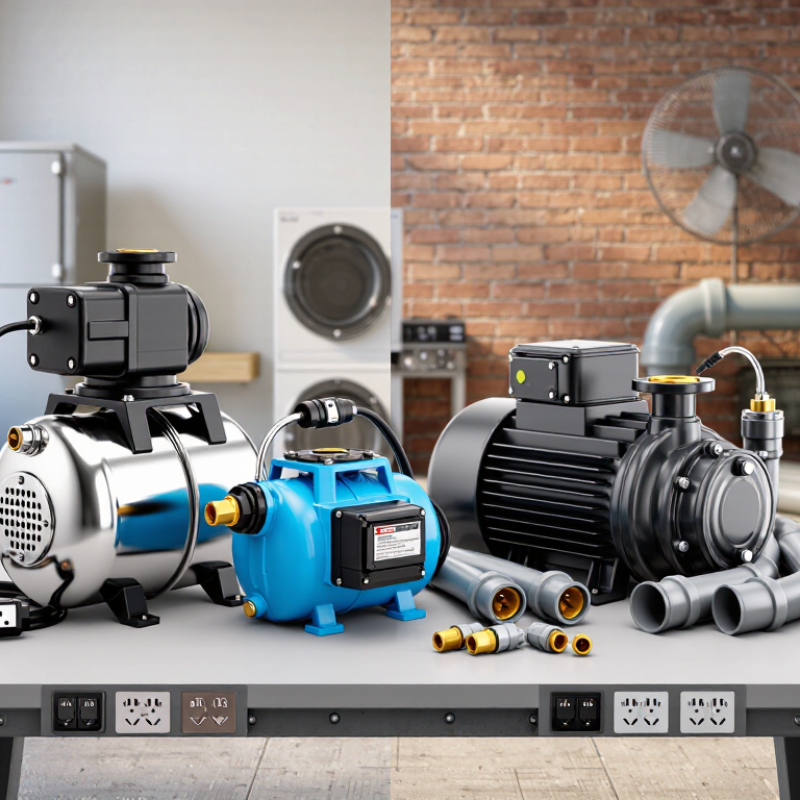
Classify Drain Pumps by Mechanism, Application, and Installation Method
2026 Best Drain Pump Types for Global Buyers
Classify Drain Pumps by Mechanism, Application, and Installation Method
Drain pumps differ mainly by mechanism. Centrifugal pumps move water with a spinning impeller and suit steady discharge. Diaphragm pumps use a flexible membrane and handle air mixed with wastewater better. Vortex pumps create a swirling flow, reducing contact between solids and the impeller. For kitchens, laundry rooms, and compact appliances, centrifugal models are often practical. Diaphragm designs may perform better where drainage is intermittent.
Application changes the selection. A washing machine needs quick flow, low noise, and frequent start-stop operation. A basement drainage system needs reliable automatic activation and resistance to suspended particles. Condensate removal requires a smaller pump, especially near air-conditioning equipment. Commercial kitchens often need wider passages and easier cleaning. The strongest pump is not always the right pump.
Installation method affects maintenance and safety. Submersible pumps sit inside the collection tank and save floor space. External pumps remain accessible, but their inlet line must stay sealed. Wall-mounted units work well in narrow utility areas. Check valve position, discharge height, voltage compatibility, and pipe diameter before ordering. These details are easy to overlook.
In global projects, temperature, water quality, local power standards, and replacement access also matter. A pump tested in clean water may struggle with lint or grease. A higher flow rating can increase noise and energy use. I would verify the actual lift height, not rely only on catalog figures. Field conditions are rarely perfect.
2026 Best Drain Pump Types for Global Buyers
Comparison by pumping mechanism, typical application, and installation method. Flow and lift figures represent common engineering ranges for commercially available drain-pump designs.
Selection guide: Centrifugal pumps are widely used for appliance-integrated and fixed installations where continuous drainage and higher flow are required. Diaphragm pumps suit dirty water and intermittent duty, while peristaltic pumps are useful for low-flow, dosing, or chemically sensitive applications. Rotary positive-displacement pumps are selected when higher pressure or lift is needed.
Installation methods: Appliance-integrated pumps are factory-fitted inside equipment; fixed inline pumps are installed in a permanent drain line; and portable or external pumps are connected when flexible positioning and temporary drainage are important.
Match Flow Rate, Head Height, 120/230 V, and 50/60 Hz Requirements
2026 Best Drain Pump Types for Global Buyers
Match Flow Rate, Head Height, 120/230 V, and 50/60 Hz Requirements
Choosing a drain pump starts with the water volume and lifting distance. A submersible pump suits basements, tanks, and flooded pits. An external centrifugal pump works better where maintenance access matters. Diaphragm pumps can handle intermittent drainage, but their output may feel limited.
Check the real flow rate at the required head height. A pump rated at 40 liters per minute may deliver far less after lifting water three meters. Add pipe length, elbows, filters, and the outlet position. Small details matter. I once treated the catalog flow rate as the working rate. That was too optimistic.
Voltage and frequency require equal attention. A 120 V pump is not automatically suitable for 230 V systems. Some motors support both voltages, but only through approved wiring or a selector. Confirm whether the unit accepts 50 Hz, 60 Hz, or both. Frequency can change motor speed, noise, heat, and flow. Check the data plate, wiring diagram, protection rating, and local electrical requirements before ordering. For global shipments, request test conditions and performance curves, not only headline numbers. Specifications can still hide assumptions.
Verify IP Ratings, IEC 60335-2-41 Safety, and Global Compliance Needs
Choosing a drain pump for global markets requires more than comparing flow rates. The 2024 WHO/UNICEF Joint Monitoring Programme reported that 2.2 billion people lacked safely managed drinking water in 2022. That pressure increases demand for dependable water-handling equipment. However, reliability begins with correct protection, not attractive specifications.
An IP rating describes enclosure protection under defined test conditions. IPX4 resists water splashes, while IPX7 covers temporary immersion. Neither rating proves safe operation in every installation. IEC 60529 testing also does not replace electrical safety evaluation. IEC 60335-2-41 applies to electrically operated pumps for household and similar purposes, alongside IEC 60335-1. Designers should verify insulation, leakage current, abnormal operation, temperature rise, and accessible-part protection.
Small details matter.
A pump installed beside a laundry sink may face detergent, vibration, and repeated starts. A basement model may encounter standing water, blocked discharge lines, and cold ambient conditions. Laboratory results can miss these combined stresses. Field validation should therefore check cable entry seals, float-switch behavior, thermal protection, and restart performance after blockage.
Global compliance can also require market-specific evidence, such as CE, UKCA, UL or CSA-related documentation, RCM, or other national approvals. Requirements vary by destination and final application. Assuming one certificate fits every country is risky, and honestly, many purchasing teams discover this too late. Ask for current test reports, traceable component data, installation limits, and clear IP test conditions before approving a pump type.